Place · Las Valeras
Valeria
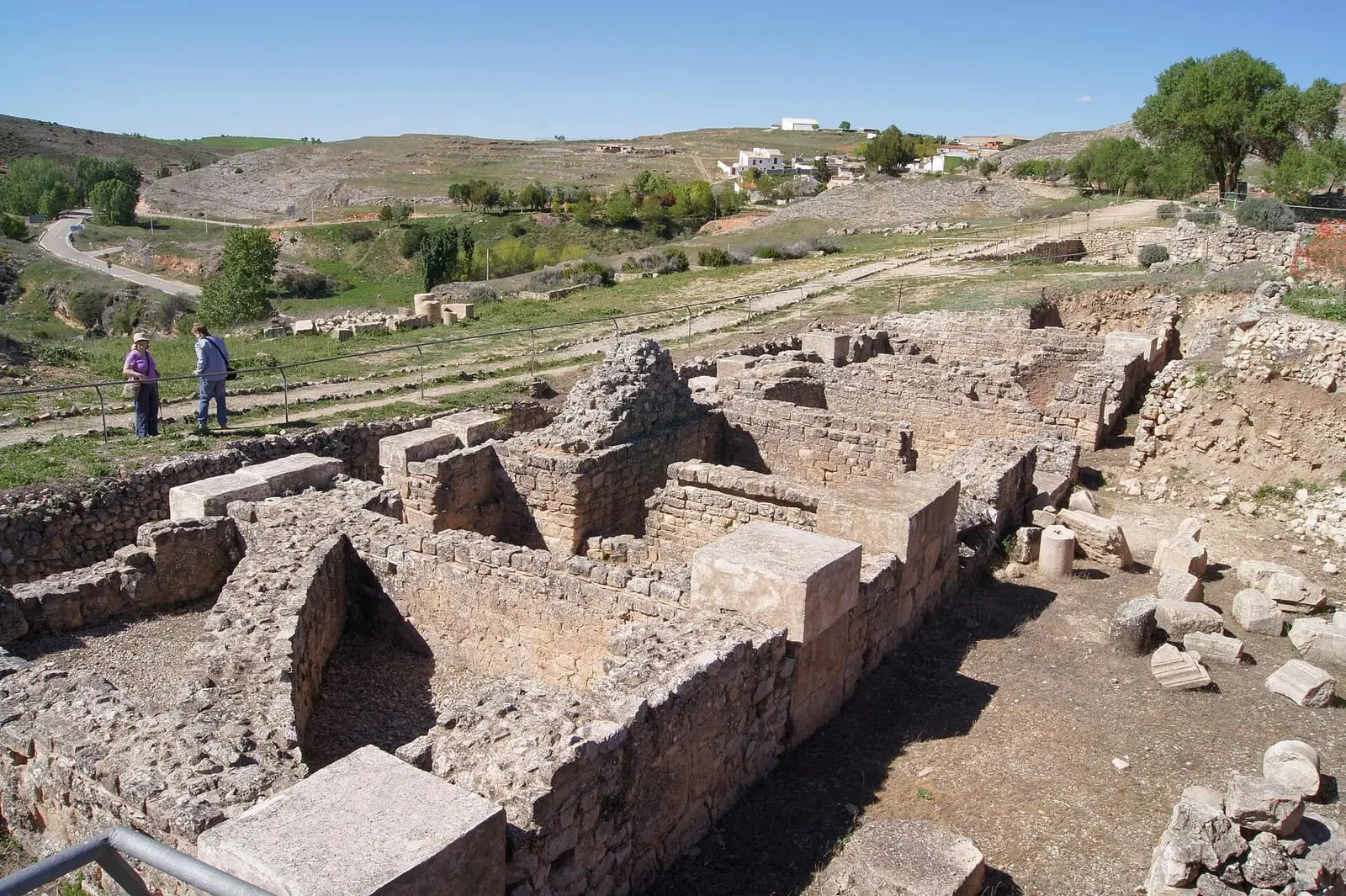
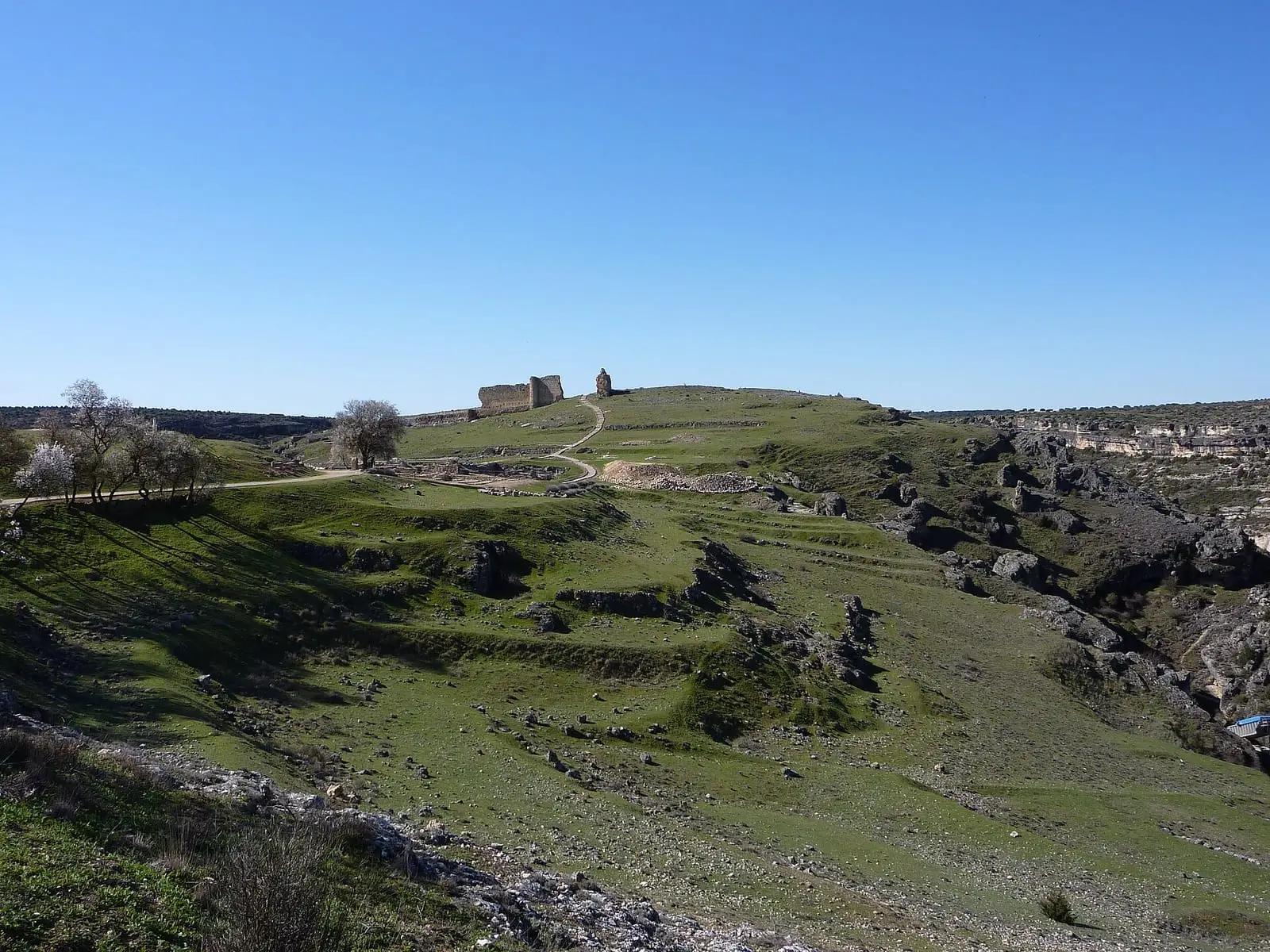
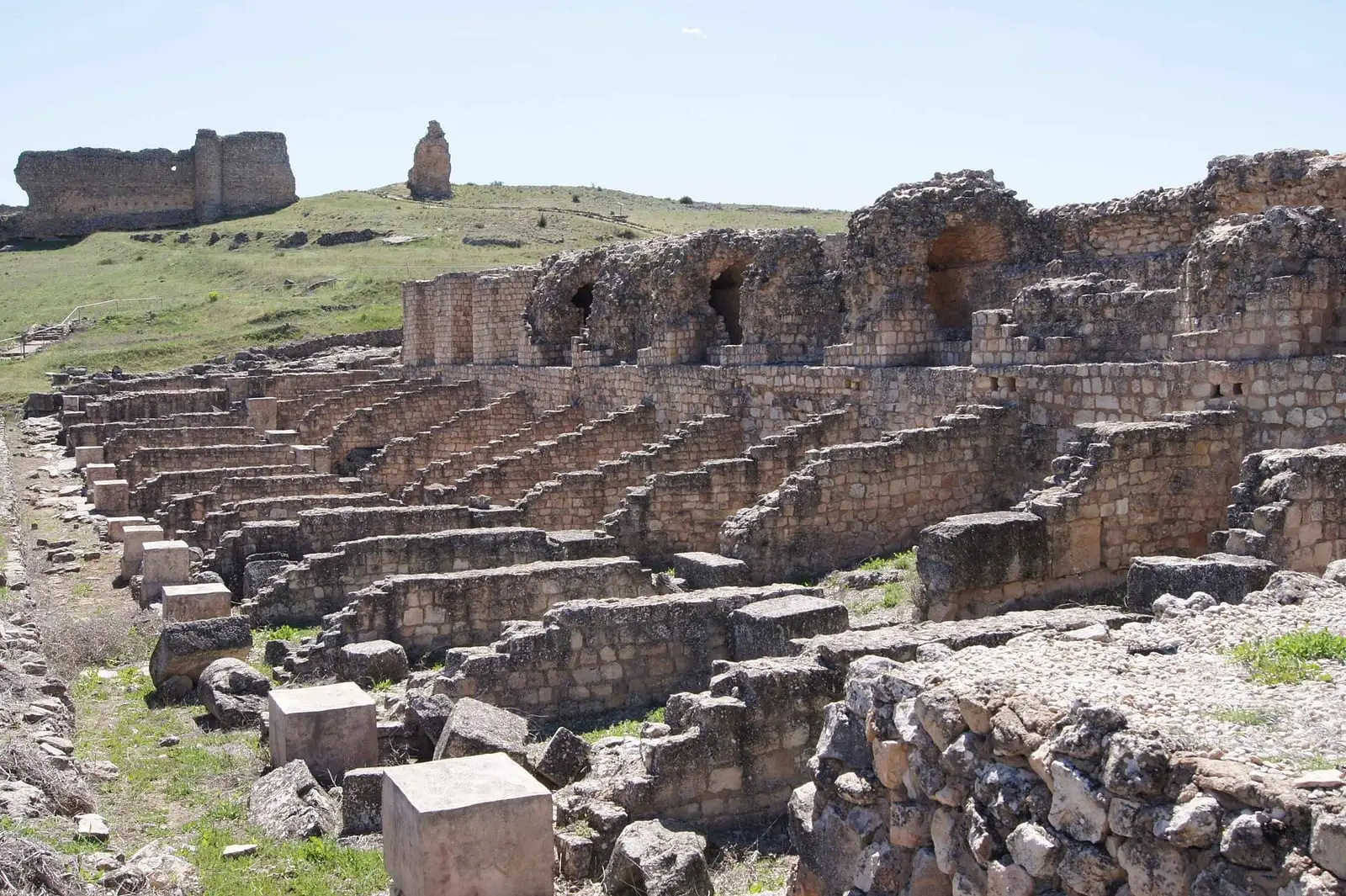
Valeria is a Roman city whose forum preserves remains of Augustan porticoes, beside a basilica dedicated to the imperial cult, tabernae and a nymphaeum with a 105-metre retaining wall. Its hanging houses overlook the River Gritos gorge. The site has a visitor reception centre; Valeria village, in Las Valeras, built its church using Roman columns.
- Municipality
- Las Valeras
- Valeria
- Roman city
- Forum
- Nymphaeum
- Hanging houses
A city at the cliff edge
Valeria is one of the cities Rome left in the province of Cuenca. It was founded between 85 and 82 BC by Gaius Valerius Flaccus, who had been consul in 93 BC.
What can be seen
- The forum, the city centre, with remains of its porticoes from Augustus’s time.
- The basilica, dedicated to emperor worship according to the regional government of Castilla-La Mancha, although other descriptions also assign it commercial and judicial functions.
- The tabernae: shops, stores and workshops.
- The nymphaeum, with a 105-metre retaining wall once decorated in honour of the nymphs; little is visible today.
- The «casas colgadas» (hanging houses), adapted to the slope and gorge edge, with openings above the river cliff.
A hall of fame
Since 2022 a team led by Dionisio Urbina and Catalina Urquijo has excavated the forum’s western cryptoporticus, the lower gallery supporting the portico. There, in fills deposited when the space was abandoned, pedestals, inscriptions and fragments of bronze statues have appeared. Researchers believe the portico’s large exedra was a kind of hall of fame, like Augustus’s forum in Rome, with statues of the imperial family, gods and distinguished residents honoured by the city. One pedestal was dedicated to Diva Drusilla, Caligula’s sister, dating it to around AD 38 to 40; a fragment of a large bronze torch would have belonged to a statue of Ceres. Letter forms distinguish at least two workshops of engravers, perhaps three. Each field season adds seven or eight names of Valeria residents to those known. Statues were replaced because of political changes or lack of space, and not every broken fragment proves that someone’s memory was erased.
Carpenters and cartwrights
Carpenters’ tools appeared in one of the forum’s shops, and cartwheels and a 4th-century altar dedicated to Minerva in a house the excavators call Valentín’s. Archaeologist Julián Torrecillas links them to woodworking and cart-making workshops, and to the idea that the black pine forests of Cuenca and Albarracín were a timber reserve for Rome. This interpretation awaits full publication.
Plan your visit
Check opening times and conditions before going.
Before you travel
Do not collect anything or enter cordoned-off areas.
Combine with
In the village square stands the church of La Sey, with columns from the ancient city, and alongside runs the River Gritos gorge. The municipality is covered under Las Valeras.


Frequently asked questions
What survives of the Roman city?
The forum, with remains of its Augustan porticoes; the basilica, dedicated to emperor worship; the tabernae, with shops, stores and workshops; the nymphaeum, whose retaining wall measures 105 metres; and the «casas colgadas» (hanging houses), built on the slope and gorge edge.
Are visits available?
The site has a visitor reception centre, where the tour begins. The official entry gives no opening times or prices.
Carry on from here
This place through time
Which eras you can read here
A single place can keep traces of several periods. These layers connect what you see with the atlas's stories.