Serranía de Cuenca · 3 places
Geology and karst landscapes of the Serranía de Cuenca
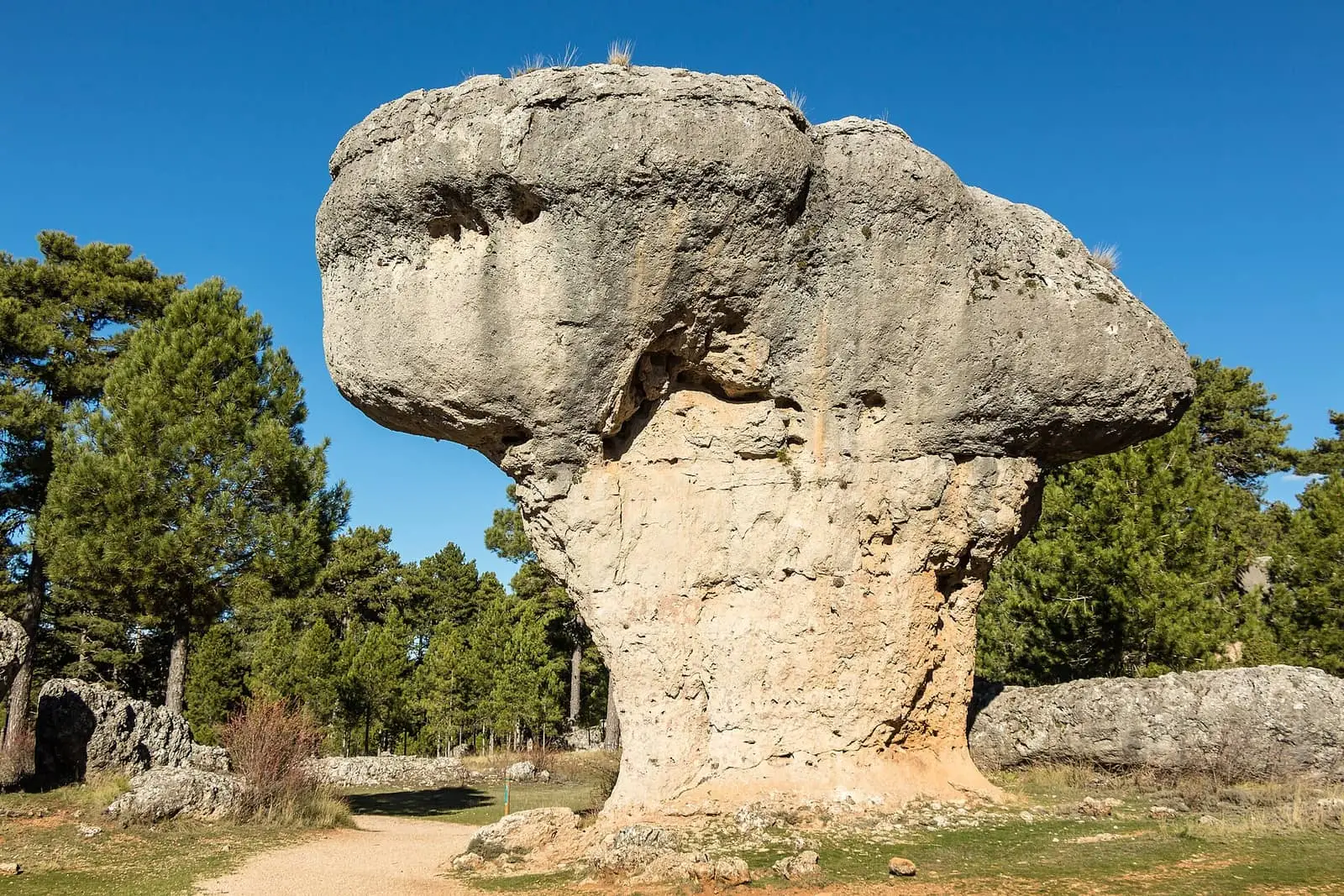
The Serranía de Cuenca is a karst landscape shaped in Mesozoic limestones: the Ciudad Encantada, to which the IGME assigns 20 km², Los Callejones de Las Majadas, the Tormagal de Masegosa or the red canyon of Talayuelas, with Cretaceous fossils at Las Hoyas in La Cierva and Lo Hueco in Fuentes.
Limestone mountains
Almost the whole Serranía is limestone and dolostone from the Jurassic and Cretaceous, deposited on a sea floor and later raised into parameras, high, open limestone plateaux, or muelas, flat-topped limestone hills. Slightly acidic rainwater dissolves them: at the surface it creates karren and ruin-like landforms, the tormagales, such as the Ciudad Encantada, the “Enchanted City” rock formations, covering about 20 km², or the Callejones de Las Majadas; underground, caves and shafts, and through collapse, torcas, collapse sinkholes, and lakes. Rivers have cut the muelas into gorges with vertical walls, and lime-rich waters build tufa barriers.
Other rocks
The Sierra de Valdemeca and the rodenales of the south are made of Triassic red sandstone, rodeno, older than the limestone: at Collado Bajo, the mountain range’s summit, and in Boniches, with quartzite conglomerates. Folded layers can be seen in the gorges, such as the anticline at the Armentero viewpoint, and in Fuentes water dissolves gypsum and opens dolines in a few years: the latest in the River Moscas complex opened in 2009.
Fossils
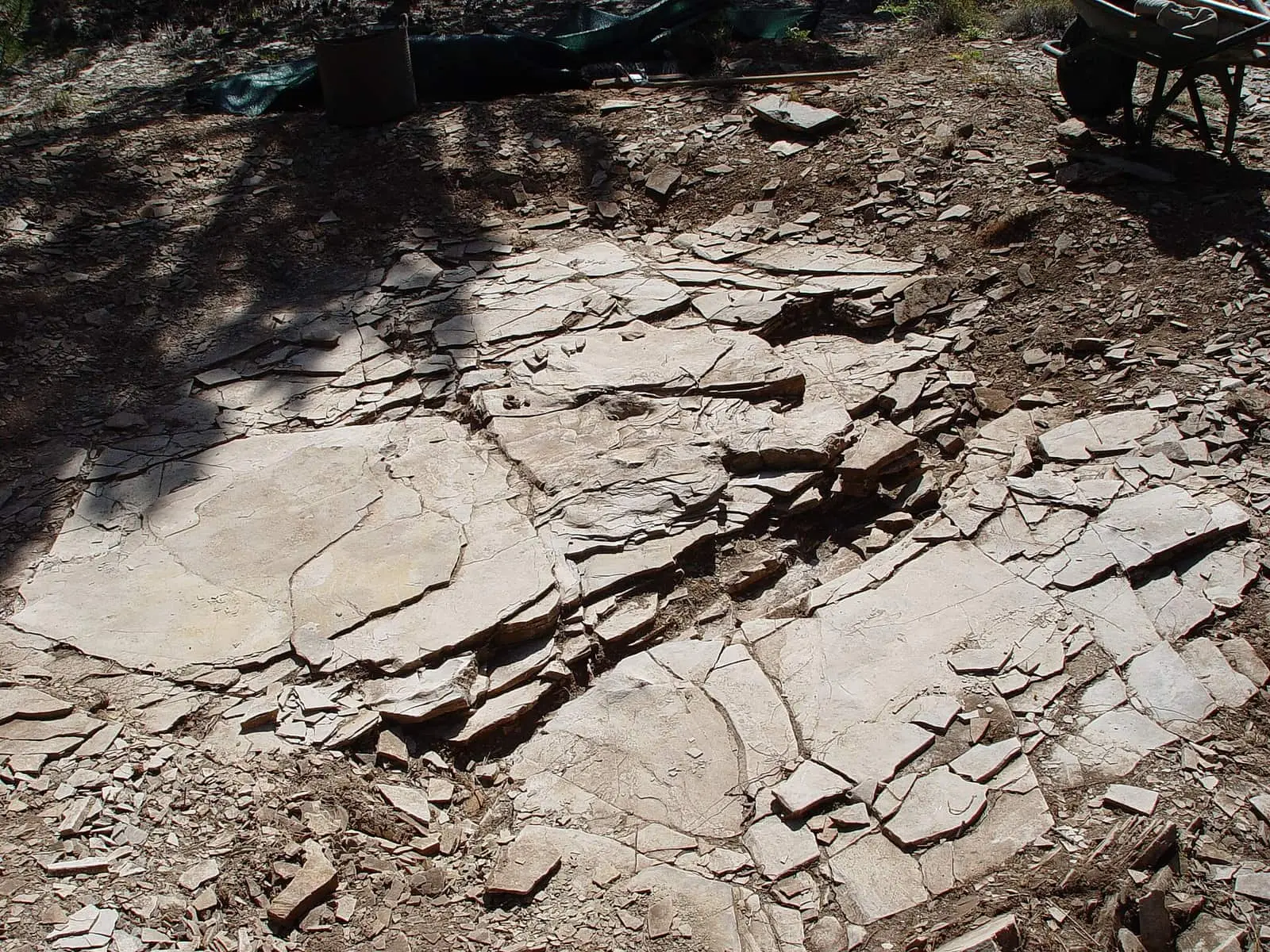
There are dinosaurs in these rocks: Las Hoyas, from the Early Cretaceous, in La Cierva, and Lo Hueco, about 75 million years old, in Fuentes, uncovered by high-speed railway works in 2007. The Ruta de los Dinosaurios follows them.
This landscape in layers of time
The places in this topic keep traces of these eras. A single place can appear in several.
All the places (3)
Frequently asked questions
What is Lo Hueco?
A Late Cretaceous fossil site in Fuentes, discovered in May 2007 during railway works, with dinosaurs, crocodiles and turtles.