Place · Santa Cruz de Moya
Orchova valley
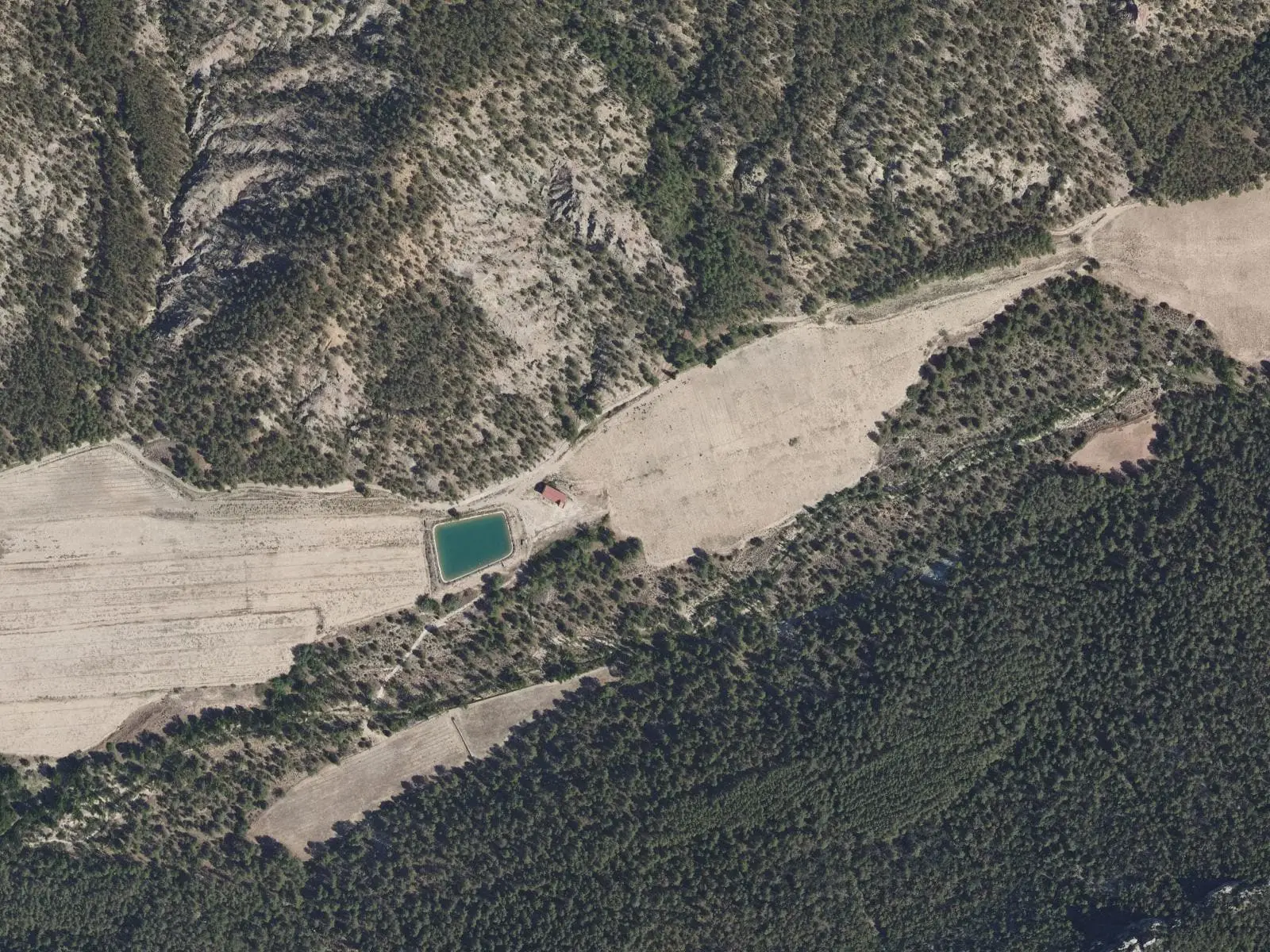
Orchova is a former rento, an isolated farmstead in the hills, of Santa Cruz de Moya: a valley beside the Aragón and Valencia border with several groups of now empty houses and a mill. A book on the Land of Moya records that in the 14th century the mayor of Ademuz entered Orchova with armed men and took cloth, fabrics and livestock worth 15,000 marabetinos.
- Municipality
- Santa Cruz de Moya
- Orchova
- Rento
- Santa Cruz de Moya
- Border
- Abandoned settlement
A rento on the border
Orchova is a valley in Santa Cruz de Moya, adjoining the lands of Aragón and Valencia, once a rento, an isolated farmstead in the hills: several groups of houses with their land and mill, once inhabited and now empty. A retired teacher from the neighbouring hamlet of Las Rinconadas has told its story, drawing on the little written record and what is remembered.
That small written record is old. The book Moya, tierras de frontera recounts that in the 14th century, in early August, the mayor of Ademuz, ignoring the peace between Castilla and Aragón, entered the rento of Orchova through Santa Cruz with armed men and took woollen and linen cloth and all the livestock. Moya’s people complained to Pedro IV of Aragón, who gave the mayor ten days to return it.
The rento that emptied
Orchova consisted of groups of scattered houses along the River Arcos, with a mill: around seventeen households, meaning around seventeen houses. For a couple of years it had its own school for eight or ten children, and those from the furthest houses gathered to walk down together. People who lived there as children remember the days of November 1949, when the Guardia Civil was preparing to storm the guerrilla camp at Cerro Moreno: orders to leave the houses, a father told to sleep in Las Rinconadas, and horses and guards climbing from every direction. According to Vestal Etnografía’s research, the rento lost its population then; in 2023 there were still cultivated plots in the valley.
Plan your visit
Before you travel
The houses are ruins on private property: view them from the path.
Combine with
The Mojón Triginio and the Guerrilla Interpretation Centre.
Frequently asked questions
What happened in Orchova in the 14th century?
According to Moya, tierras de frontera, the mayor of Ademuz entered with armed men and took cloth and livestock; Moya's people complained to Pedro IV of Aragón, who gave him ten days to return it.
Carry on from here
Lands and landscapes
From here, follow the memory of the land
These readings connect Orchova valley with the stories, the work and the villages around it.
Where it is
Where the data on this page come from
- Name
- Centro de Estudios del Marquesado de Moya · sede en Landete source consulted, 5 October 2026
- Municipality (INE code)
- Centro de Estudios del Marquesado de Moya · sede en Landete source consulted, 5 October 2026
«Source consulted»: the primary source has been read. «Reference located»: the source has been identified but not yet read. «Open question»: the figure needs confirmation.