Castle · Moya
Moya castle
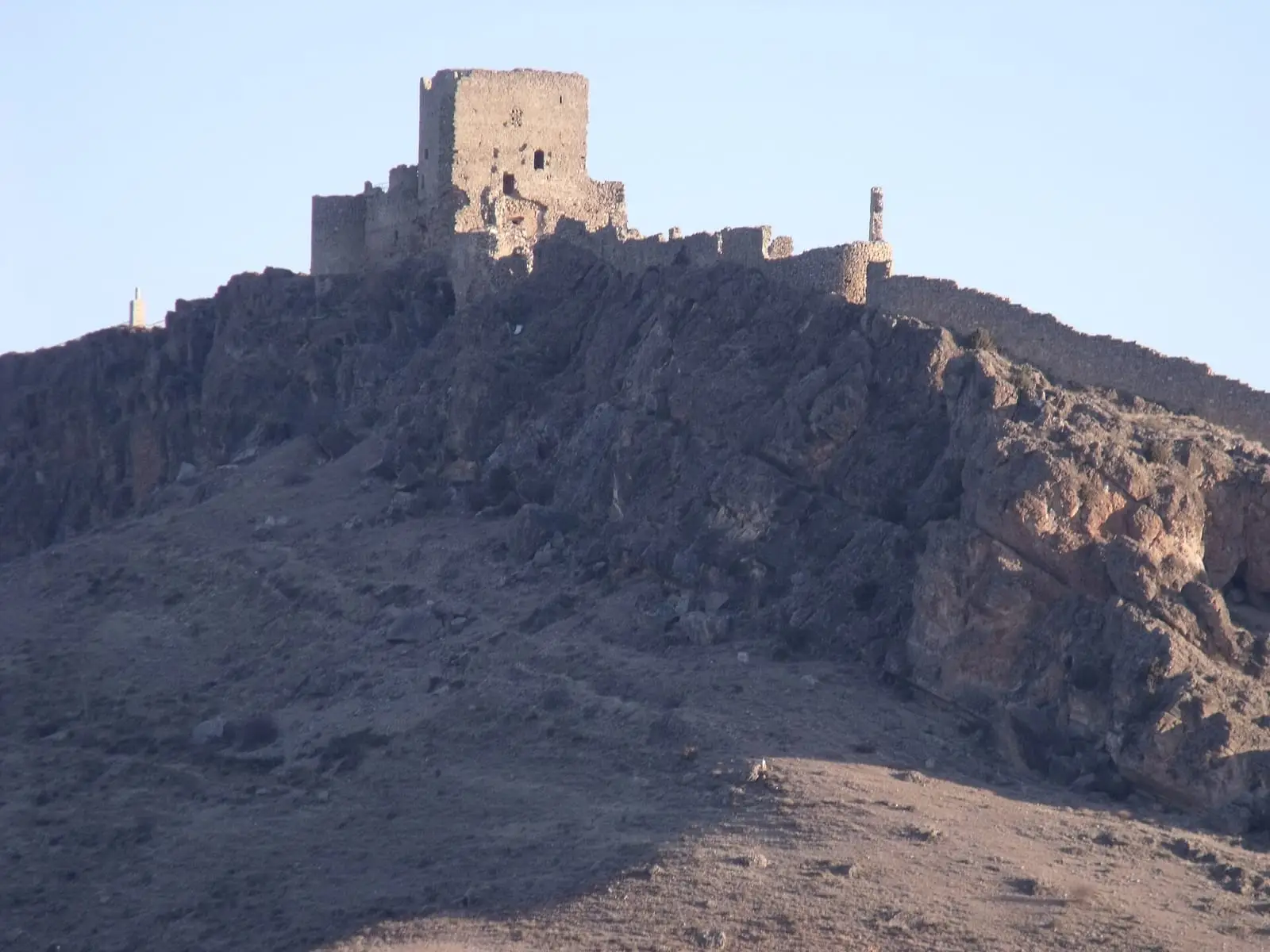
Moya castle stands between the Albacara and fourth enclosure of the walled town that gave the marquisate of Moya its name. In April 1975 the BOE announced a fifth auction of its ruins, with a starting price of 50,000 pesetas. The hill also has an Iberian settlement of up to 13 ha.
- Municipality
- Moya
- Castle
- Moya
- Marquisate of Moya
- Walled town
The town’s fortress
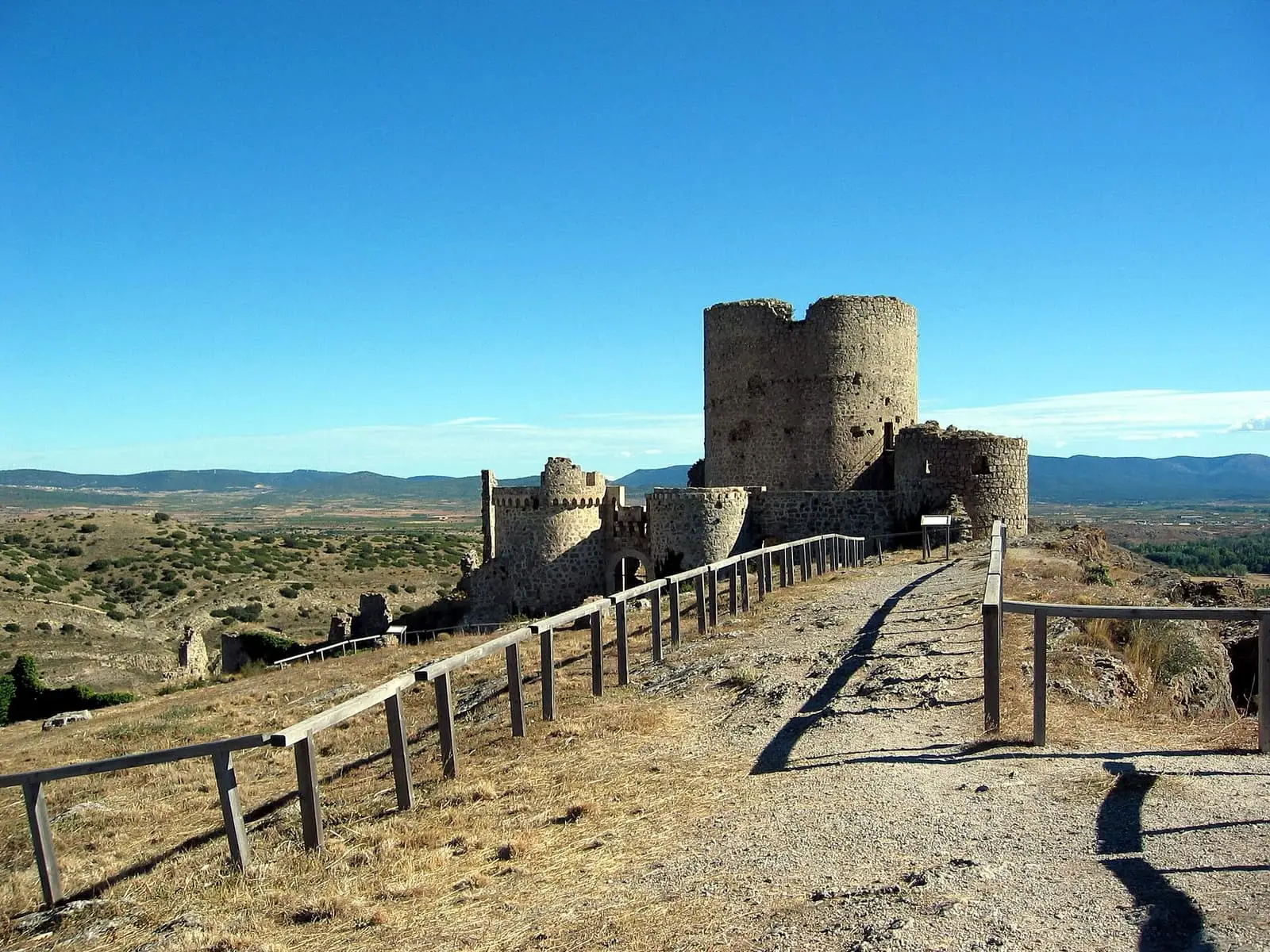
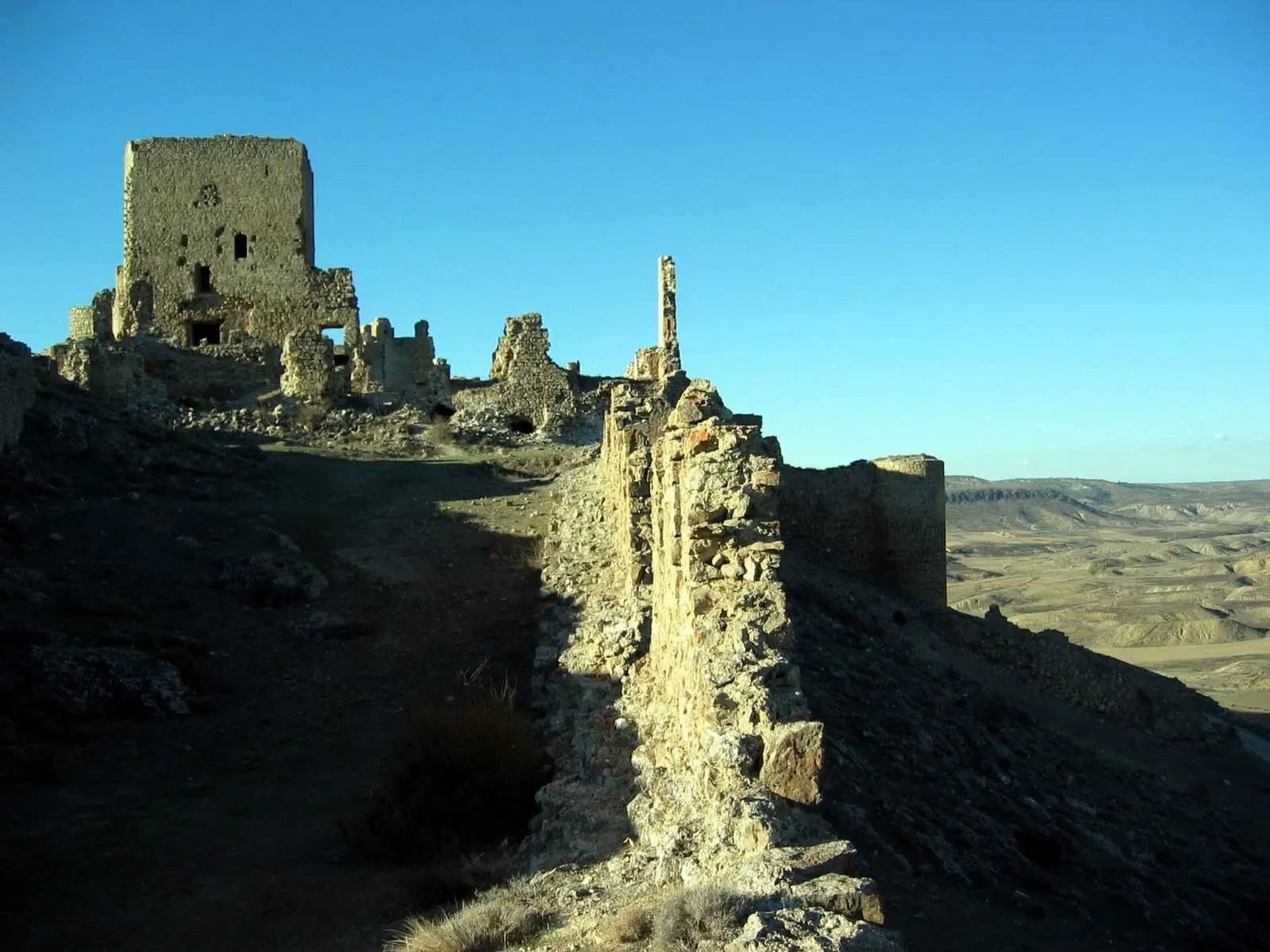
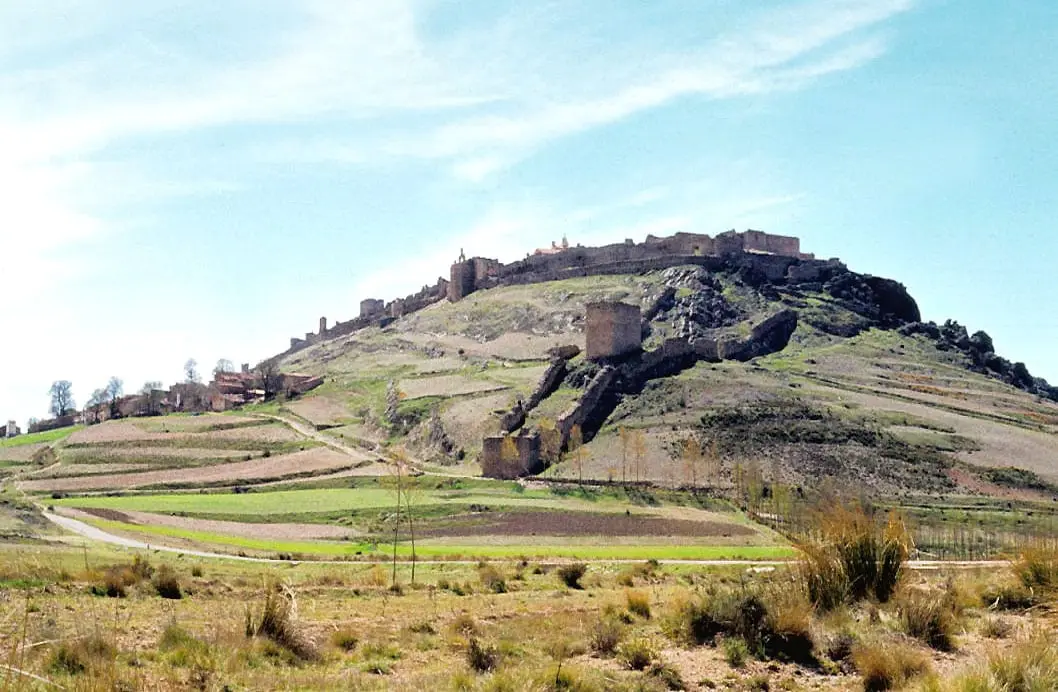
Moya castle stands between the Albacara and fourth enclosure of the walled town that named the marquisate. The town is surrounded by five enclosures and eight gates, and the coracha, a wall protecting access to water, descends the north-eastern slope, with Torre del Agua and Torre de San Roque. Materials and techniques date the walls between the Middle Ages and Renaissance.
The castle belongs to the Moya historic ensemble, protected since 1982 as a historic-artistic ensemble.
The palace hiding the tower
In December 2020 work began to consolidate the keep and nearby walls and make the ascent safe, its 1980s walkways badly deteriorated. The accompanying archaeologists found more than expected. Old photographs, some from the 1930s, showed a two- or three-storey palace above the entrance towers, hiding much of the keep: the 15th-century castle became a residence in the early modern period and looked that way for about three centuries, until weaker walls fell and the castle reappeared. They found the beginnings of stairs to another floor, firing chambers linked to the first marquis, Andrés de Cabrera, a paved room predating the palace and a band of Talavera-type tiles from the 17th or 18th century. Also signs of a fire: a layer about forty centimetres thick at the entrance and fire traces beneath plaster. It could not be dated, because the layer may have been brought as fill, and need not be identified with the 1835 Carlist attack. After losing a medieval floor structure, the ground floor was covered with a large barrel vault. In September 2021 the tower was already shown with signs.
A castle at auction
In April 1975 the castle ruins were auctioned for the fifth time, for 50,000 pesetas. The buyer is unknown. In 2008–2009 the Ministry of Public Works and regional government signed an agreement for work on the wall and Concepcionistas convent.
Before the castle
An Iberian settlement lay beneath the castle, its size hard to establish because the medieval fortress covers it; remains cluster at the summit’s southern end. Beside it, on Cerro Viejo, is another of about 8 hectares.
Plan your visit
Before you travel
The town is deserted, a hillside ruin with changes of level and unstable walls. Stay on the paths and do not climb walls. Ask the town hall about access to restored areas.
Combine with
The charter, captives’ hospital and depopulation are described in Moya.


From the archive
Frequently asked questions
Which enclosures does the town have?
According to Castilla-La Mancha's heritage catalogue, five walled enclosures and eight gates; on the north-eastern slope the coracha, a wall protecting access to water, has Torre del Agua and Torre de San Roque.
What preceded the castle?
Marín Rubio records an Iberian settlement of up to 13 ha at the castle, but notes that the medieval castle makes its boundaries difficult to establish.
Carry on from here
Lands and landscapes
From here, follow the memory of the land
These readings connect Moya castle with the stories, the work and the villages around it.
This place through time
Which eras you can read here
A single place can keep traces of several periods. These layers connect what you see with the atlas's stories.
Where it is
Where the data on this page come from
- Name
- «Ruinas de la antigua villa medieval de Moya» source consulted
- Ministerio de Educación Nacional: «Decreto de 22 de abril de 1949 sobre protección de los castillos españoles» (1949) source consulted
- Jefatura del Estado: «Ley 16/1985, de 25 de junio, del Patrimonio Histórico Español» (1985) source consulted
- España. Ministerio de Cultura: «Real Decreto 2726/1982, de 3 de septiembre, por el que se declara conjunto histórico-artístico la villa de Moya (Cuenca)» (1982) source consulted
- Dirección General de Turismo, Comercio y Artesanía de Castilla-La Mancha: «Moya» source consulted
- Marín Rubio, Esther: «Una hipótesis sobre la organización del territorio en época ibérica en la cuenca del río Algarra» (2004) source consulted
- Municipality (INE code)
- «Ruinas de la antigua villa medieval de Moya» source consulted
- Ministerio de Educación Nacional: «Decreto de 22 de abril de 1949 sobre protección de los castillos españoles» (1949) source consulted
- Jefatura del Estado: «Ley 16/1985, de 25 de junio, del Patrimonio Histórico Español» (1985) source consulted
- España. Ministerio de Cultura: «Real Decreto 2726/1982, de 3 de septiembre, por el que se declara conjunto histórico-artístico la villa de Moya (Cuenca)» (1982) source consulted
- Dirección General de Turismo, Comercio y Artesanía de Castilla-La Mancha: «Moya» source consulted
- Marín Rubio, Esther: «Una hipótesis sobre la organización del territorio en época ibérica en la cuenca del río Algarra» (2004) source consulted
«Source consulted»: the primary source has been read. «Reference located»: the source has been identified but not yet read. «Open question»: the figure needs confirmation.