Viewpoint · Villalba de la Sierra
Villalba de la Sierra viewpoints
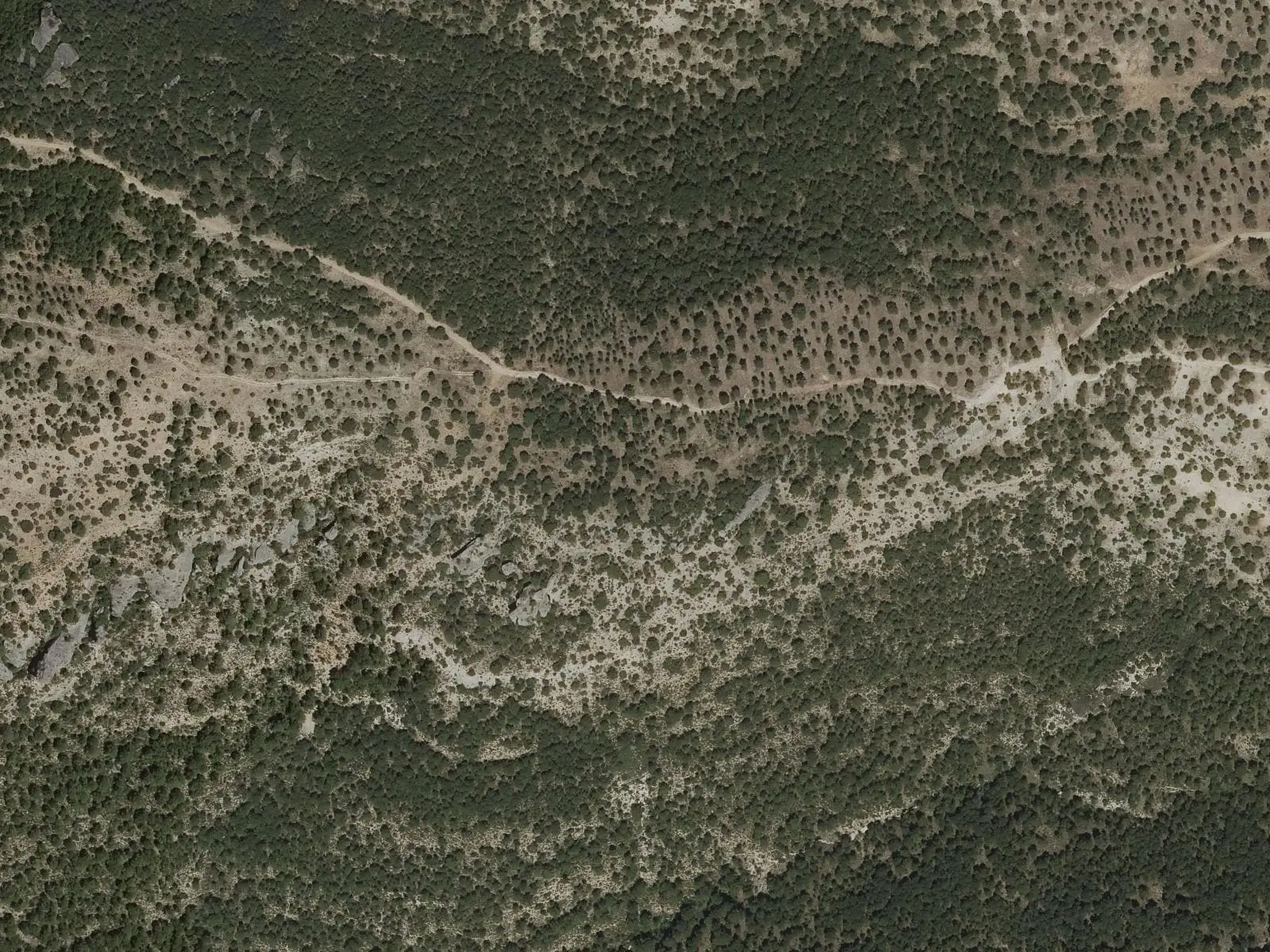
Above Villalba de la Sierra, in the Natural Park, a limestone ridge links seven viewpoints over the Júcar: Villalba, at almost 1,300 m, and Santa María, La Cresta, El Pico, El Estrecho, El Repetidor and El Salto, the last above the 1926 hydroelectric station. The PR-CU 33, the Piedra Yunque route, passes below.
- Municipality
- Villalba de la Sierra
- Viewpoints
- Villalba de la Sierra
- Júcar
- Peña del Águila
- PR-CU 33
A ridge above the river
East of Villalba de la Sierra, the ground rises from the Júcar river plain to the Natural Park’s muelas, flat-topped limestone hills. The first lookout, Villalba viewpoint, stands at almost 1,300 m, overlooking the Océñigo, La Castilla and Santa María ravines. Higher up, along the Loma de las Resineras, you reach Peña del Águila.
A path then follows a natural ridge with five viewpoints close together: Santa María, La Cresta, El Pico, El Estrecho and El Repetidor, the last in a meadow area. The final one, El Salto viewpoint, overlooks the hydroelectric station’s settlement: the Salto de Villalba.
Francisco Javier Rodríguez Laguía, of the CuenCANP association, gives the viewpoint’s elevation as 1,283 metres and that of nearby Cerro Serrano as 1,303. Using Google Earth, he has calculated that on very clear days the Ocejón, in Guadalajara, might be visible around 140 kilometres away. The ascent passes through black pine and the descent through holm oaks, called chaparros here, beside the ruins of a building known as the Tina del Escalón. Below runs the Camino del Agua, following the conduit bringing drinking water to Cuenca from Arroyo Frío (Rollo Frío in the recording).
Plan your visit
Before you travel
These viewpoints do not form an approved trail: the official one in the area is the PR-CU 33, a PR (short-distance trail) sharing the start. The El Estrecho passage is difficult and can be dangerous, and the final descent is steep.
Combine with
The Piedra Yunque and the Ventano del Diablo. Beside the village is a stargazing point: the Serranía has been a Starlight destination since 2018.
Frequently asked questions
What are the seven viewpoints?
Villalba, at almost 1,300 m, above the Océñigo, La Castilla and Santa María ravines; and, along the ridge, Santa María, La Cresta, El Pico, El Estrecho, El Repetidor and El Salto.
Is it dangerous?
The passage at El Estrecho viewpoint is difficult and can be dangerous; proceed with great caution or leave it out.
Carry on from here
Lands and landscapes
From here, follow the memory of the land
These readings connect Villalba de la Sierra viewpoints with the stories, the work and the villages around it.
Where it is
Where the data on this page come from
- Name
- Cadena SER Cuenca source consulted, 5 October 2026
- Municipality (INE code)
- Cadena SER Cuenca source consulted, 5 October 2026
«Source consulted»: the primary source has been read. «Reference located»: the source has been identified but not yet read. «Open question»: the figure needs confirmation.