Archaeological site · Fuentes
Lo Hueco site
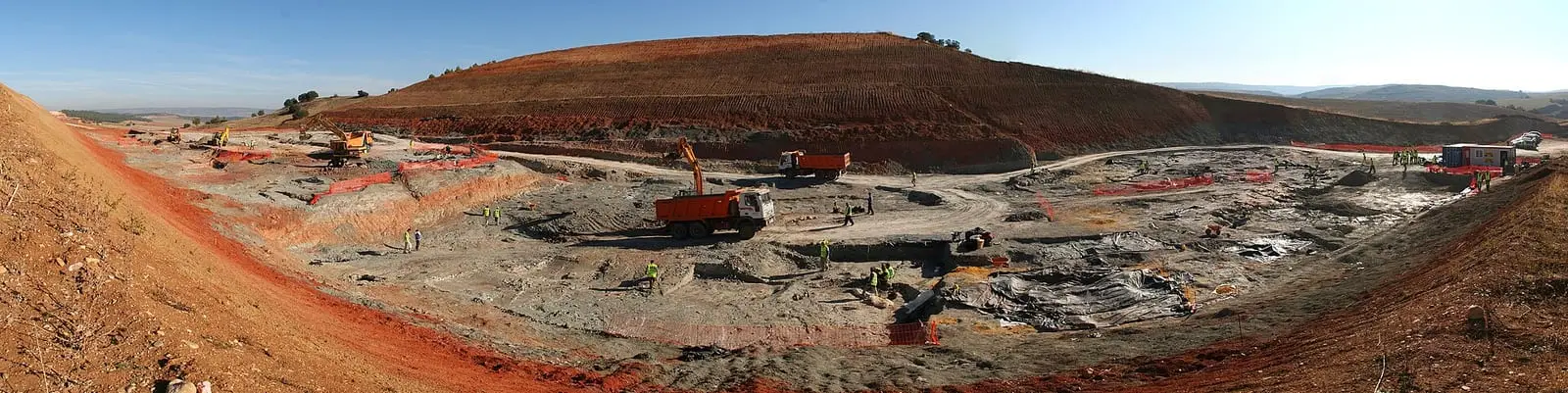
Lo Hueco is an Upper Cretaceous site (Campanian–Maastrichtian) uncovered in May 2007 during construction of the Madrid–Valencia AVE high-speed railway in Fuentes. The 2013 publication records over 8,500 macroremains, including theropod, ornithopod and titanosaur dinosaurs. The site was removed and can no longer be seen on the ground.
- Municipality
- Fuentes
- Dinosaurs
- Cretaceous
- Lo Hueco
- Fuentes
- Palaeontology
A discovery during construction
In May 2007, during archaeological monitoring of the AVE high-speed railway works towards Levante, dinosaur bones emerged as a small hill between Arcas del Villar and Fuentes was cut down. Nothing comparable is known in the surrounding area.
What it was
It dates from the end of the Cretaceous, the dinosaurs’ last few million years. Rivers and waterlogged areas then occupied the site, leaving grey, brown, red and green marls and mudstones. These yielded several dinosaurs, crocodiles and turtles, footprints, fish, amphibians, reptiles and ferns, in exceptional density and variety. It is one of the most important fossil vertebrate discoveries in Spain and Europe: more than 8,500 large fossils, including theropods, ornithopods and titanosaurs. Other counts refer to more than 14,000 remains collected in six months of excavation.
What remains
The site extended around 200 metres in length and 10 in height, at around 1,050 metres above sea level. It was fully excavated and removed: nothing remains to see on the ground.
The excavation continuing in a warehouse
Because the fossils had to be removed quickly during construction, many were extracted in blocks of rock still unopened in 2022. Francisco Ortega, of the UNED, called this work indoor excavation: it takes place in the Cuenca warehouse where the museum stores the collection, while other remains are prepared in laboratories at the Universidad Complutense and the UNED in Las Rozas. That year, with a grant of just over twenty thousand euros from the regional government of Castilla-La Mancha, they were comparing Lo Hueco with Poyos, in Guadalajara, where there is a nesting area with many dinosaur eggs. Both lie in the same formation, Villalba de la Sierra, from the late Cretaceous, but researchers suspected they were not from the same time and wanted to test this using remains of sauropods and large carnivores from both sites. Lo Hueco has also yielded turtle shells with marks interpreted as being from leeches, and bones bearing insect traces, helping establish how the carcasses decomposed.
Plan your visit
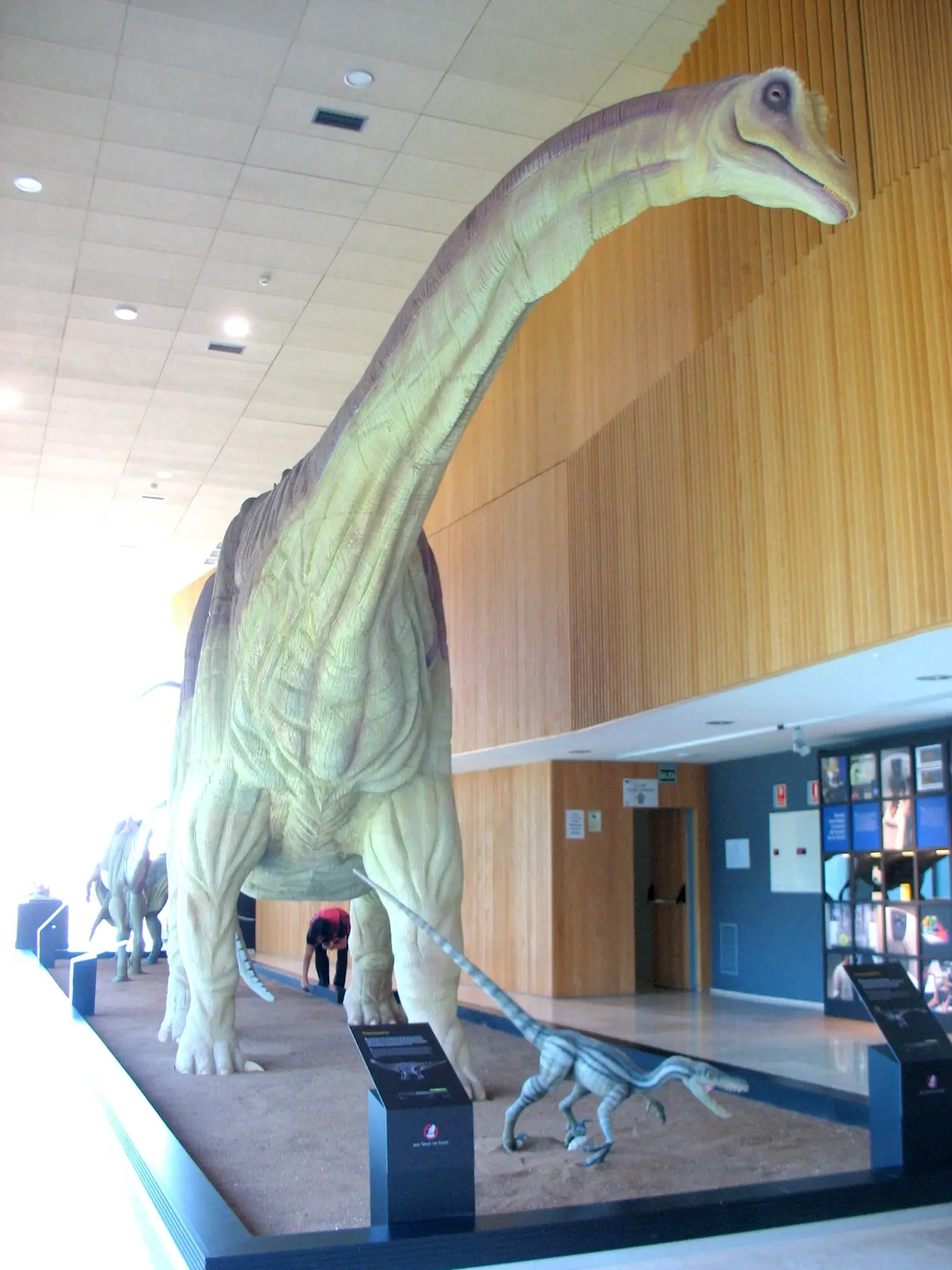
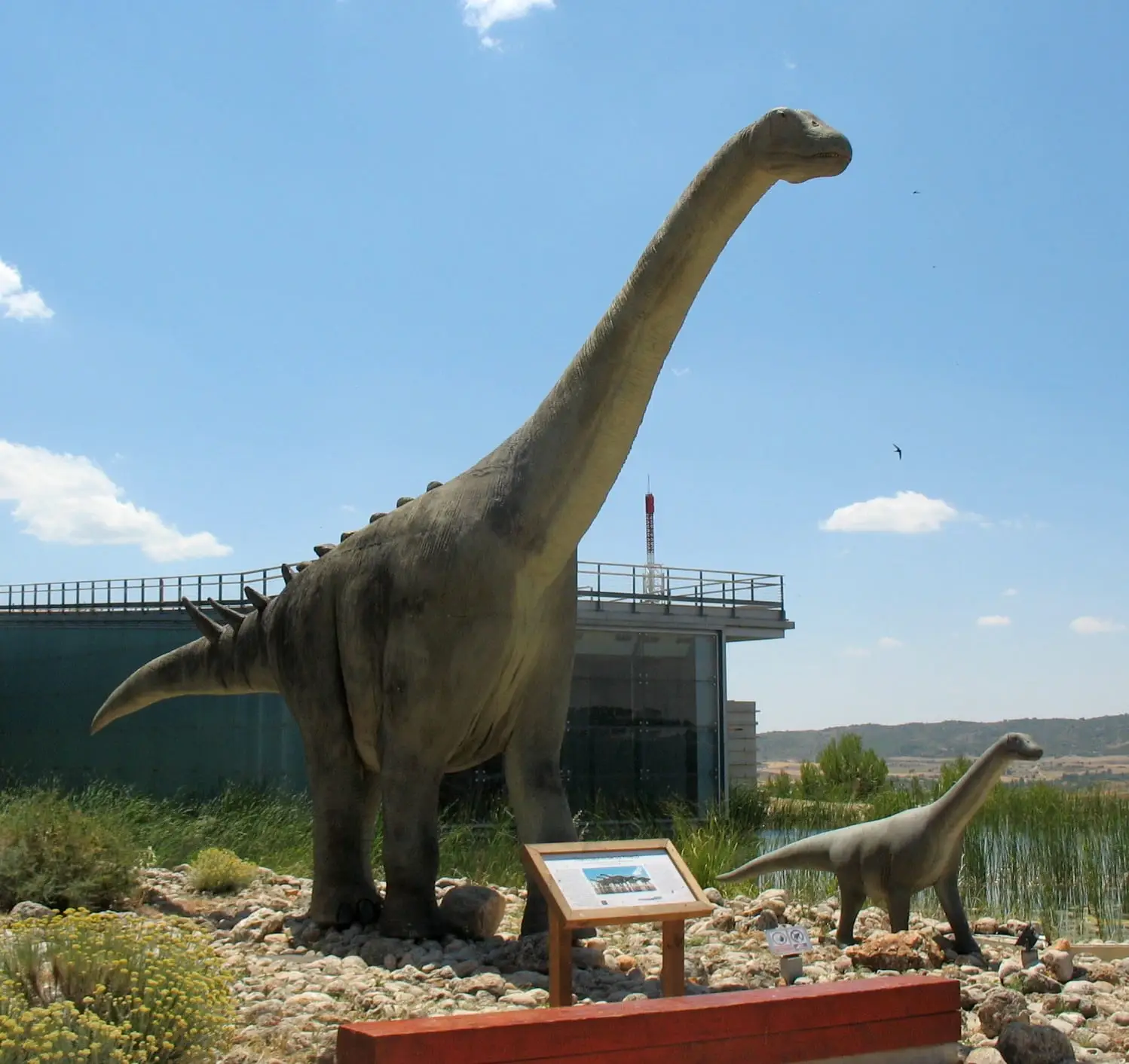
To learn about it, go to the exhibition centre in Fuentes, on the Cuenca Dinosaur Route, and the replica of the titanosaur Epi.
Before you travel
Collecting fossils is permitted only for research.
Combine with
Another site in the province, much older, is Las Hoyas; fossils from both can be seen at Cuenca’s Museo de Paleontología.


Frequently asked questions
Can it be visited?
The site itself was removed. The exhibition centre in Fuentes tells its story, forms part of the Cuenca Dinosaur Route, and the village has a replica of the titanosaur Epi.
What was found?
Fish, amphibians, turtles, lizards, crocodiles, pterosaurs and dinosaurs, mainly from a sandy channel in the Villalba de la Sierra Formation.
Carry on from here
Lands and landscapes
From here, follow the memory of the land
These readings connect Lo Hueco site with the stories, the work and the villages around it.
This place through time
Which eras you can read here
A single place can keep traces of several periods. These layers connect what you see with the atlas's stories.
Where it is
Where the data on this page come from
- Name
- Rewilding España source consulted, 4 October 2026
- Diputación Provincial de Cuenca source consulted, 4 October 2026
- Junta de Comunidades de Castilla-La Mancha source consulted, 4 October 2026
- Junta de Comunidades de Castilla-La Mancha source consulted, 4 October 2026
- Instituto Geológico y Minero de España: «IB113: Yacimiento de dinosaurios del Cretácico superior Lo Hueco» (2013) source consulted
- Callapez, P. M. y otros: «Moluscos del yacimiento paleontológico de “Lo Hueco” (Cretácico Superior, Cuenca, España): Implicaciones paleoambientales y secuenciales» (2013) source consulted
- Municipality (INE code)
- Diputación Provincial de Cuenca source consulted, 4 October 2026
- Junta de Comunidades de Castilla-La Mancha source consulted, 4 October 2026
- Instituto Geológico y Minero de España: «IB113: Yacimiento de dinosaurios del Cretácico superior Lo Hueco» (2013) source consulted
- Callapez, P. M. y otros: «Moluscos del yacimiento paleontológico de “Lo Hueco” (Cretácico Superior, Cuenca, España): Implicaciones paleoambientales y secuenciales» (2013) source consulted
«Source consulted»: the primary source has been read. «Reference located»: the source has been identified but not yet read. «Open question»: the figure needs confirmation.