Heritage · Cañete
Church of Santiago, Cañete
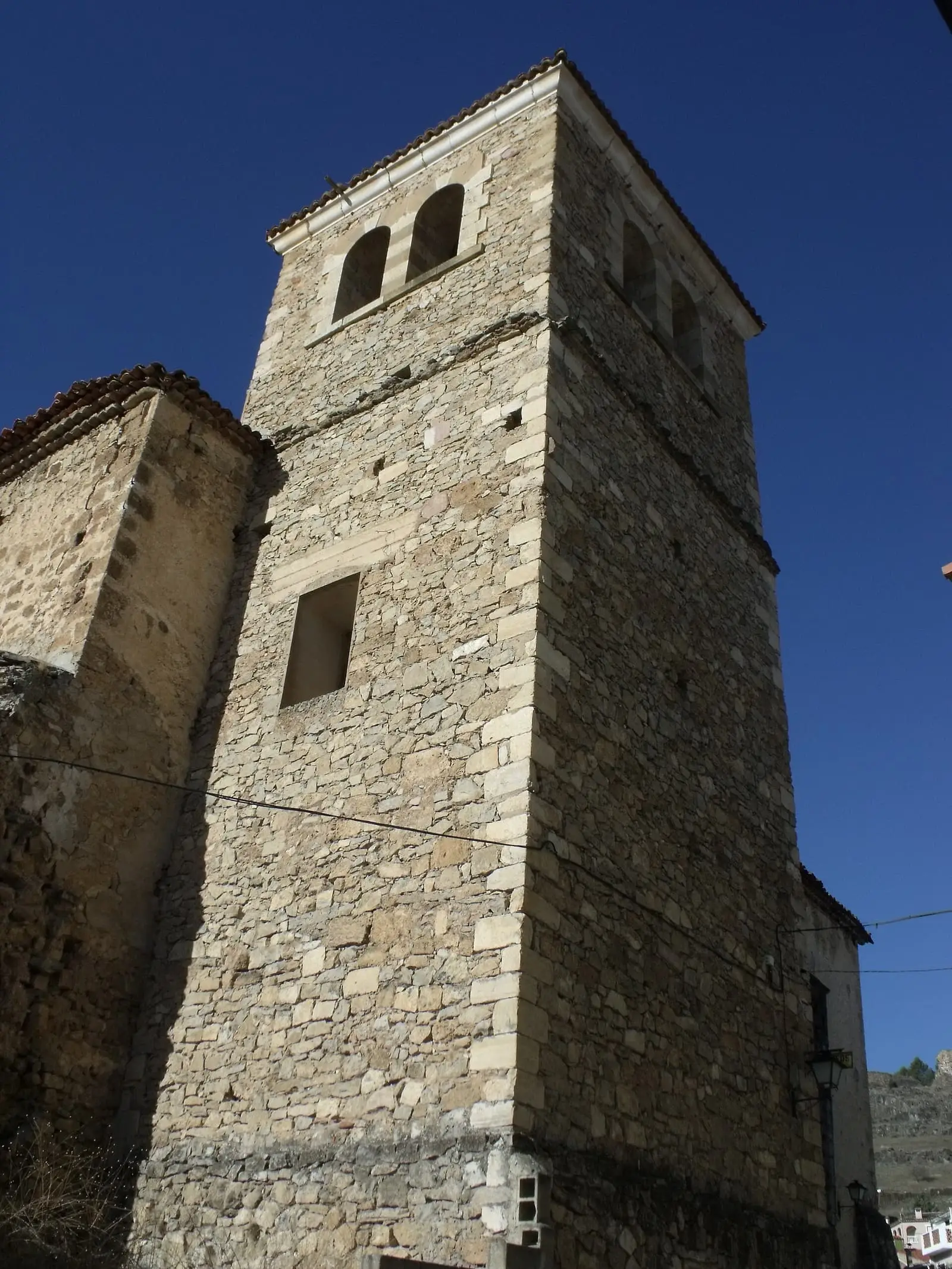
Santiago church is the sole survivor of Cañete's three parish churches: San Andrés and Santa María have disappeared. It stands at the town's south-eastern end, built on the Muslim wall, and once adjoined the Hurtado de Mendoza palace. Almost all the present building dates from the 17th and 18th centuries, with a nave and two aisles and an unusual north–south orientation.
- Municipality
- Cañete
- Santiago church
- Rural Baroque
- Cañete
- Parishes
- Hurtado de Mendoza
The only parish church left
Santiago church is the only one of Cañete’s parish churches still standing. It was probably built in the 12th or 13th century, but only a few Gothic remains inside and in the doorway survive from that time. Almost everything visible dates from the 17th and 18th centuries, in Cuenca’s rural Baroque style, built between 1600 and 1760 when people and money were scarce.
A church on the wall
It has a nave and two aisles, very broad but low for their width because of limited resources, with brick groin vaults on strong piers. The doorway is a very wide flat arch with a central mullion, and the well-designed tower is not very tall. An unusual feature: it faces from north to south.
It stands at the town’s south-eastern corner, and its east and south walls are two stretches of the Muslim town wall, joined by a round tower. It could only be built against it once the wall had lost its military role. It once adjoined the now vanished palace of the Hurtado de Mendoza family, lords and later marquises of Cañete. The vaults exert more thrust than the building can withstand: the entire west wall has given way and visibly leans outwards.
Plan your visit
Before you travel
Ask the town council when it is open.
Combine with
The church of San Julián and the Plaza Mayor.
Frequently asked questions
Which parish churches did Cañete have?
Three: Santiago, San Andrés and Santa María. The latter two disappeared, leaving Santiago as the only survivor.
What is it like inside?
A very broad hall church with a nave and two aisles, covered by brick groin vaults on sturdy cruciform piers.
Carry on from here
Lands and landscapes
From here, follow the memory of the land
These readings connect Church of Santiago, Cañete with the stories, the work and the villages around it.
Where it is
Where the data on this page come from
- Name
- Ayuntamiento de Cañete source consulted, 5 October 2026
- Municipality (INE code)
- Ayuntamiento de Cañete source consulted, 5 October 2026
«Source consulted»: the primary source has been read. «Reference located»: the source has been identified but not yet read. «Open question»: the figure needs confirmation.