Heritage · Villar del Humo
Peña del Escrito
Peña del Escrito consists of three sandstone cavities with 170 figures in total, beside a seasonal channel draining towards the River Mesto, 7 km north-west of Villar del Humo. Peña del Escrito I has a doe with a spear or arrow embedded in its back; Peña del Escrito II contains 138 figures.
- Municipality
- Villar del Humo
- Rock art
- Peña del Escrito
- Levantine
- Schematic
Three sandstone cavities
Peña del Escrito lies around 7 km north-west of Villar del Humo, beside a seasonal channel descending to the River Mesto. It contains 170 figures in three sandstone cavities.
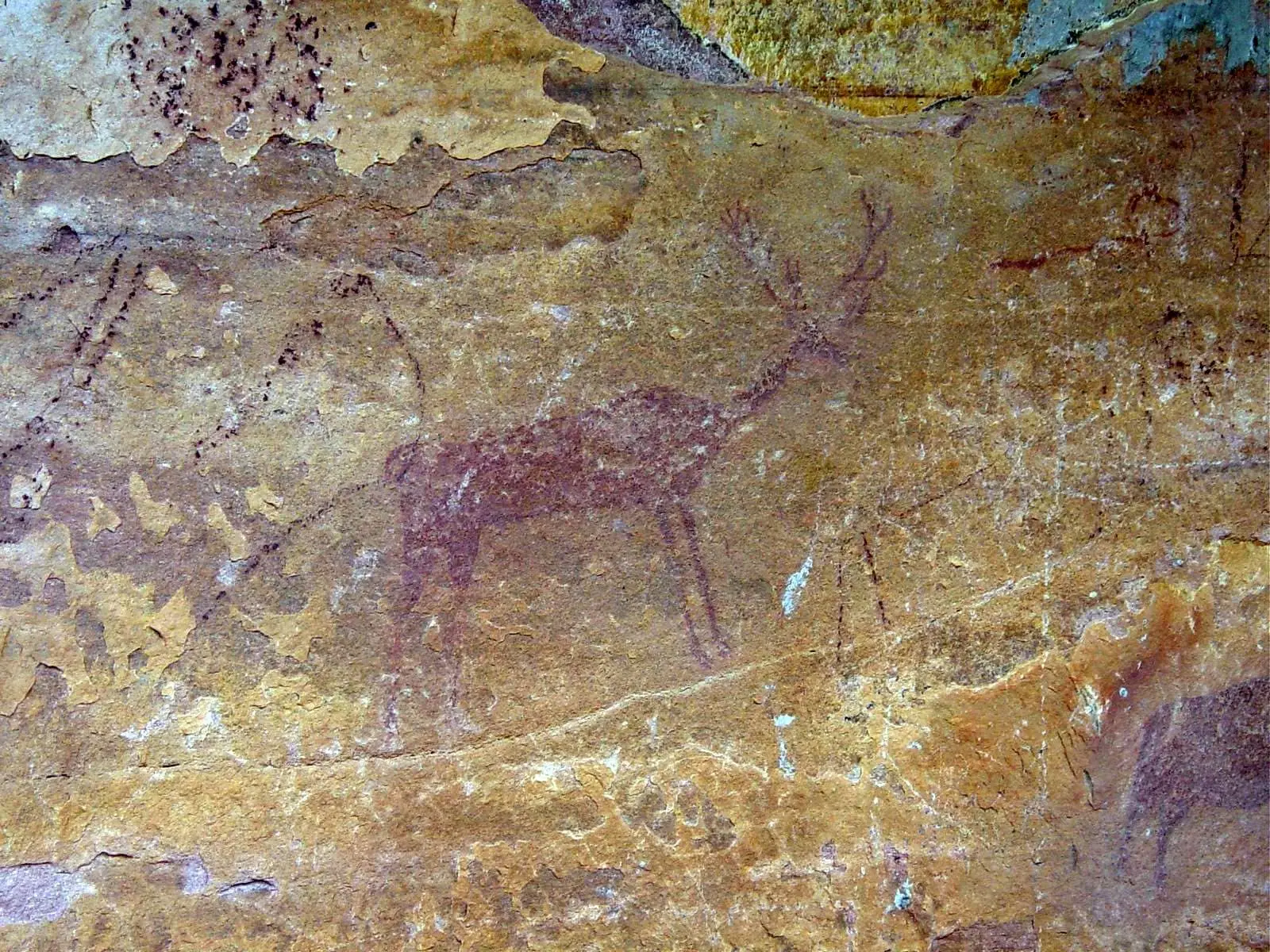
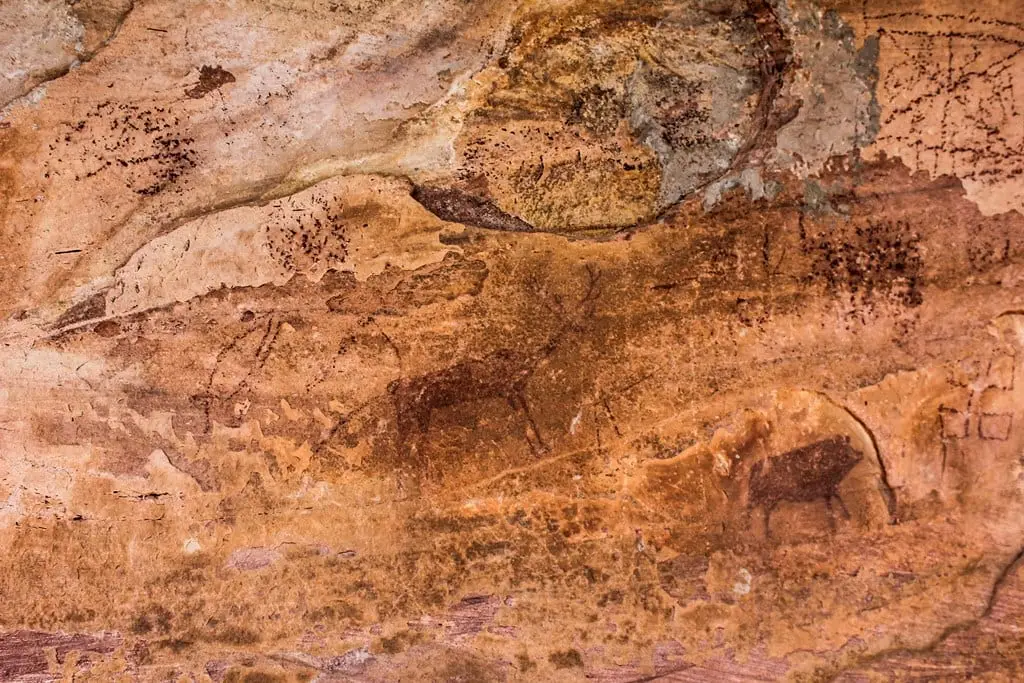
At Peña del Escrito I, all the figures occupy a single panel beneath a strongly projecting overhang. To the left are almost complete Levantine-style animals: goat, deer, bull, doe and wild boar. A doe with an arrow embedded in its back stands out, with the others arranged around it. In the centre are another group of animals and a red cat painted in modern times; the rest are small schematic figures.
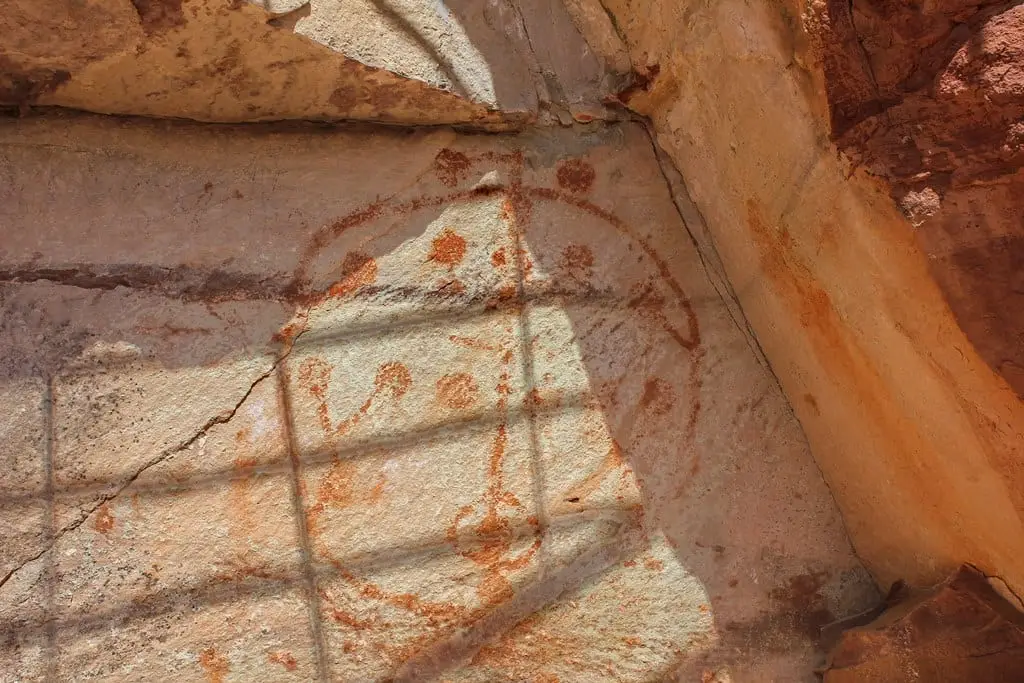
Peña del Escrito II, around 20 metres to the right and 10 lower down, is the most complex group, with 138 figures. It has two parts distinguished by the colour of the rock and paint: to the left, Levantine scenes in browns and light reds; to the right, schematic figures in orange.
Several millennia
The shelter was a symbolic place for millennia, from the Epipalaeolithic until close to the Iron Age, when the schematic figures were painted. It forms part of the Villar del Humo group, a World Heritage Site.
Plan your visit
Before you travel
The paint is fragile: do not touch or wet it.
Combine with
Marmalo and Selva Pascuala, the group’s other rock shelters.


From the archive
Frequently asked questions
What is at Peña del Escrito II?
The most complex shelter, with 138 figures on a panel divided into two sectors: Levantine figures in brown and red tones to the left and orange schematic figures to the right.
Which animals appear?
At Peña del Escrito I, naturalistic Levantine-style goat, deer, bull, doe and wild boar.
Carry on from here
Lands and landscapes
From here, follow the memory of the land
These readings connect Peña del Escrito with the stories, the work and the villages around it.
Where it is
Where the data on this page come from
- Name
- Ministerio de Cultura · ARAMPI source consulted, 5 October 2026
- Municipality (INE code)
- Ministerio de Cultura · ARAMPI source consulted, 5 October 2026
«Source consulted»: the primary source has been read. «Reference located»: the source has been identified but not yet read. «Open question»: the figure needs confirmation.