Heritage · Cañete
Puerta de la Virgen
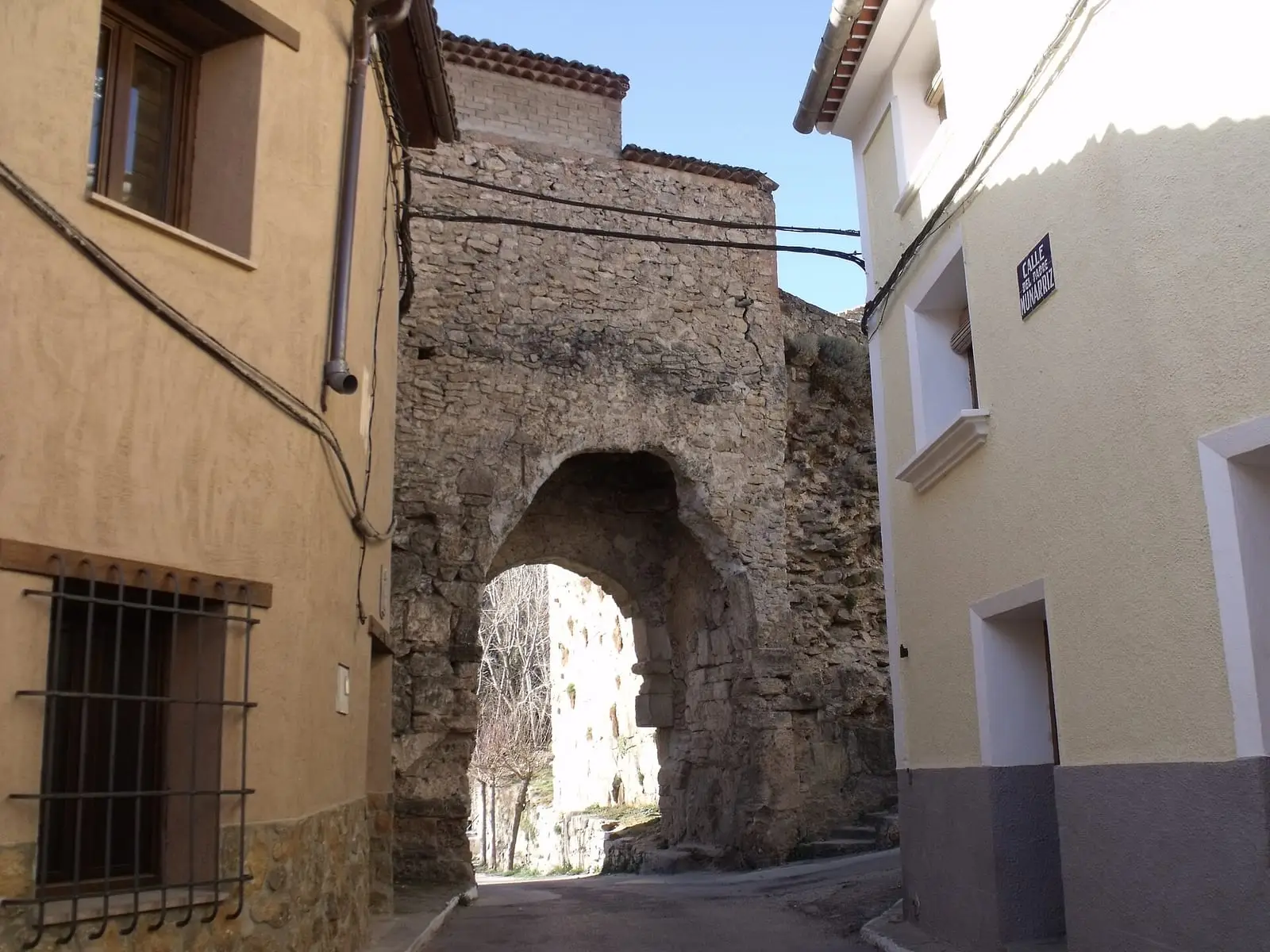
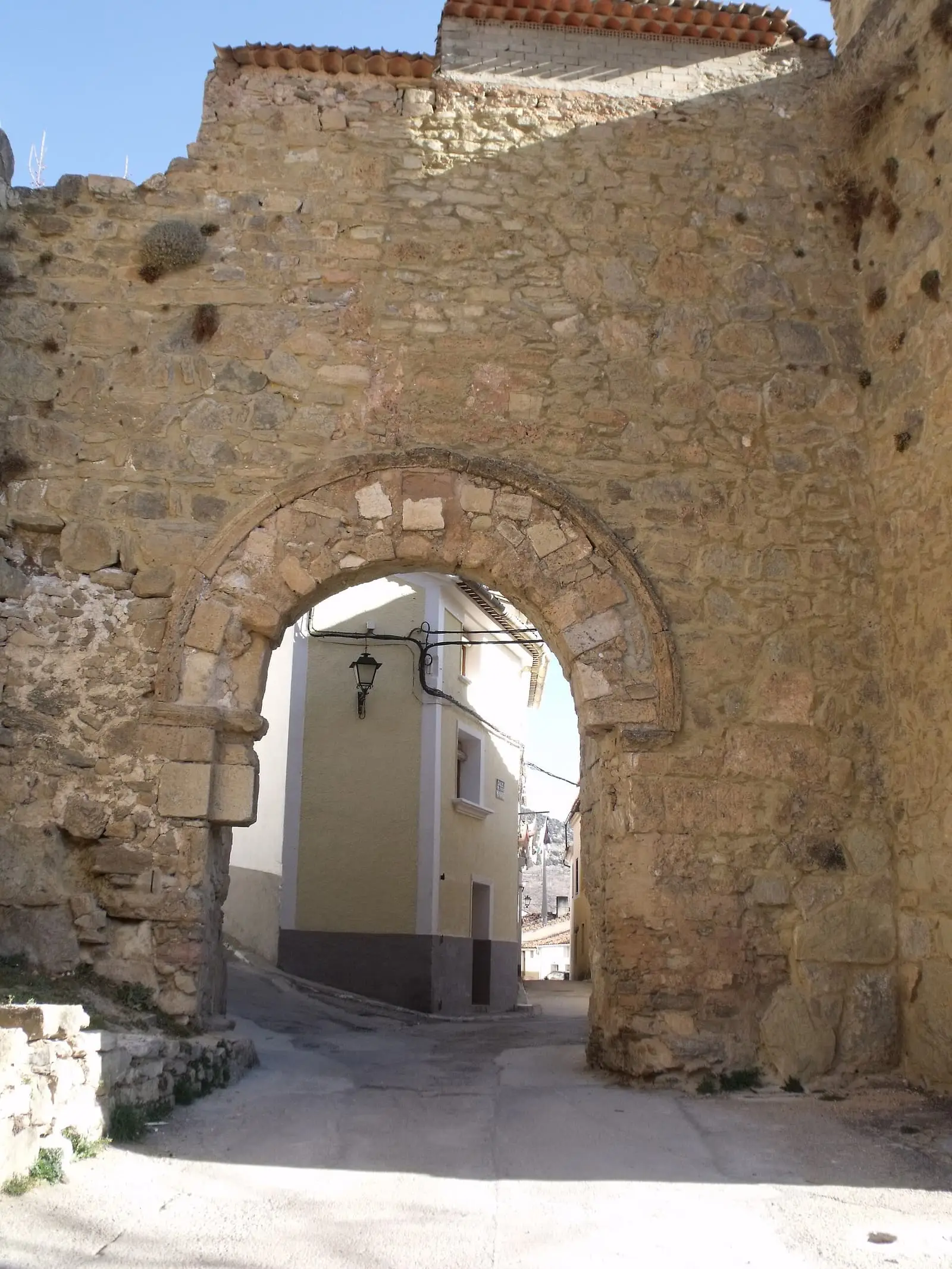
Puerta de la Virgen is the southern gate in Cañete's wall, with a direct rather than bent entrance, an Islamic work of the 10th century altered after the Christian conquest. It takes its name from the Virgen de la Zarza hermitage, beside the traditional site of the patron saint's apparition. All streets in the southern half of the old town converge on it.
- Municipality
- Cañete
- Puerta de la Virgen
- Town wall
- Virgen de la Zarza
- Cañete
- Caliphate
The southern gate
This is the southern gate in the wall of Cañete, one of the three main gates alongside Las Eras and San Bartolomé. It led to the river plains to the west, beyond the castle hill, and to upland paths and livestock tracks towards the upper Guadazaón. All streets in the southern half of the village descend towards it.
It is a 10th-century Islamic work, like the town wall, altered after the Castilian conquest, perhaps in the 12th or early 13th century. Unlike the other two, it has neither a bent passage nor towers: it opens directly through the wall, defended by a projection of the wall on one side and a projecting wall on the other. It may originally have been a postern, a small gate defended by concealment, like Puerta del Rey. The bell gable of the first Virgen de la Zarza hermitage was built above the right-hand wall.
What can be seen
Its only ornament is a round moulding on the arch, which once led it to be considered Romanesque. There is an almost erased inscription on the right jamb. It is in poor condition: pieces have been removed, some through looting and others to allow vehicles through.
Plan your visit
Combine with
Beside it, the Virgen de la Zarza hermitage; the other gates are Las Eras and San Bartolomé.

Frequently asked questions
What is the gate like?
A direct entrance through the wall, with a clear span of 2.5 m and a height of 4 m to the keystone. It closed with two double-leaf gates, whose pivot sockets survive, and has two round arches with a barrel vault replacing the Muslim arch.
Why is it called that?
After the nearby Virgen de la Zarza hermitage. Legend says the iron-bound gate leaves were given to Castielfabib in exchange for relinquishing the image, and it has been called La Virgen ever since.
Carry on from here
Lands and landscapes
From here, follow the memory of the land
These readings connect Puerta de la Virgen with the stories, the work and the villages around it.
Where it is
Where the data on this page come from
- Name
- Ayuntamiento de Cañete source consulted, 5 October 2026
- Municipality (INE code)
- Ayuntamiento de Cañete source consulted, 5 October 2026
«Source consulted»: the primary source has been read. «Reference located»: the source has been identified but not yet read. «Open question»: the figure needs confirmation.