Episode · 1940s – 1970s · War, maquis and post-war
May songs, conscripts and dancing in Valsalobre
In Valsalobre people danced on Sundays in a hall in the Solano neighbourhood, young men sang mayos to the young women and auctioned them for measures of wine, and on Easter night a Judas effigy was hung from an enormous pine. The year's conscripts said farewell in song. Villagers tell the story in videos by Vestal Etnografía.
On this page 9 sections
A village with many festivities
The villagers of Valsalobre remember a full calendar. Santiago, the patron saint, on 25 July; Santa Ana the following day; the Virgin’s feast in August and San Roque. And San Blas, San Isidro, San Antonio, New Year, the May Cross, when the priest blessed the fields in procession. Everything was celebrated, they say.
Dancing in El Solano
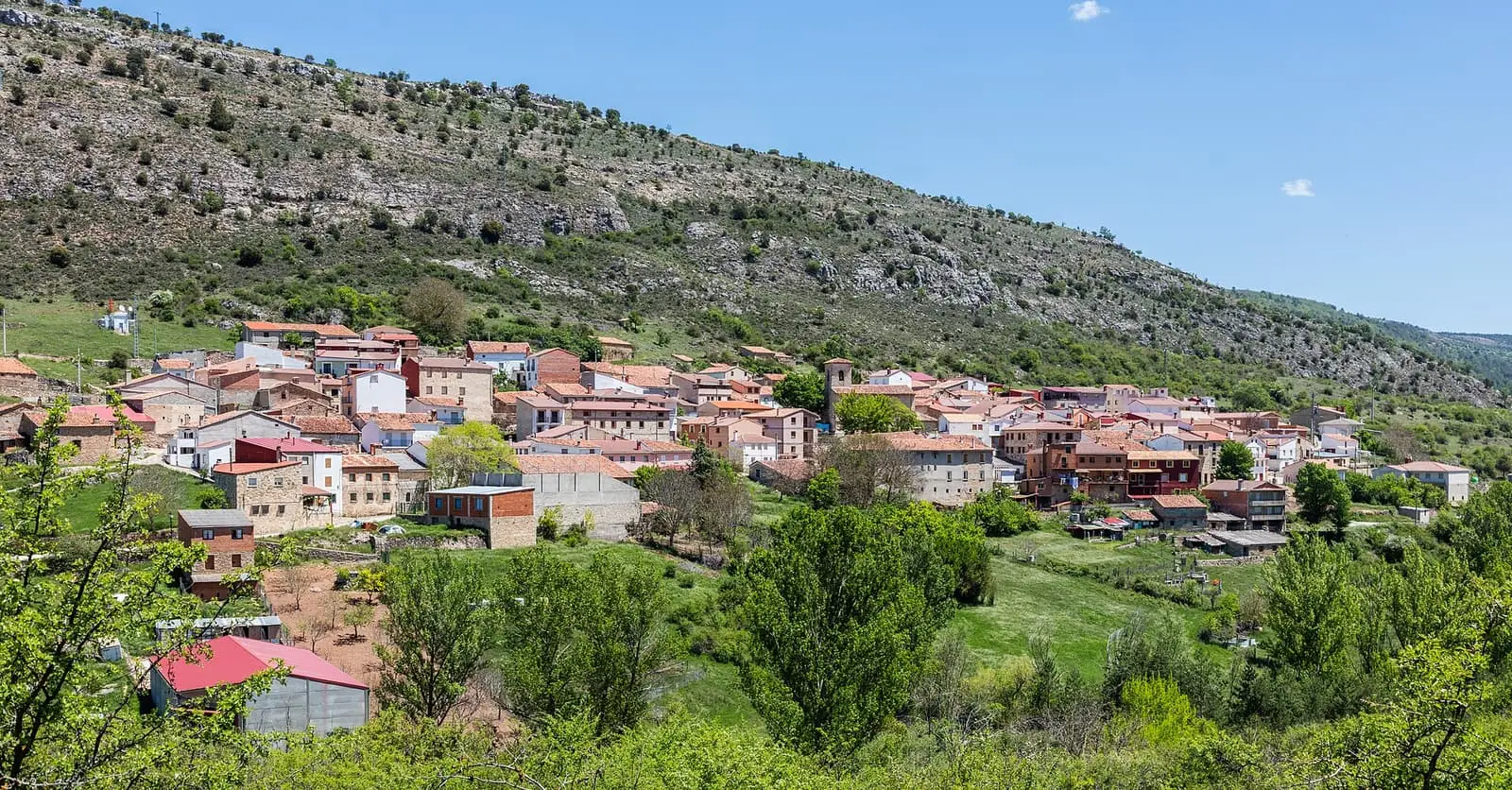
The village had two neighbourhoods, El Solano to the north and El Muladar to the south. In El Solano, on the ground floor of a council-owned house, there was a hall where people danced on Sundays. At first, with a guitar, cymbals and whoever would sing; young men went round the village playing, and the girls knew there was a dance and got ready. Then came the accordion: the first player was a musician from Peñalén, also the sacristan and church organist, and later an accordionist from Carrascosa. One man says his father, who got on very well with the young men, once brought a barrel piano from near Sacedón by cart, and had to return it because it was not a success.
Dancing had its rules. When the music began, the girls paired up and the boys, also in pairs, went to ask them to dance. If the girls said no, they had to turn away. Meeting a girl in the street was forbidden, so the dance was where people talked and courtships began. One woman remembers her father not letting her stay out after nine.
There were times when dancing depended on permission. One interviewee says the priest would arrive and ask for the government permit, and if there was none, there was no dance, even if the village had nothing to eat. And those in charge there, he says, were the secretary, the priest and the Guardia Civil. It is his memory.
The mayos
In spring the young men sang mayos, May songs. The youngest sang them from the threshing floors; the older ones went from house to house to the young women. Each mayo was auctioned for cuartillos, measures of wine: each young man’s friends bid, and whoever offered most later danced with the young woman, even if she did not like him. Afterwards there was dancing and a meal, and they were given eggs and, if possible, a plate of ring-shaped biscuits or something to drink.
One man admits they were mischievous: when they knew a friend liked a girl, they all bid to push up the price. One woman says that one year, because she would not dance with the man who had sung to her, she was given no eggs, and they never spoke again.
During Holy Week, young women went round the houses singing or praying, dressed in mourning, and were given eggs and a bowl of beans, which they later sold in Beteta for the Virgin. Their mothers made their candles.
The quintos
A boy became a young man on entering his call-up year, and the quintos, the year’s conscripts, paid an entry fee, though nobody remembers how much. Before leaving for military service there was a farewell dance. Young women are said to have accompanied the conscripts singing as far as Cañizares, because the scheduled coach went no further: there was still no road. One man says he had no farewell dance because a friend’s mother had died and the village was in mourning, and he learnt only the day before that he had to report to Cuenca.
The Judas pine
On Easter night, the young men hung a Judas effigy from a pine they had cut in the hills: the largest and best, competing each year to surpass the previous one. They dragged it to the village with carts, sometimes two, one in front and one behind. A hole was dug and it was erected. The young men had to guard it all night because those from neighbouring villages came to pull it down for mischief: it was a widespread custom.
One villager dates the last «alto» (tall) Judas pine to around 1965 or 1966: it filled the whole street, with poles joined together, and eight or ten men raised it with forked poles. There were already few of them; there used to be thirty or forty young men. Afterwards the custom continued with a smaller pole, and when there were not enough people the pine was cut and sold on the spot. Today, they say, they put up a thin little pole nobody sees.
Tavern, shop and cards
Many houses had a tavern or grocer’s shop. Men played brisca and tute, card games, with the stove lit. Some sold wine from vats brought from Carrascosa by mule, and fizzy soft drinks came from a factory in Villanueva, with bottles hanging from the pannier. There was no fridge: drinks were cooled in the spring’s trough or in a well dug inside a house. People paid with eggs, and sometimes credit was recorded in a notebook. The interviewees laughingly remember children stealing eggs from home and hiding them behind the church to pay for treats.
The first television arrived in the council premises where the bar is now, and the whole village went down to watch it at night. The picture was poor, and one house’s aerial, with almost half a kilometre of cable, had to be installed above the water well.
Winter bonfires
In winter there were bonfires at house doors or in the neighbourhoods. Old baskets were burnt at San Julián; there were also bonfires for San Antón and Santa Águeda. Children went round the girls’ houses with a doll to be given eggs and money, and then held a party with omelettes. The firewood, they say, was stolen from household woodpiles, and sometimes a hen or rabbit too. Today, they say, little remains of those celebrations because hardly anyone is in the village in winter.
Vocabulary
- Mayo
- A song with which young men serenaded young women in spring, going from door to door, ending in an auction in measures of wine for a dance with her.
- Quinto
- A young man who reached the age for military service. In Valsalobre he was seen off with a dance.
- Pino de Judas
- The largest pine the young men cut in the hills and erected in the village; in the early hours of Easter Sunday they hung a Judas effigy from its tip.
- Cuartillo
- A measure of wine. At the mayos, bids were made in cuartillos: whoever offered most danced with the young woman.
Where it is today
Carry on elsewhere
- Valsalobre en altotajo.es · the village told from the Alto Tajo
Frequently asked questions
What were the mayos of Valsalobre?
A spring serenade by young men to young women. They went from door to door singing, and then an auction in measures of wine decided who danced with each woman. Afterwards there was dancing and a meal, with eggs and ring-shaped biscuits.
Where did people dance?
In a ground-floor hall in a council-owned house in the Solano neighbourhood, on Sundays. At first with guitar and cymbals; later with accordion, sometimes played by musicians from Peñalén or Carrascosa.
What was the Judas pine?
A celebration organised by the young men. They cut the largest pine in the hills, brought it in on carts and erected it in the village. In the early hours of Easter Sunday they hung a Judas effigy from the tip and guarded it all night to stop people from another village pulling it down.
Sources and reading
- Vestal Etnografía: «Historias de la taberna y el baile en Valsalobre» (conversación con tres vecinos) source consulted · Oral source. Automatic transcript read: dates and names are memories and are used only where the transcript is clear.
- Vestal Etnografía: «Los mayos y la matanza en Valsalobre» (conversación con un vecino de 97 años y una vecina) source consulted · Oral source. The mayos and the young women's Holy Week customs come from here.
- Vestal Etnografía: «La escuela y los quintos en Valsalobre» (conversación con tres vecinos) source consulted · Oral source. The conscripts and farewell as far as Cañizares come from here.
- Vestal Etnografía: «Las salinas y el pino de Judas en Valsalobre» (conversación con tres vecinos) source consulted · Oral source. The Judas pine and dance permits come from here.
- Vestal Etnografía: «La agricultura y las hogueras de invierno en Valsalobre» (conversación con tres vecinos) source consulted · Oral source. The winter bonfires and mayos auction come from here.
Open questions
- Exact date when the mayos were sung and the words of the songs: the interviewees remember none.
- Full calendar of festivities and which continue today; villagers cite Santiago, Santa Ana, the Virgin's feast in August, San Roque, San Antonio, San Blas, San Isidro and the May Cross.
- The government permit for dancing and the role of the priest and Guardia Civil, as one interviewee remembers them: no documentation.
- Location of the Solano hall and the council-owned house that held the telephone and first television.