Viewpoint · Huélamo
Huélamo castle
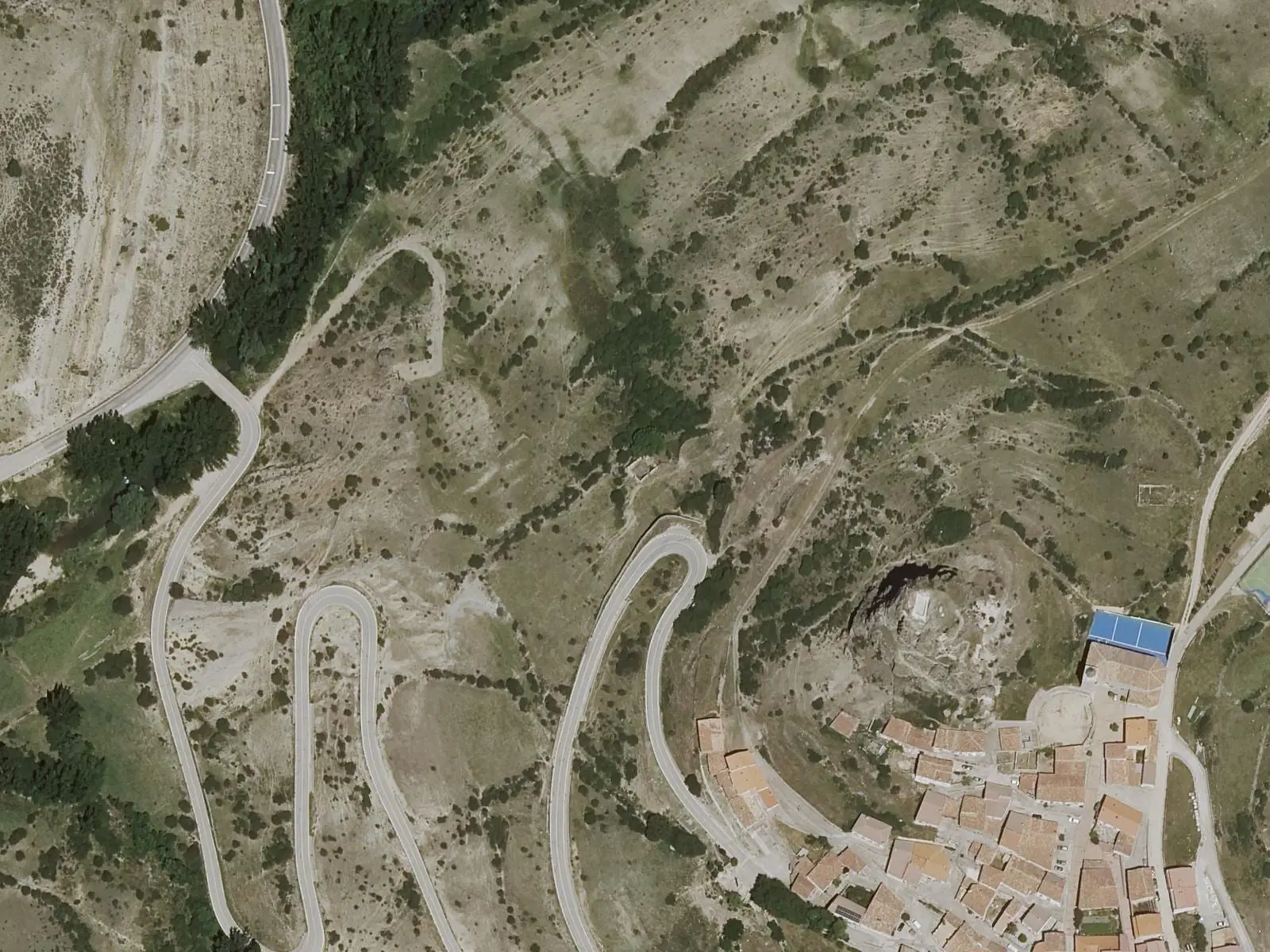
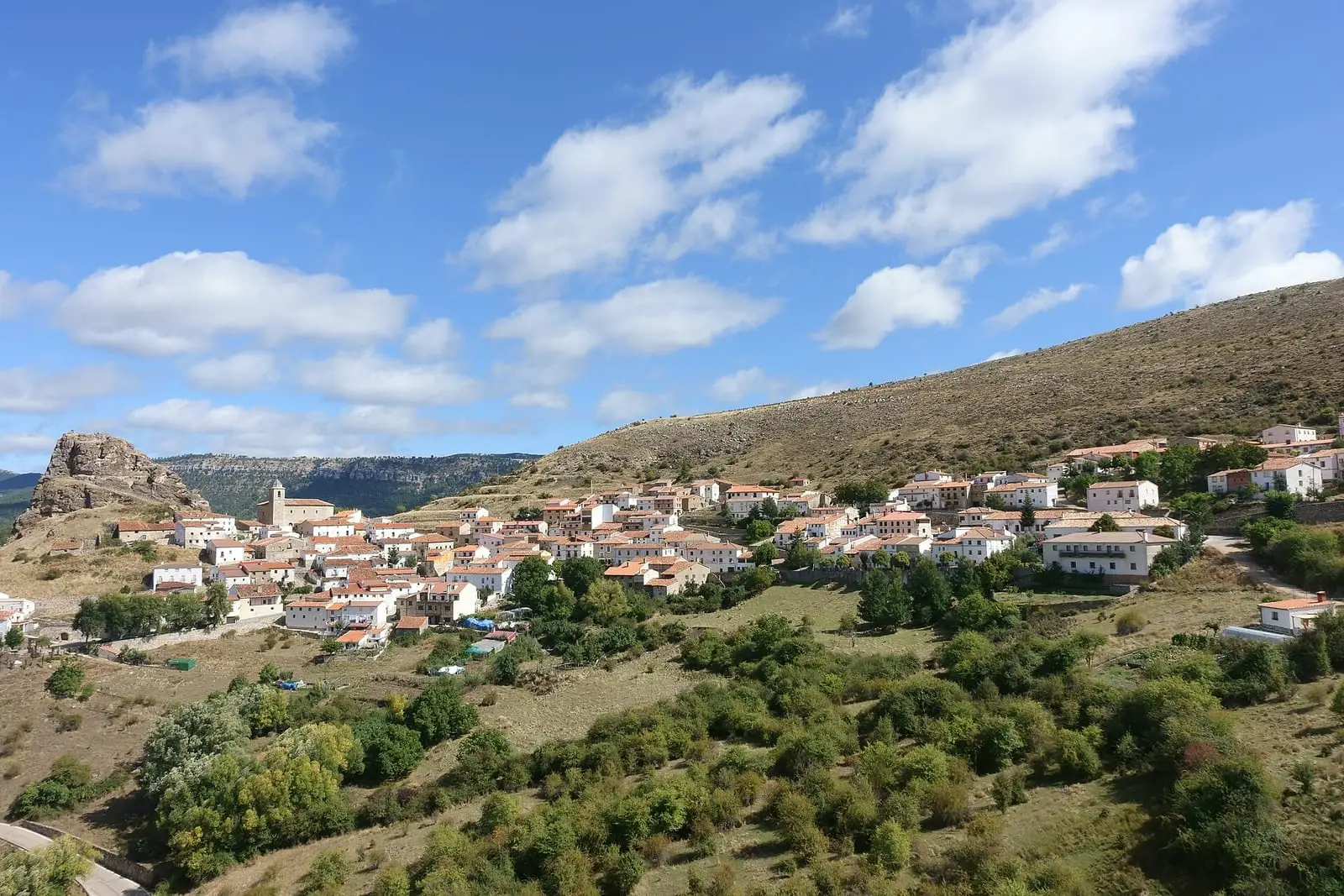
Huélamo castle crowns the rock above the village, on the upper Júcar. Recent excavations place its origin in the late 8th or early 9th century, in Hispano-Muslim times, and point to earlier occupation, perhaps Bronze Age. It was an Order of Santiago commandery. A short Natural Park trail climbs from the square.
- Municipality
- Huélamo
- Castle
- Hispano-Muslim
- Order of Santiago
- Huélamo
- Júcar
The rock above the village
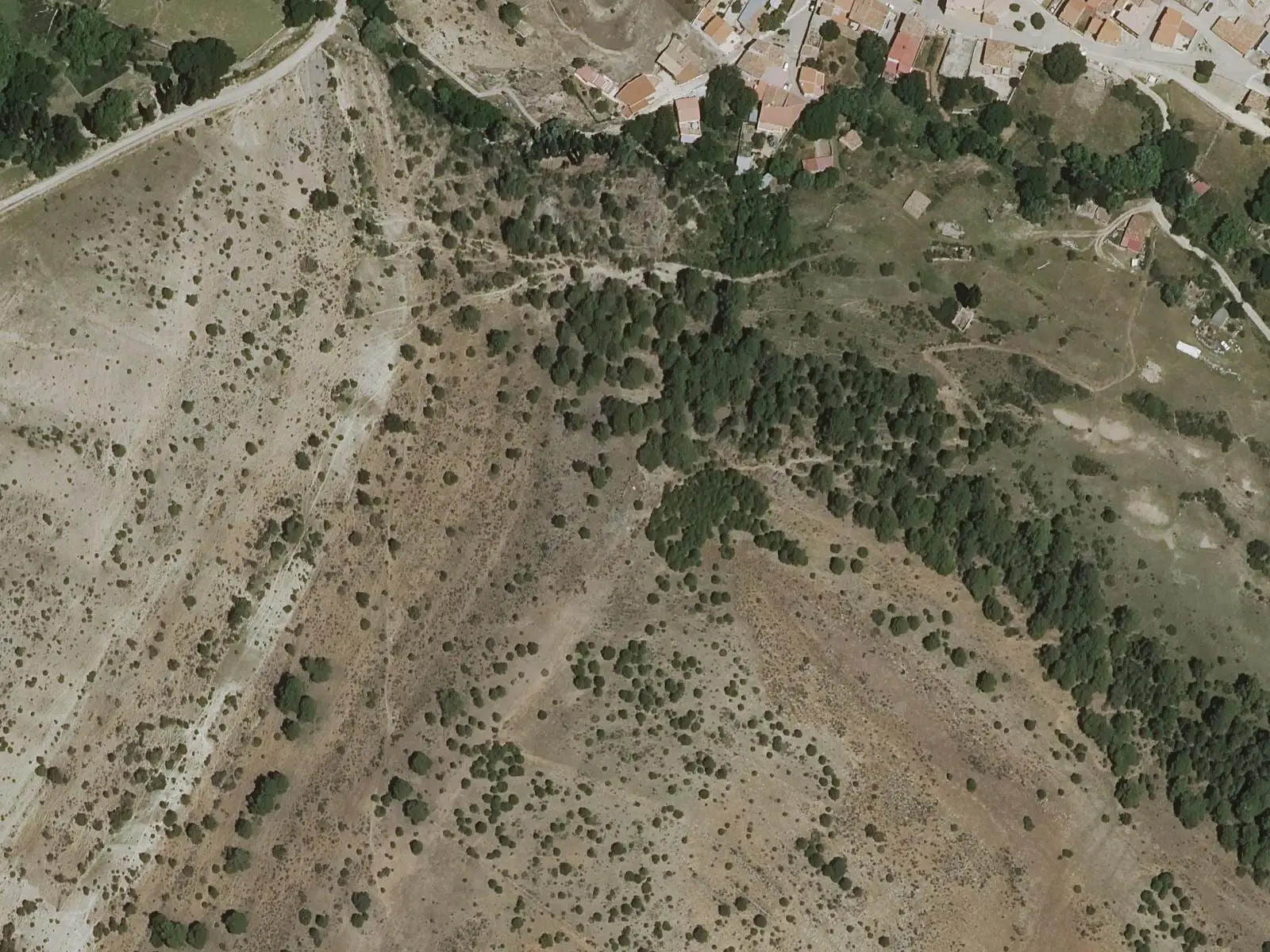
Huélamo spreads across a slope crowned by a large rock. Above remain traces of the Arab fortress, with the upper Júcar valley below.
What the ground has revealed
Archaeologist Pedro Pablo de las Muelas, born in the village, directed the excavations. Walls and a circular well place the fortress’s origin in the late 8th or early 9th century. The name points the same way: it is linked to an old Walmu in Arabic sources. Structures and pottery apparently from the late Bronze Age, still unconfirmed, also emerged between the bullring and church.
It later became an Order of Santiago commandery and a crossing between Aragón and Castile; the Order’s inspections, especially that of 1508, describe it in detail. The fortified hills of Masegosa date from the same period as its earliest walls.
Plan your visit
PNSC-S5 climbs to the castle from Plaza del Obispo: an easy 0.4 km with summer shade, suitable all year.
Before you travel
The excavations are covered, and the fortress needed urgent work in 2020. There are drops at the summit and the cistern is an open hole: keep back and do not climb the walls.
Combine with
Then explore Huélamo’s centre, where Julián Romero was born.
Frequently asked questions
When does Huélamo castle date from?
Excavations document walls and a circular well about 3 metres deep, placing its origin in the late 8th or early 9th century. Pottery among the remains appears to date from the late Bronze Age, around 800 BC, an identification still provisional.
How do you climb up?
Along Natural Park trail PNsc-05: 0.4 km linear, easy, with summer shade, starting at Plaza del Obispo within the village.
Can the excavations be seen?
No: lack of funding led archaeologists to end the work and cover the remains for protection until they can be presented to visitors.
Carry on from here
Lands and landscapes
From here, follow the memory of the land
These readings connect Huélamo castle with the stories, the work and the villages around it.
This place through time
Which eras you can read here
A single place can keep traces of several periods. These layers connect what you see with the atlas's stories.
Where it is
● Reference point · ● Villages · ● Places · ━ Routes nearby
Location sketch. The map with paths and names loads as you scroll to it.
Reference villages: Huélamo · Valdemeca · Tragacete · Beamud.
Open the full map and its historical layers →More viewpoints nearby
See all →

Where the data on this page come from
- Name
- Rewilding España source consulted, 4 October 2026
- Junta de Comunidades de Castilla-La Mancha: «PNsc-05 Subida al Castillo de Huélamo» source consulted
- Ministerio de Educación Nacional: «Decreto de 22 de abril de 1949 sobre protección de los castillos españoles» (1949) source consulted
- Jefatura del Estado: «Ley 16/1985, de 25 de junio, del Patrimonio Histórico Español» (1985) source consulted
- Ayuntamiento de Huélamo: «Consolidaciones urgentes Castillo de Huélamo: cuadro de precios descompuestos» (2020) source consulted
- Muñoz Martínez, José Luis: «Encuentran cerámica de la Edad del Bronce y construcciones del siglo VIII en el castillo de Huélamo» (2022) source consulted
- Ayuntamiento de Huélamo: «Estudio del impacto arqueológico del Castillo de Huélamo» (2023) source consulted
- Municipality (INE code)
- Rewilding España source consulted, 4 October 2026
- Junta de Comunidades de Castilla-La Mancha: «PNsc-05 Subida al Castillo de Huélamo» source consulted
- Ministerio de Educación Nacional: «Decreto de 22 de abril de 1949 sobre protección de los castillos españoles» (1949) source consulted
- Jefatura del Estado: «Ley 16/1985, de 25 de junio, del Patrimonio Histórico Español» (1985) source consulted
- Ayuntamiento de Huélamo: «Consolidaciones urgentes Castillo de Huélamo: cuadro de precios descompuestos» (2020) source consulted
- Muñoz Martínez, José Luis: «Encuentran cerámica de la Edad del Bronce y construcciones del siglo VIII en el castillo de Huélamo» (2022) source consulted
- Ayuntamiento de Huélamo: «Estudio del impacto arqueológico del Castillo de Huélamo» (2023) source consulted
- Location
- Rewilding España source consulted, 4 October 2026
«Source consulted»: the primary source has been read. «Reference located»: the source has been identified but not yet read. «Open question»: the figure needs confirmation.