Episode · 1940s – 1960s · War, maquis and post-war
Bread, water, clothes and pig slaughter in Valsalobre
In the post-war years, households in Valsalobre relied on the communal oven, a single spring from which water was carried in jugs, three days of washing in the river, the winter pig slaughter and barter with the villages of the Alcarria. Eggs served as currency. Villagers tell the story in videos by Vestal Etnografía.
On this page 8 sections
Water from a single spring
Until running water arrived, Valsalobre had a single spring from which to carry water home. People had to go with the cántaro, an earthenware water jug, on their head, on a cloth ring or with nothing beneath it, and keep their balance uphill. It was also where boys and girls met: the young men lingered nearby, and sometimes a jug was emptied to go back for another.
At home, water was kept in large earthenware jars and jug stands. Dark botijos, drinking vessels with a spout, were for winter; white ones for summer, because the water came out cooler. There was no bathroom: people washed with a bucket or basin, and the stable or countryside served as the toilet. The streets were not surfaced. The houses, they say, were very poor but clean.
The washing
Clothes were washed in the river. A wash took three days: first they were soaped at home, the next day taken down to the river and spread on the meadow in the sun, and people had to return to wet them three or four times. Almost everything was white cotton, retor, a plain cotton cloth. In winter they had to break the ice and wash kneeling, or on a stone slab. Sheets were changed every eight or ten days.
Clothes were mended. Elbow patches, now worn as decoration, were then a necessity, and a girl would be taught to put on a corduroy patch without the reverse showing. Socks were made at home from sheep’s wool, then dyed blue or maroon. For Santiago’s day, the patron saint, girls were made a dress; the previous year’s became their everyday dress, in winter and summer, because there was no other. In the snow they wore rubber shoes, and their feet got wet all the same.
Bread in the village oven
The oven was communal and stood beside the town hall. Whoever had a sourdough starter kept it from one batch to the next. Flour was kneaded with water and the starter in a large trough; fifteen large round loaves could be made at once, to last fifteen days. In mid-morning they were carried in escriños, straw baskets, left to rise on boards covered with white cloths and put in the oven. Each household marked its bread with a cross or another sign.
The hornero, the oven keeper, was appointed by auction and ran the oven for one or two years: putting in firewood, preparing the oven and taking out the bread. He was paid with a loaf. The oven was also used for magdalenas, ring-shaped biscuits and festive sweets for San Antonio and Santiago. Another woman remembers three people being appointed and taking weekly turns, and that her mother was an oven keeper. When a bakery opened, the communal oven fell out of use, and by then, they say, people were already leaving.
Flour came from the mills on the road to Beteta, beyond a bridge. The miller went round the village with a horse collecting wheat and brought the flour back up the next day, keeping a share as payment. At home it was sifted: flour on one side, bran for pigs and hens on the other.
The pig slaughter
Every household held a matanza, the annual pig slaughter, in winter so the cured meat would dry properly. Some slaughtered two pigs. It lasted two or three days: one for the meal, another for making chorizos. The whole family took part. The guts had to be washed in the river or at the spring, and blood sausages were boiled in a large cauldron. The rest was stored in earthenware jars with oil, the summer store of food when people went harvesting. Hams were hung and bacon was eaten raw.
They also made zarajos, a dish of suckling lamb intestines. For children the slaughter was a celebration: they pulled the pig’s tail, kept the bladder, inflated it through a reed, left it to dry and bounced it like a ball at night. But there is one rule a villager recalls firmly: in winter nobody touched the chorizos or loin, even if they went hungry, because reaping and threshing would come later and they had to keep going.
Eggs and barter
Money was scarce, and hens’ eggs served as currency. They bought oil or sugar in the shop and were taken to Beteta, about six kilometres away, to sell. One man remembers his father packing them in boxes with straw and taking them by mule to Villanueva, where they were put on the roof of the scheduled coach bound for Madrid.
In autumn people came from the Alcarria, from Priego and surrounding villages, with grapes, peppers and olives, and exchanged them for potatoes. When one villager’s father could find nothing to take home, he went with two mules and his ten-year-old son to near Millana, in Guadalajara, to barter whatever he could for oil or wheat, when the Sacedón reservoir was being built. They took three days to arrive and, on the way back, the father, who had been imprisoned after the war, was terrified of the guards on the road. Potatoes, beans and chickpeas grew in the river valley, they say, and each household had a vegetable plot.
Was there hunger?
The testimonies disagree, and that is a good reason to record them all. A woman born in the early 1940s says she did not go hungry: they had pulses, wheat, beetroot and a pig for the whole year, even if there were no desserts. A man born in 1941 says there was hunger in his home. In that same conversation they recall how, when there was no wheat left in May, a mother pickled cucumbers while the father went down to Córdoba with the animals. And almost everyone agrees on one thing: at seven or eight they went weeding, hauling with mules and threshing, and payment for threshing was a ring-shaped bread. They were happy, they say, with what they had.
Vocabulary
- Cántaro
- An earthenware vessel for carrying water from the spring, on the head with a cloth ring underneath.
- Botijo
- A vessel with a handle and drinking spout. Dark ones were used in winter and white ones in summer because they kept the water cooler.
- Escriño
- A straw basket used to carry bread to the oven.
- Masa madre
- A piece of fermented dough kept from one batch to the next.
- Hornero
- A villager appointed by auction to run the communal oven for one or two years, paid with a loaf.
Where it is today
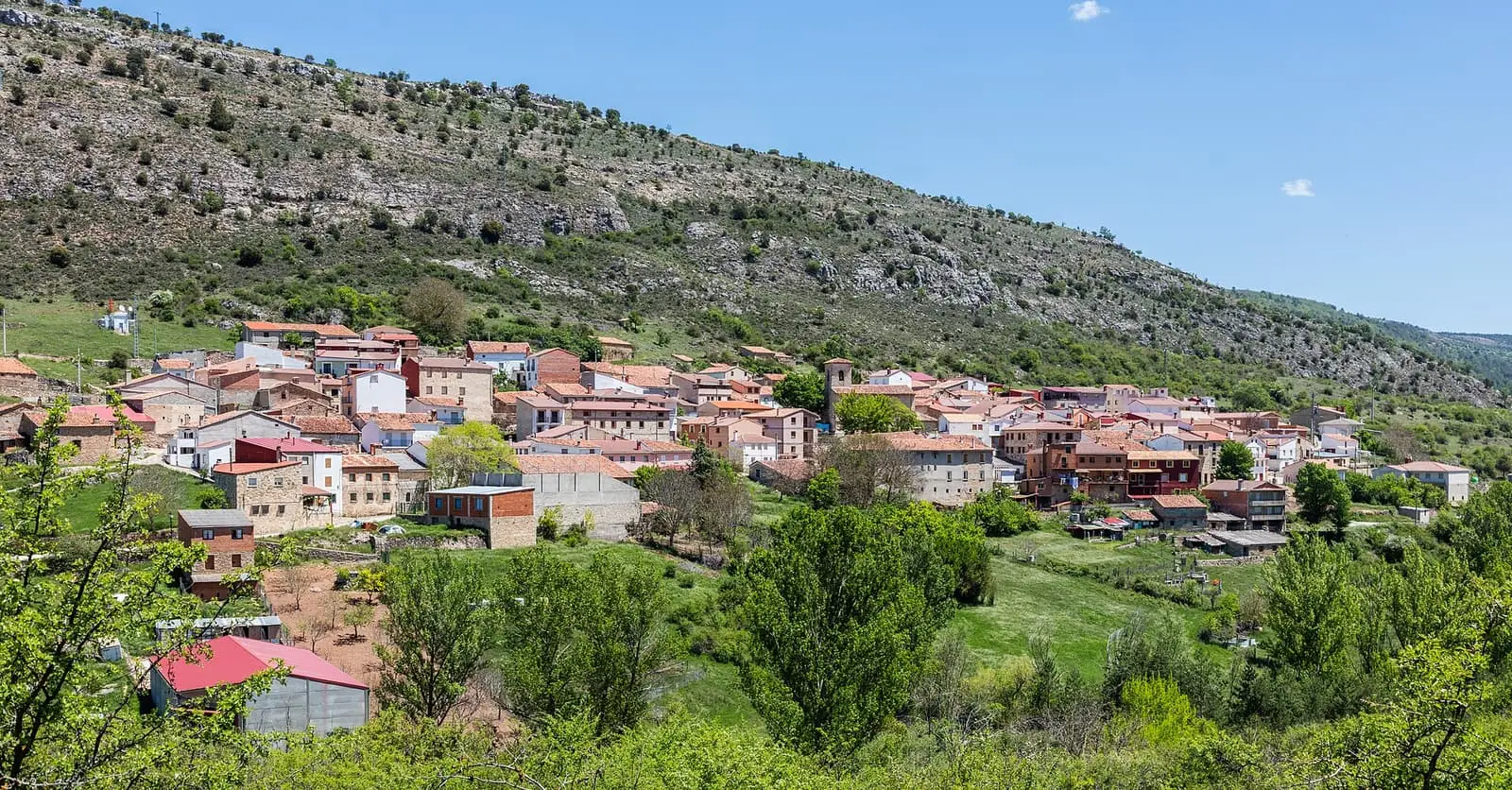
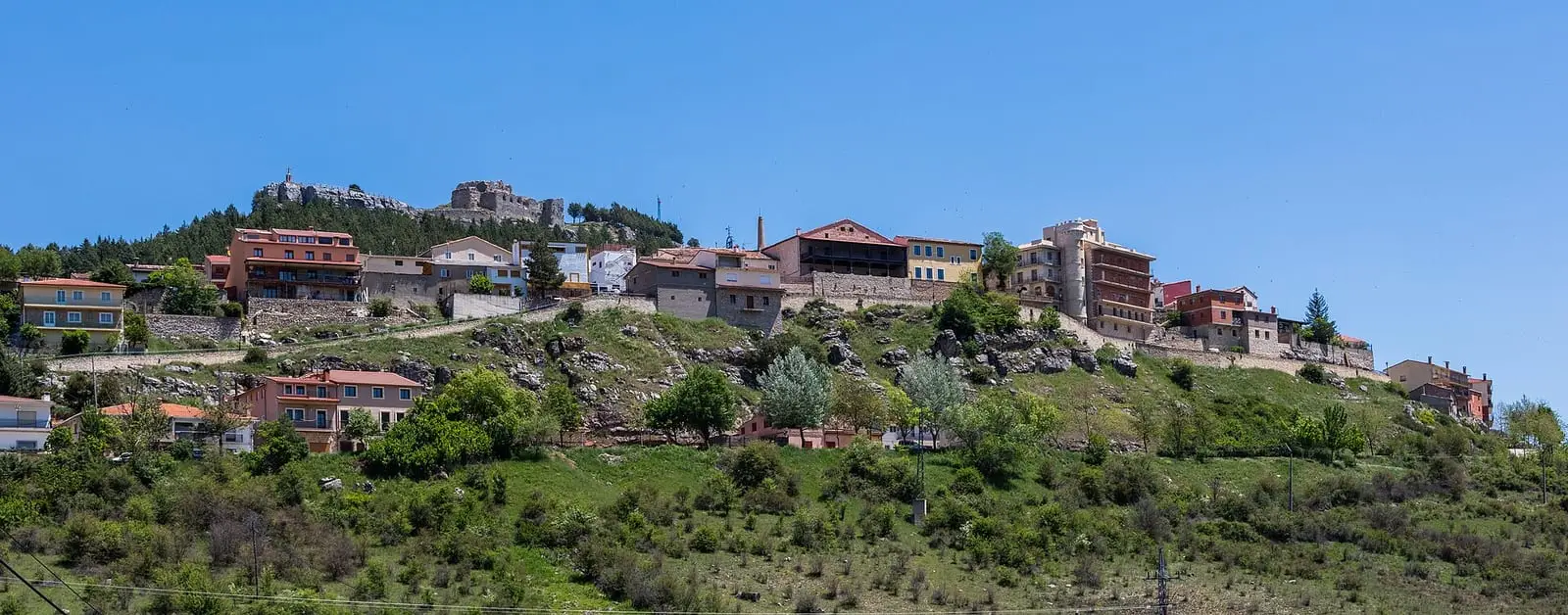
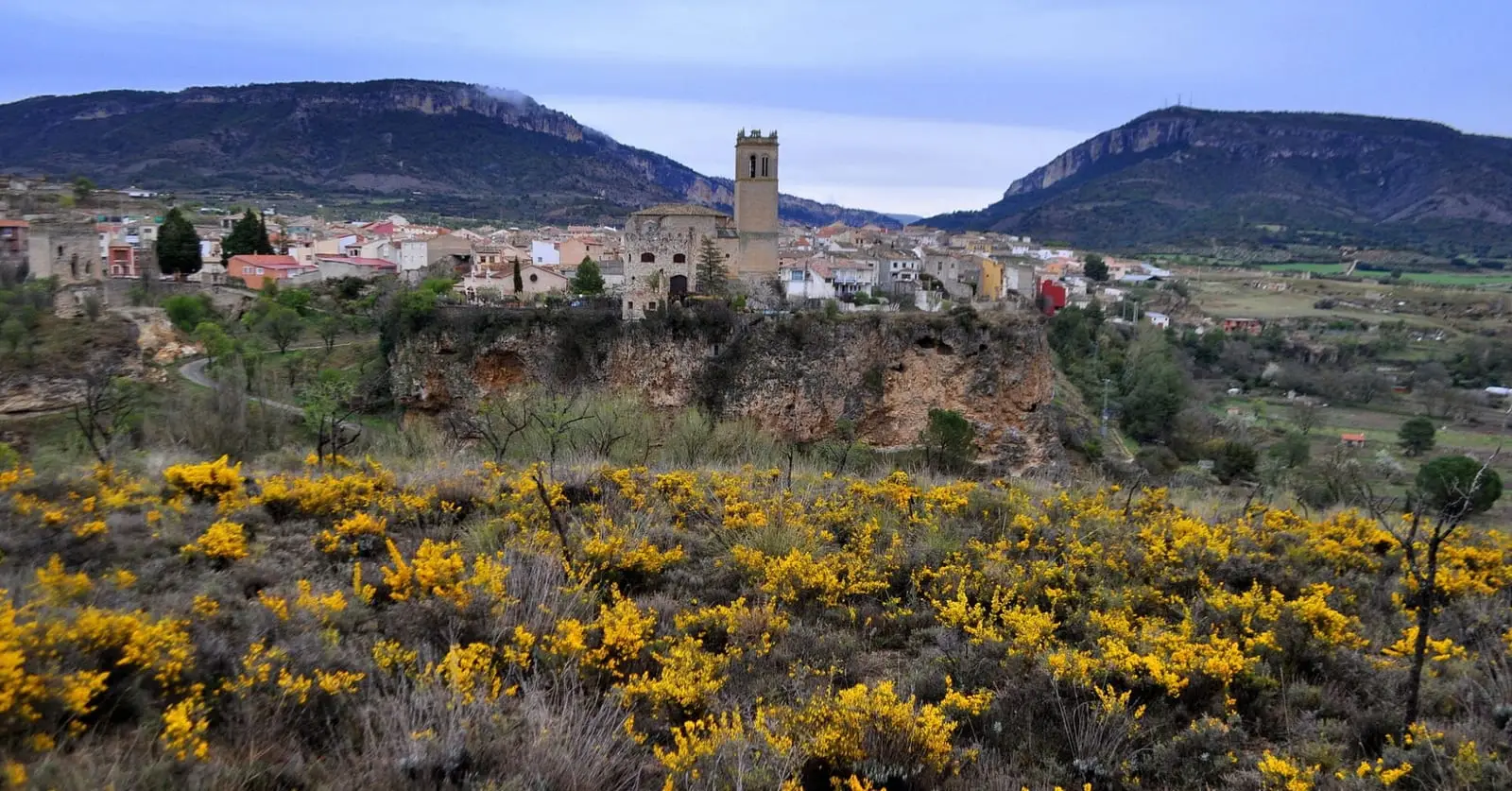
Carry on elsewhere
- Valsalobre en altotajo.es · the village told from the Alto Tajo
Frequently asked questions
How was bread made in Valsalobre?
In a communal oven beside the town hall. Each household kneaded dough in its trough with a sourdough starter, and bread was carried in straw baskets and marked with a cross or another sign. The oven keeper charged one loaf per batch.
Where did the water come from?
From a single village spring, in jugs carried on the head. For washing, people went down to the river, where in winter they had to break the ice.
What was barter with Priego?
In autumn people came from the Alcarria, from Priego and surrounding villages, with grapes, peppers and olives, and exchanged them for potatoes.
Sources and reading
- Vestal Etnografía: «El agua y el horno comunal de Valsalobre» (conversación con dos vecinas) source consulted · Oral source. Automatic transcript read: dates and figures are memories and are used only where the transcript is clear.
- Vestal Etnografía: «Los mayos y la matanza en Valsalobre» (conversación con un vecino de 97 años y una vecina) source consulted · Oral source. The pig slaughter and eggs come from here.
- Vestal Etnografía: «Historias de la taberna y el baile en Valsalobre» (conversación con tres vecinos) source consulted · Oral source. Barter with the villages of the Alcarria and the journey to Millana come from here.
- Vestal Etnografía: «La agricultura y las hogueras de invierno en Valsalobre» (conversación con tres vecinos) source consulted · Oral source. Post-war hunger and children threshing come from here.
Open questions
- When running water arrived: one interviewee says «hace unos cincuenta años» (about fifty years ago) and another that it was «uno de los últimos pueblos de la provincia» (one of the last villages in the province), around 1984. Check with the town council or Cuenca Provincial Council.
- Number and location of ovens: one woman speaks of a communal oven beside the town hall, another of turns among three. Unclear.
- Mills: villagers remember two on the road to Beteta, one converted into a home. Unidentified.
- Whether there was hunger in the post-war years: testimonies disagree. Both are recorded.