Episode · 1926 – today · The trades of the forest and the water
El Salto de Villalba: a hundred years of light on the Júcar
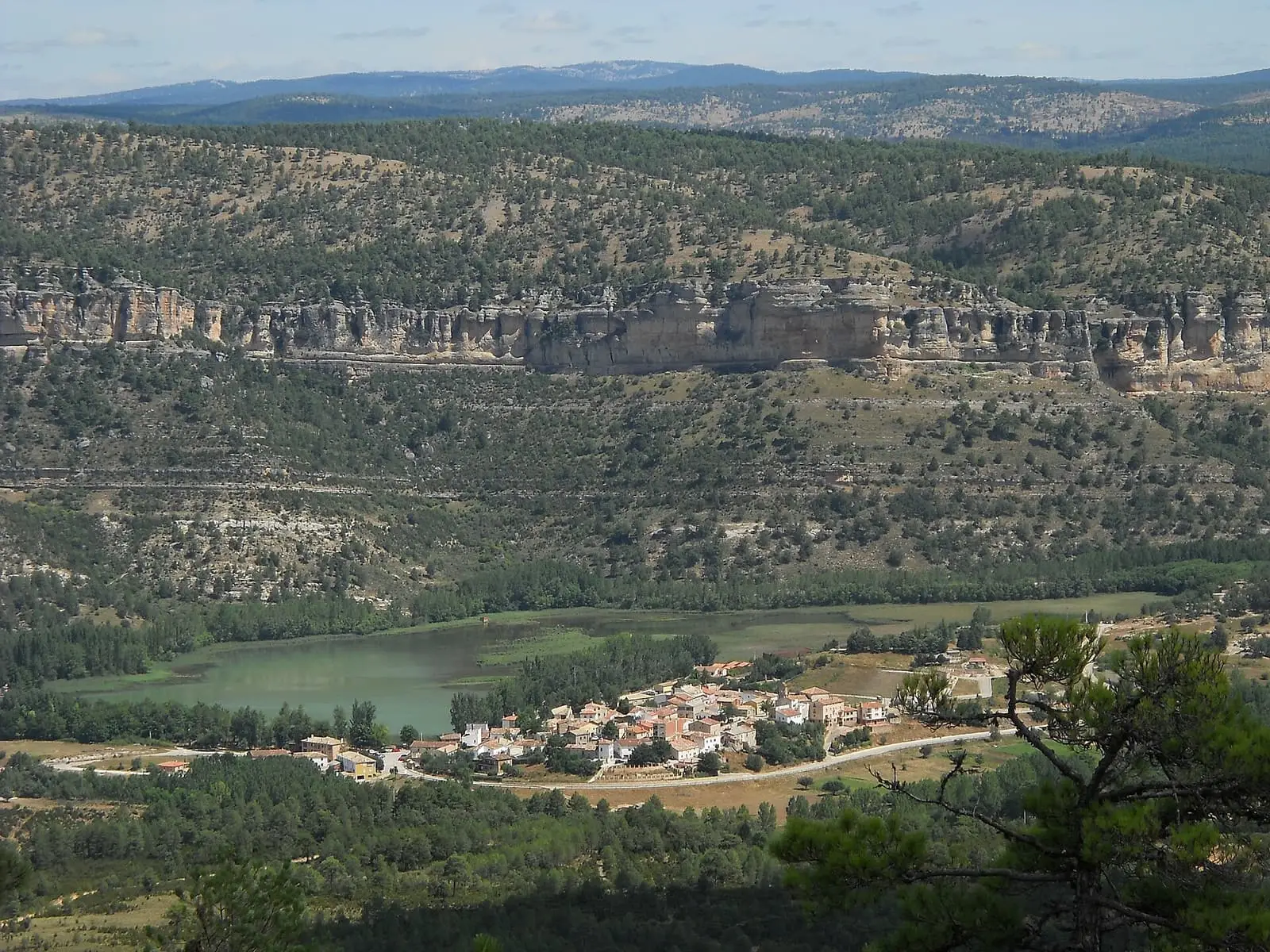
The Salto de Villalba hydroelectric station began operating in Villalba de la Sierra in 1926. It was promoted by Unión Eléctrica Madrileña, according to elDiario.es, and inaugurated by Alfonso XIII on 15 June. A channel about twenty kilometres long carried Júcar water from La Toba reservoir, through Laguna de Uña, to a forebay above the station, and electricity was sent to Madrid. A settlement grew beside it with a school, church and company shop, gradually emptying as the station was automated.
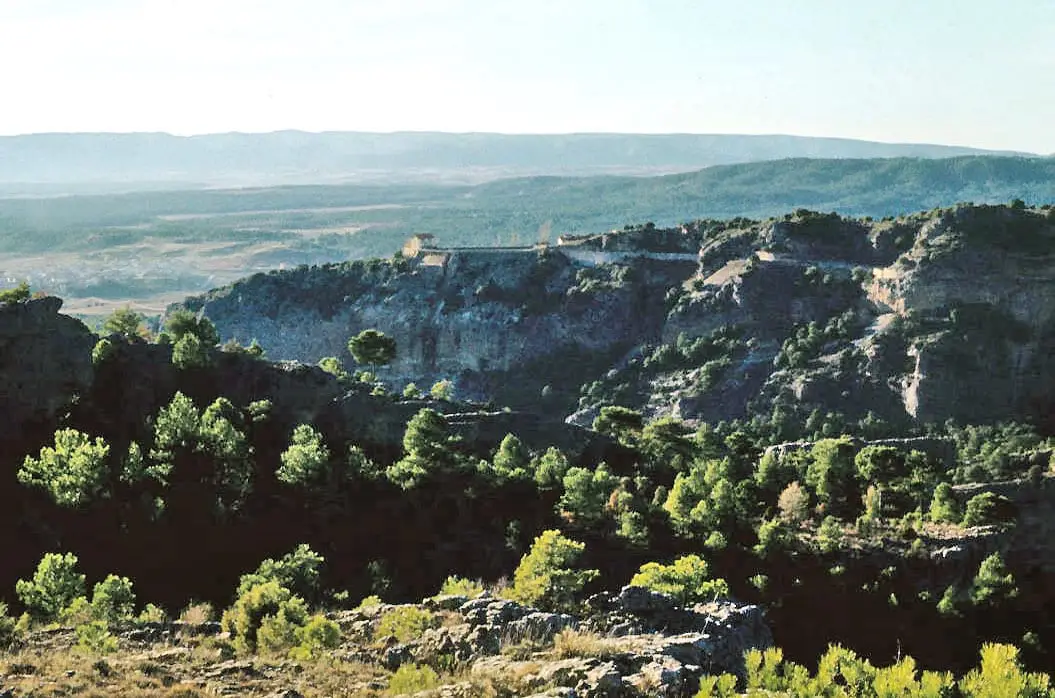
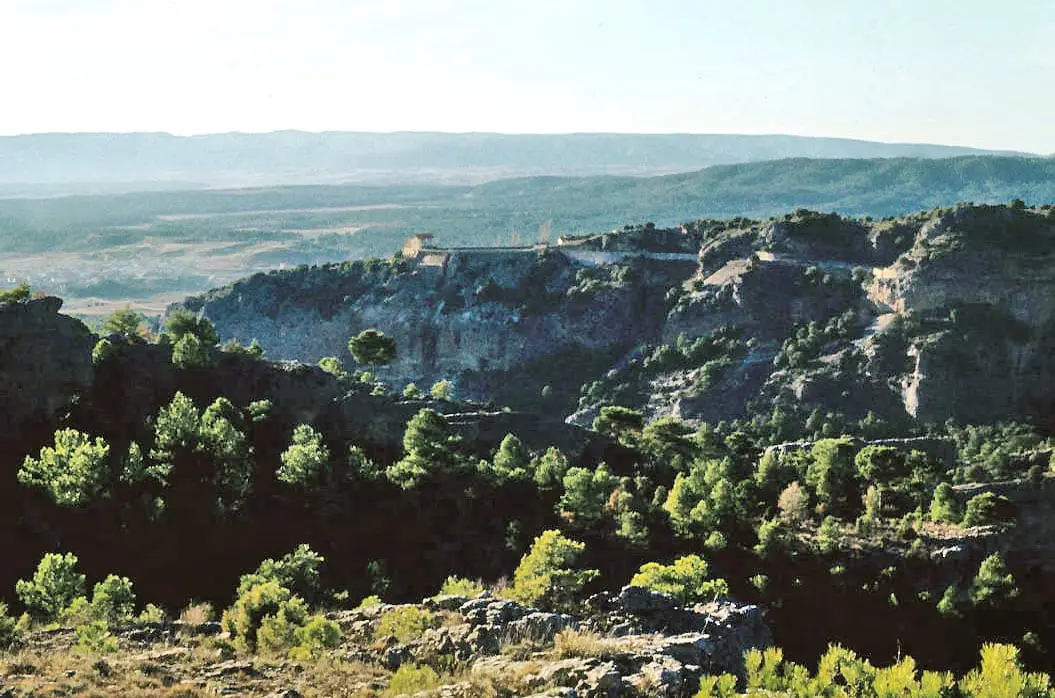
Photo: «Serranía de Cuenca 1979 23», LBM1948 (1979) · CC BY-SA 4.0
On this page 8 sections
A project for Madrid
In 1926 a hydroelectric station began operating in Villalba de la Sierra that villagers called, and still call, the Salto. Its purpose was to supply electricity to Madrid, which was growing and needed light. It was promoted by Unión Eléctrica Madrileña, according to elDiario.es, which marked the centenary in July 2026: after successive mergers the station passed to the Naturgy group, its current owner and also owner of the settlement. The newspaper dates the inauguration by Alfonso XIII to 15 June 1926 and explains that power first travelled to Bolarque station in Guadalajara, of very similar design and built earlier, and from there to the capital. Vestal Etnografía’s documentary names another company, Eléctrica de Castilla; the sources could not be cross-checked.
Water came from La Toba reservoir. A channel carried it to Laguna de Uña, which had to be dammed and increased in size. From the lake the channel continued along the limestone cliffs: thirteen tunnels, several aqueducts and a siphon, Rollo Frío, according to the documentary Vestal Etnografía filmed for the centenary. The channel was almost twenty kilometres long according to elDiario.es and more than twenty according to the documentary. At the end the water reached a forebay above the station and descended through pipes to the turbines.
Water took about three hours to travel between Uña and the station. If the turbines had to start at seven, the water was requested at four. The forebay regulated the difference: water from the channel came in, and what the machines needed went out. A single family lived at the forebay itself, responsible for maintenance and regulating flow to the turbines: one of the children, one of eight siblings, lived there for thirty-five years, went down to school morning and afternoon and back up for lunch, until he became an apprentice at the Salto. La Toba reservoir was planned for about 35 hm³ and ended up at 9.7; on the radio the difference has been attributed to the Civil War, which does not fit a station inaugurated in 1926 and remains to be clarified.
Timber passed through too
Before providing light, the Júcar provided timber. Each spring pine logs went down towards Cuenca, and the station could not block their passage. The solution was for the timber to use the same channel. At the Rollo Frío siphon a metal aqueduct was laid for the logs, and from the forebay a separate channel returned them to the river, bypassing the cliffs of Uña.
Among the witnesses are people who saw timber drives pass there and remember logs being taken out at the loading point with mules and loaded onto lorries at the end of the track.
A radio account says that around 1930 a section of channel collapsed just as a timber expedition was passing and was rebuilt in a week so as not to stop it. A document confirming this is missing.
The settlement
A settlement organised by trade was built at the foot of the station. Workers lived below; senior staff above. On the open ground stood the station, the church and the management house, where the managers stayed. A man who started work in 1960 counted 149 employees that year: gardeners, carpenters, plumbers, electricians, painters. ElDiario.es speaks of more than a hundred families and about 118 workers at its peak, according to local historian Joaquín Carboné’s estimate; the documentary, of about fifteen families. The three figures disagree.
The Salto had what the village did not yet have. Electric light, when people in the village still heated their homes with wood stoves, and drinking water, filtered from the channel through layers of earth, before Villalba had it. A school. A priest employed by the company who said mass daily. A village doctor who held consultations two days a week in a clinic that surprised visitors. And an economato, a company shop selling at cost price: orders were written in a notebook, the amount deducted from wages and a lorry delivered from house to house. Each family also had a henhouse on the higher ground, with rabbits, pigs or pigeons.
Midnight mass was held at the Salto, not in Villalba. Villagers came down the path with lights, like a nativity scene.
Villalba before and after
For the village, the project brought a change of scale. Outsiders came to work on construction and had to be housed and fed. One interviewed family’s grandfather came from Paracuellos de la Vega for the works and stayed as a watchman; another’s began helping with construction in 1926 and ended up as a gardener. For decades many Villalba inhabitants worked at the Salto and walked there and back. One witness sums it up by saying Villalba went from a few small houses to almost the capital of those villages. Around 1950–1960 the municipality reached about 1,100 inhabitants, including the Salto’s people, according to elDiario.es; today it has about 600.
Automation
Over the years the station was automated and many trades were no longer needed. Retiring workers’ posts were no longer filled. A couple from among the settlement’s last families say their parents retired around 1990–1995. In the end three children remained in the settlement. When the two older ones turned fourteen and went down to study in Cuenca, the youngest had to leave too: the school would not remain open for one pupil.
At the centenary, some houses had been restored as accommodation for company workers. The rest of the buildings, according to former residents, were in ruins. The station still operates: Naturgy puts its output at about 23,800 MWh a year, the consumption of about 8,000 households, according to elDiario.es, which quotes councillor Juan Expósito as giving one direct company employee and three subcontracted workers.
From the archive
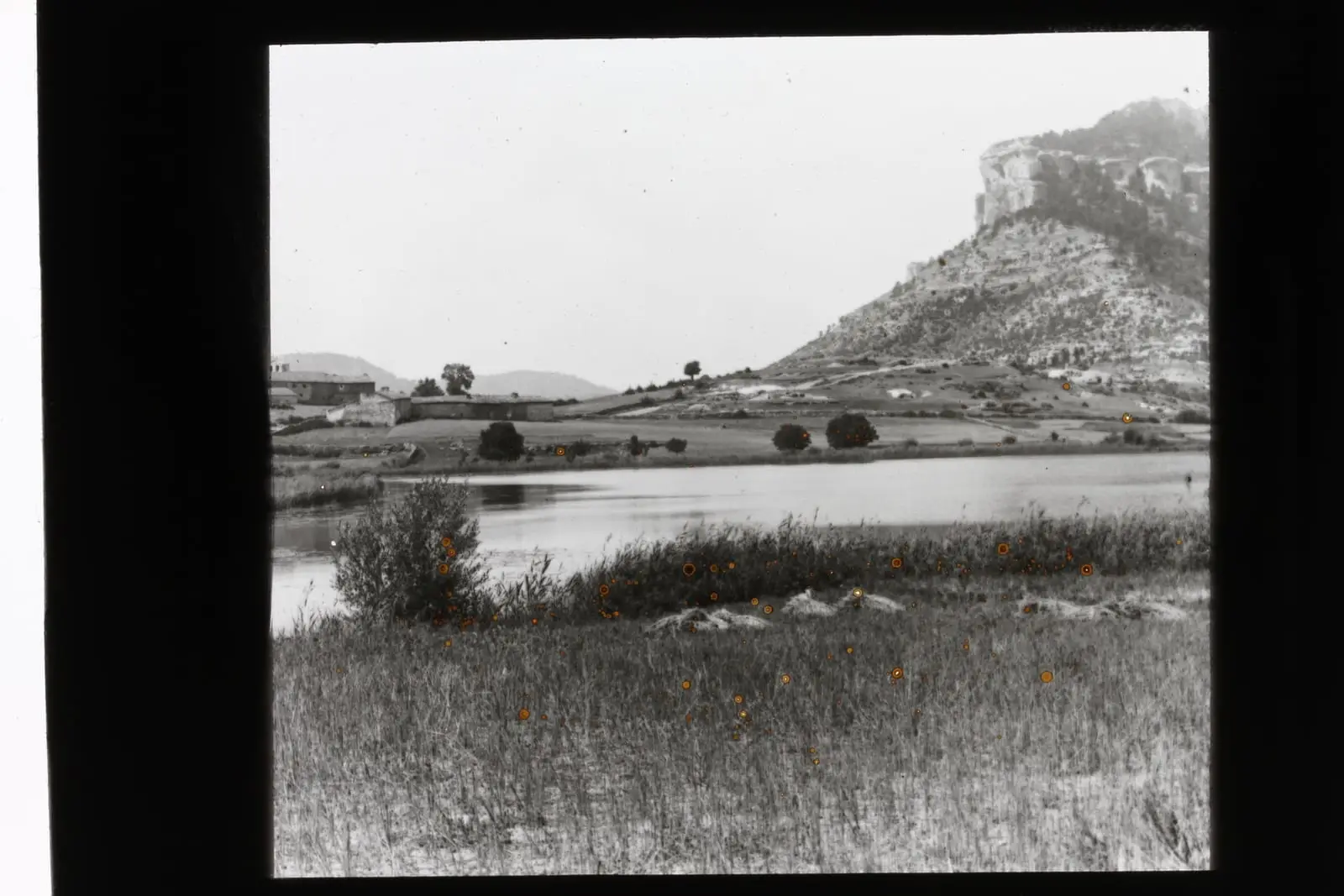
Vocabulary
- Salto
- A drop in water level used to generate electricity, and by extension the station and its whole complex. In Villalba de la Sierra, «el Salto» names the station and its settlement.
- Depósito de carga
- A basin above the station where the channel ends. It regulated water flowing down pipes to the turbines; at the Salto it had to be requested about three hours beforehand, the time it took to arrive from Uña.
- Sifón
- A section where the channel descends and rises again across a hollow in the terrain. At Rollo Frío a metal aqueduct was built for timber to pass over.
- Economato
- A company shop selling basic goods at cost price. At the Salto orders were placed in a notebook and the amount deducted from wages.
Where it is today
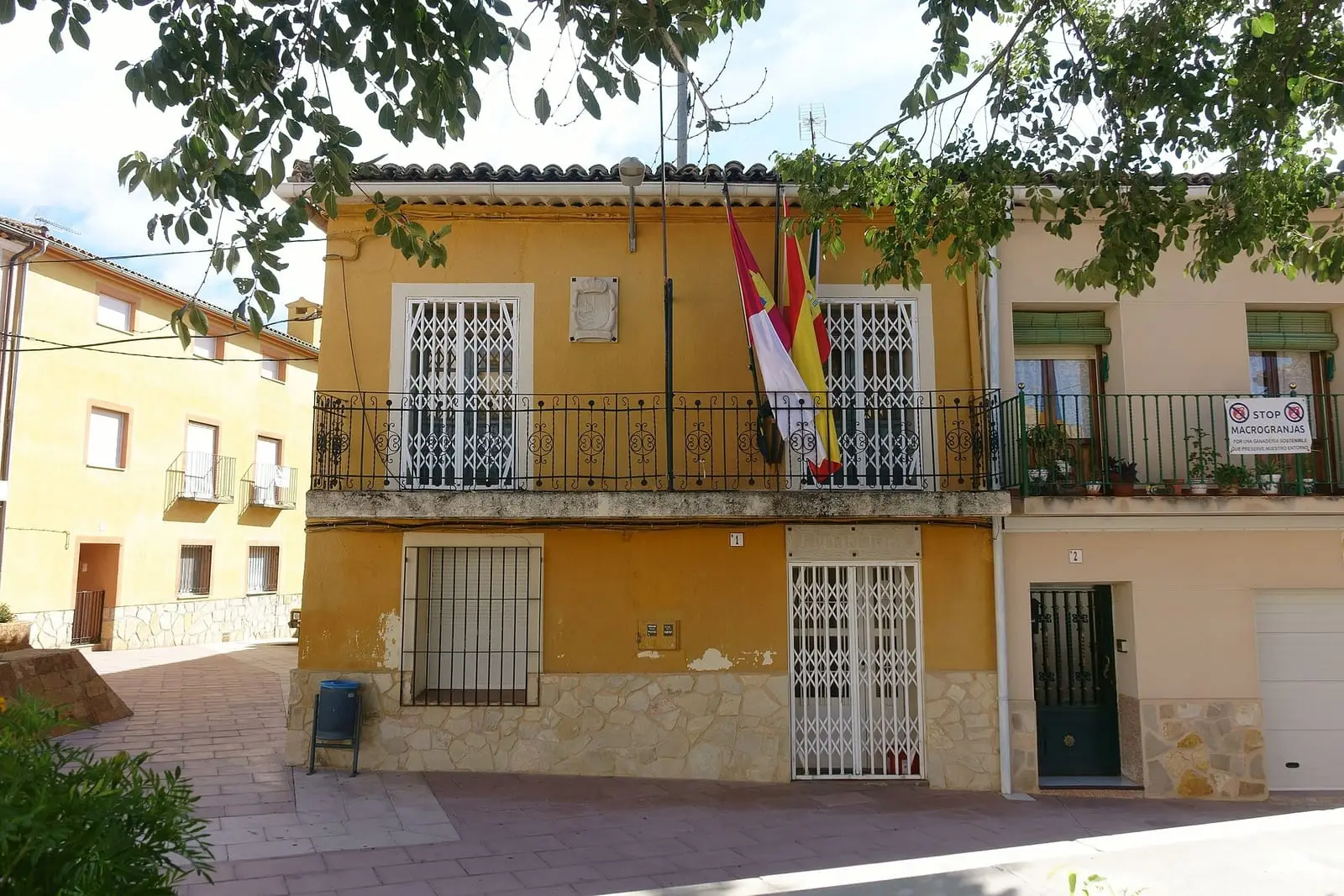

Carry on elsewhere
- Gancheros: los pastores del bosque flotante (altotajo.es) · the timber-driving trade, told from the Tagus
Frequently asked questions
What is the Salto de Villalba?
The hydroelectric station of Villalba de la Sierra, in the Serranía de Cuenca, inaugurated on 15 June 1926 according to elDiario.es. It used Júcar water carried by a channel from La Toba reservoir and Laguna de Uña, and its electricity went to Madrid. A settlement for its workers was built beside it.
Why did the Salto channel have a passage for timber?
Because the Júcar was also the route for timber. Each spring pine logs went down towards Cuenca, and the works had to let them pass. According to Vestal Etnografía's documentary, the logs came down the channel itself, crossed the Rollo Frío siphon on a metal aqueduct and returned to the river through their own channel from the forebay.
How many people lived in the Salto settlement?
There is no documented figure and sources disagree. ElDiario.es speaks of more than a hundred families and about 118 workers at its peak; a man who began work in 1960 remembers 149 employees that year, and the documentary narration speaks of about 15 families. In the early 1990s three children remained.
Sources and reading
- Vestal Etnografía: «Cien años del Salto de Villalba. La obra del siglo en la memoria de Villalba de la Sierra» (documental con testimonios de vecinos y antiguos residentes del poblado) source consulted · Oral source. Automatic transcript read; figures and names have been taken only where the transcript is unambiguous.
- elDiario.es, Javier Muñoz de la Torre Granados: «Cien años del Salto de Villalba: la fábrica de luz para Madrid que reclama conservar su patrimonio» (19-7-2026) source consulted · Press. Promoting company, inauguration, channel length, workers, Villalba's population and connection with Bolarque. Does not give the year construction began or the building contractor.
- Finantres Noticias: «Cuenca recupera la obra hidráulica que convirtió el Júcar en energía hace un siglo» reference located · Located through a search engine. The address no longer opens (404 error), so it has not been read; cited only as a reference to the centenary exhibition.
- Hoy por Hoy Cuenca, Cadena SER: «La gran obra que llevó la luz a Madrid y transformó la Serranía de Cuenca» (05-02-2026, con audio) source consulted · Interview about the centenary documentary, with extracts from its testimonies; these are not new voices.
- Hoy por Hoy Cuenca, Cadena SER: «El agua como motor: molinos, batanes y martinetes en los ríos de la provincia de Cuenca» (08-02-2023, con audio) source consulted · Anecdote about the channel breaking around 1930.
- Hoy por Hoy Cuenca, Cadena SER: «Siete miradores: una ruta por las crestas de Villalba de la Sierra mirando al Júcar» (10-03-2026, con audio) source consulted · Oral explanation by a popular history presenter; cites no documents.
Open questions
- Alfonso XIII's visit: a presenter (radio, 2026) says the king arrived at the Salto on 15 July 1926, slept there and went to Uña the next day; elDiario.es dates the inauguration to 15 June. The press of 1926 is missing.
- Electricity restrictions in Madrid in 1918 because of drought, affecting shops and trams: cited by the same presenter as background to the search for power in the mountains. The proclamation or contemporary press has yet to be located.
- Company: the radio (2026) names Sociedad Anónima Eléctrica de Castilla as the builder, with engineers Manuel Lorenzo Pardo and Juan Lázaro Urra; elDiario.es names Unión Eléctrica Madrileña as promoter. They may be contractor and promoter, or successive companies: documentation is needed.
- Inauguration dates: the radio places the inauguration of the management house with Alfonso XIII in July 1926; elDiario.es dates the station's to 15 June. They may be two separate events.
- La Toba capacity: projected at 35 hm³ and finally 9.7 according to the radio, which attributes the difference to the Civil War; the construction project is missing.
- Promoting company: elDiario.es names Unión Eléctrica Madrileña, now part of Naturgy, the current owner. The documentary cites Sociedad Anónima Eléctrica de Castilla and one testimony «Unión Eléctrica». Both versions are recorded: a contemporary documentary source is missing.
- Inauguration (15 June 1926, with Alfonso XIII): only in the press of 2026. Check against the press of 1926. Neither the year construction began nor the building contractor is recorded.
- Channel length: almost twenty kilometres according to elDiario.es and more than twenty according to the documentary. The number of tunnels (13) and aqueducts appear only in the documentary.
- Workers and families: elDiario.es speaks of more than a hundred families and about 118 workers at the peak (local historian Joaquín Carboné's estimate); one testimony, of 149 employees in 1960; the documentary narration, of 15 families and almost 150 workers. The figures do not agree and none comes from an archive.
- Location of the station, forebay and Rollo Frío siphon: no verified coordinates.