Episode · 1841 – 1924 · Carlists, Madoz and disentailment
The Serranía Baja mining rush
Between 1841 and the early 20th century, the hills of Talayuelas and Garaballa filled with mining claims. From 1848 a company of Cuenca's bourgeoisie worked the grey copper of Santa Filomena, on the Marchioness of Moya's land; in 1898 an English company bought the mines and in 1899 extracted 15 tonnes of ore. The lack of roads and railways ended it all: in 1924 the Estadística Minera spoke of mining with a «vida lánguida» (languishing existence).
On this page 6 sections
A law and a rush
In the mountains between Talayuelas, Garaballa and the Valencian villages of Tuéjar and Sinarcas, the earth has always shown its metal: small veins of iron and some copper, and across the hills, heaps of slag from old smelting works. Some slag heaps, such as that at Campo de las Herrerías, are Roman; others perhaps come from medieval ironmaking that burnt the forest.
The mining law of 1825, the Elhuyar law, gave private individuals more freedom. In 1841 came the first Talayuelas file held by the Provincial Historical Archive: the Pozo Vulcano, an iron mine in the «Meneras del Pico Ranera» (ore workings of Pico Ranera), now the Cerro de las Minas. Antonio Gimeno, from Torrebaja, a merchant and iron manufacturer, applied for it; he lived at the rento, an isolated farmstead in the hills, of Mijares, in Landete, where there was a smelting works. In 1845 claims were made for sixteen slag heaps in the municipality to resmelt them. Behind them were members of Cuenca’s bourgeoisie, villagers and four owners from Cartagena, where Roman slag was then being smelted in search of lead and silver.
Santa Filomena
In February 1848 the Sociedad Minera Santa Filomena was formed in Cuenca: a lawyer, Ambrosio Yañiz, as chairman; a treasurer and shareholders from the city’s bourgeoisie. It was incorporated by deed in 1854 and published its regulations in 1855 to work two mines, Santa Filomena, in the Barranco de la Canaleja in Garaballa, and Amistad, in the Cerro de las Minas. The vein was grey copper with silver. The mines stood on the Marchioness of Moya’s land; in those years she was Eugenia de Montijo, Empress of the French.
It did not last long. In 1867 the Estadística Minera listed it as idle: its future depended on coal from Henarejos, two leagues away, and a railway branch line to make the whole district profitable. The railway never came.
Outsiders
The decree of 1868 opened concessions to foreign capital, and names from afar appeared in the Serranía Baja (lower Serranía): a notary and doctor from Murcia, a future mayor of Cartagena, a Dane settled in Barcelona, the Duke of Las Torres, brother of the Count of Romanones. In 1890, 25 applications were opened in Talayuelas; a single owner sought twelve permits that year. Old galleries were cleared in the hope of starting in 1891. In 1896 they all relinquished their claims.
In 1898 the claims were made again, this time with title deeds, and the owners sold six mines, including «Pico de Ranera», which was Santa Filomena, to an English company, United Spanish Copper Mines. It prepared the workings in October 1898, continued in 1899 and in the last three months of the year extracted 15 tonnes of ore, all sent to England. That is everything the statistics record.
A languishing existence
In 1909 there were still thirteen iron concessions in Talayuelas and Garaballa, several held by people connected with the Henarejos coal mines. The last report is from 1924: the Estadística Minera recognised areas in Cuenca «de indiscutible importancia» (of unquestionable importance), the iron of Talayuelas, Garaballa, Landete and Víllora, the copper of Talayuelas «en donde los romanos dejaron testimonios» (where the Romans left evidence), but described mining with a languishing existence because of the almost complete lack of transport. The mine entrances and slag heaps remain in the hills.
Vocabulary
- Registro minero
- An application to the Civil Government to explore or extract a mineral on land measured in pertenencias. It was published in the province's Official Gazette and opened a 60-day period for objections.
- Pertenencia
- A unit of mining area: a square of 100 by 100 metres.
- Denuncia de escorial
- An application to exploit heaps of slag from old smelting works, with a view to resmelting them.
- Cobre gris
- Copper ore containing some silver, produced by the Santa Filomena vein.
- Escorial
- A heap of smelting waste. In Talayuelas there are Roman examples, such as that at Campo de las Herrerías, and others perhaps medieval.
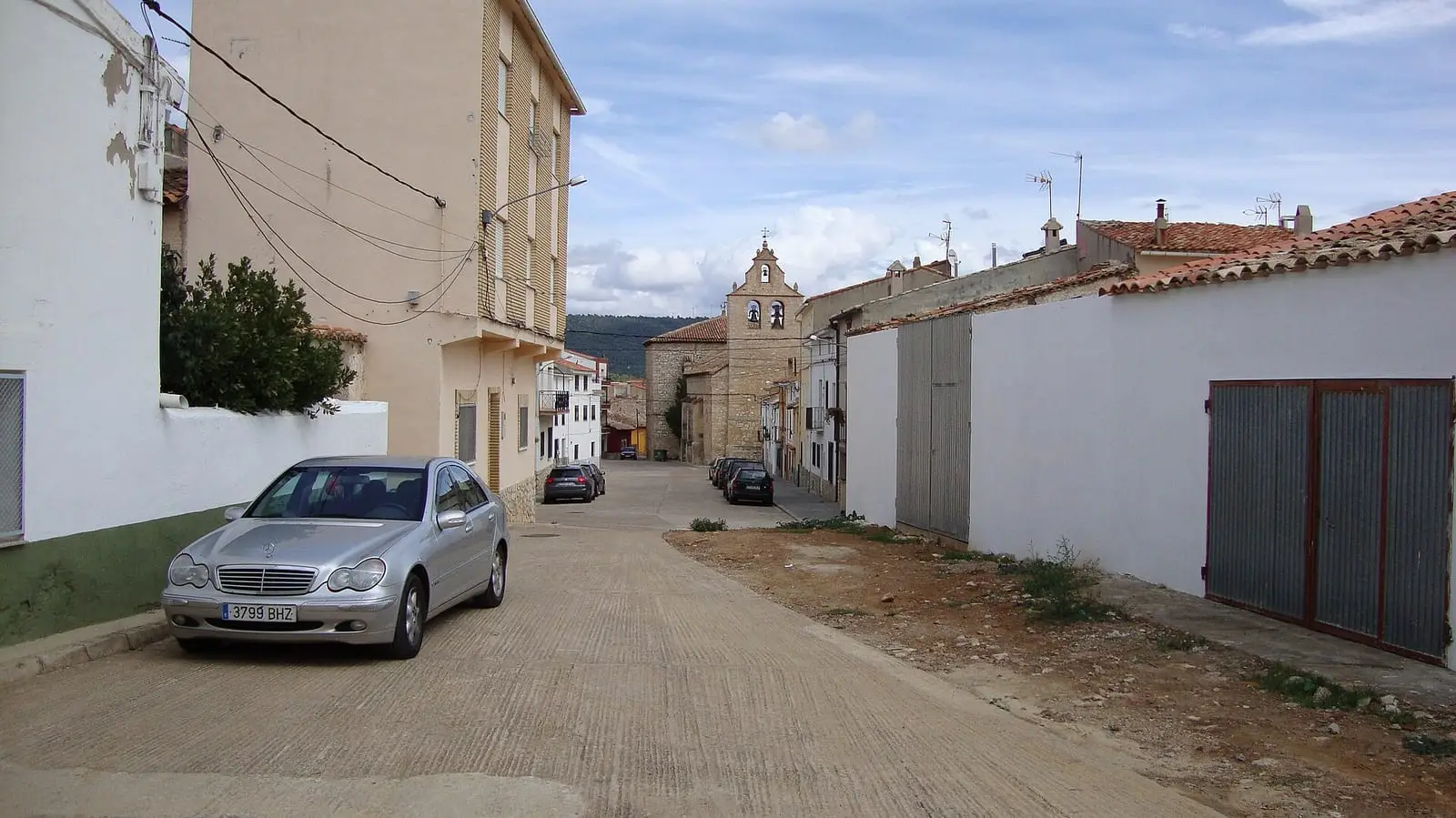
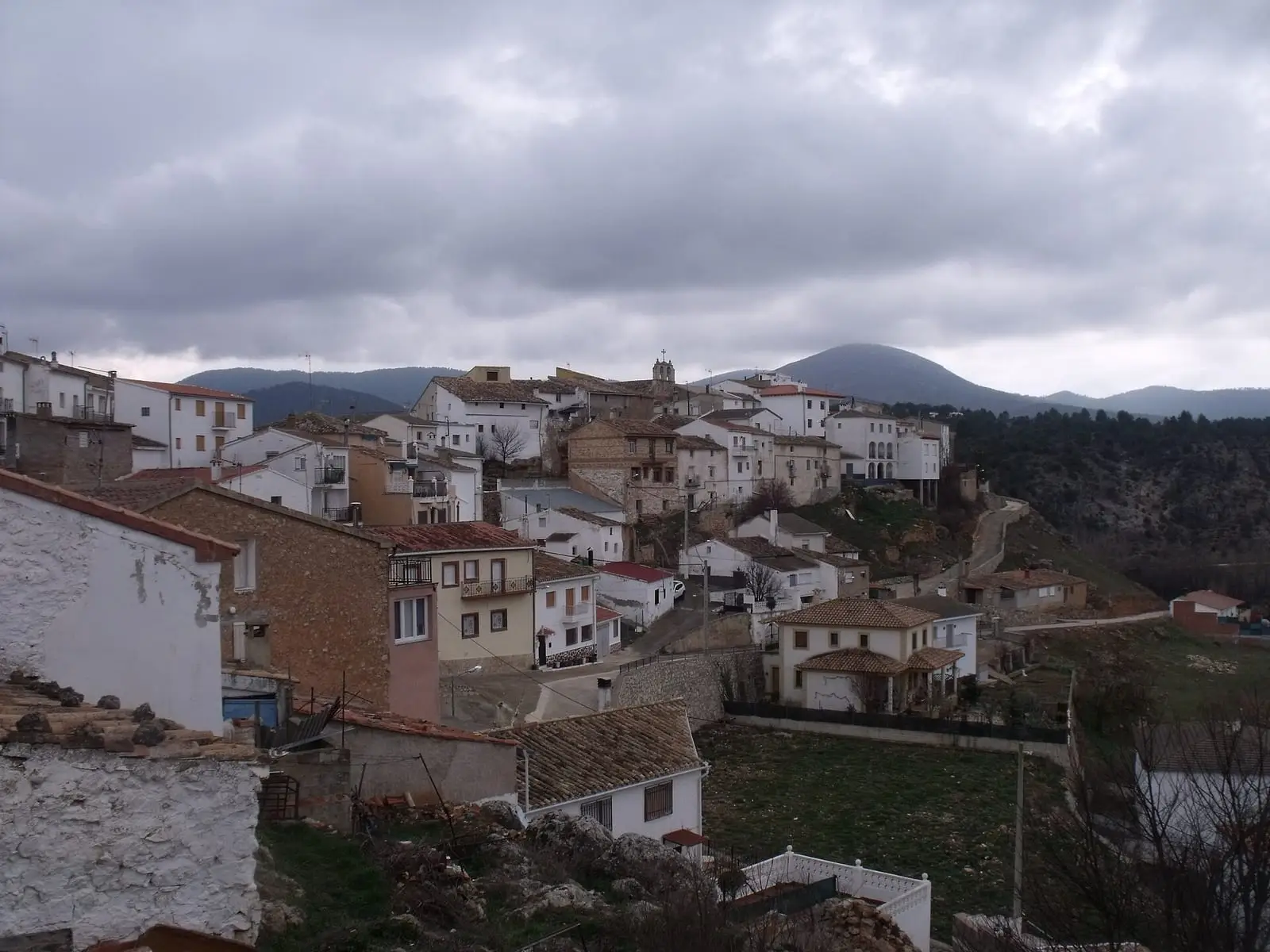
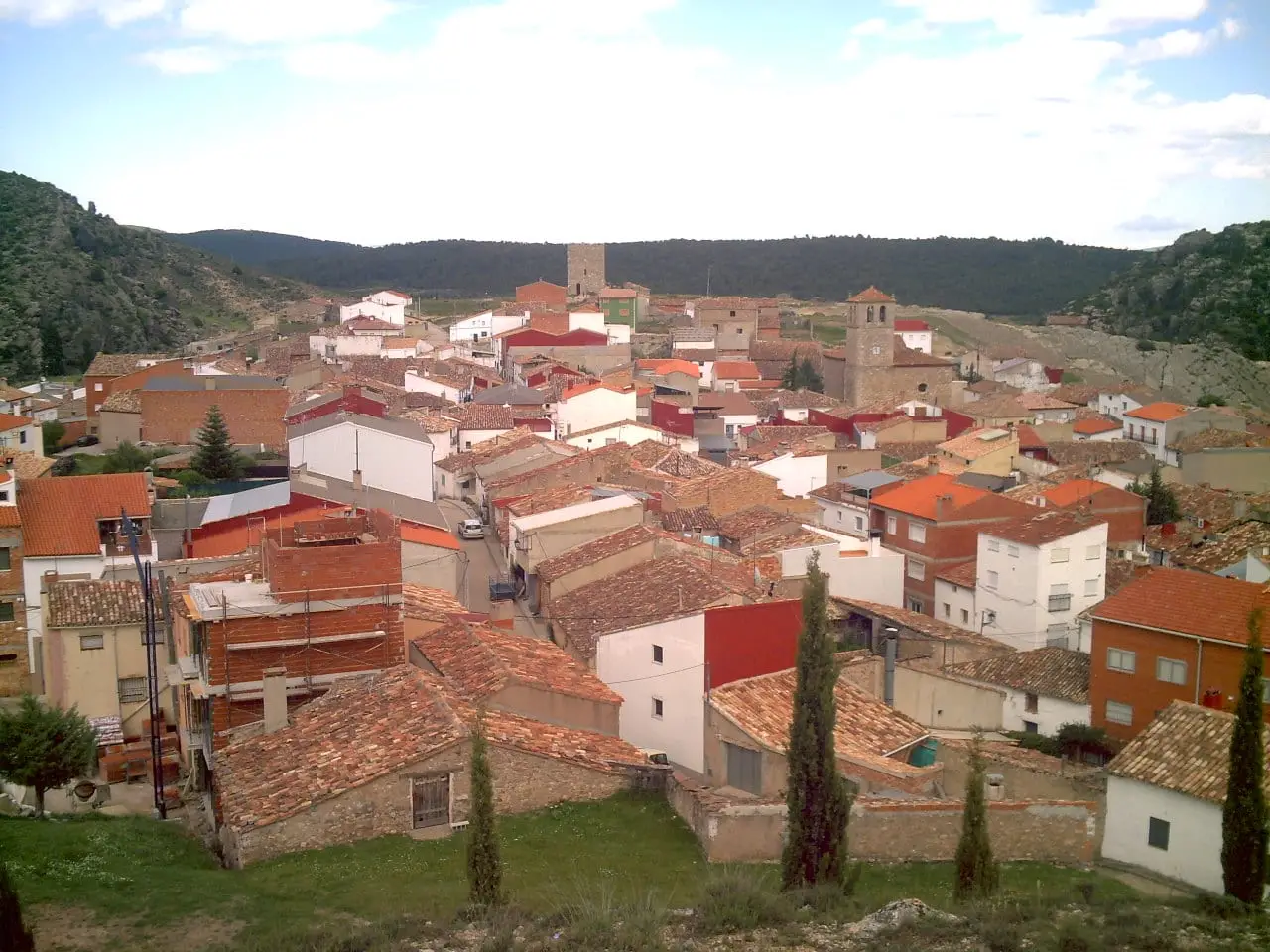
Where it is today
Frequently asked questions
Were there real mines in the Serranía Baja?
Yes, small ones. Iron veins and, to a lesser extent, copper in Talayuelas and Garaballa, with galleries at Santa Filomena and the Cerro de las Minas. There was far more paperwork than ore: dozens of claims, a Cuenca company and an English company that extracted 15 tonnes in 1899.
Why did it fail?
Because of transport. In 1867 everything depended on a railway that never arrived, and in 1924 the Estadística Minera was still blaming the lack of transport for the languishing state of the province's mining.
What does Eugenia de Montijo have to do with it?
The Santa Filomena and La Provisora mines stood on land belonging to the Marchioness of Moya, a title then held by María Eugenia de Palafox, Portocarrero y Kirkpatrick, Empress of the French.
Sources and reading
- Huerta, J. J. (2023): «Historia de la minería metálica en la Serranía Baja de Cuenca», De Re Metallica 41, pp. 5-20 reference located · The abstract on Dialnet has been read.
- Huerta, J. J.: «La minería metálica en la Serranía Baja de Cuenca. Siglos XIX-XX», Centro de Estudios del Marquesado de Moya (2026) source consulted · Extract from the 2023 article, based on the 102 mining files in the Cuenca Provincial Historical Archive (1841–1900) and the IGME's Estadística Minera.
- Estadística minera de España correspondiente al año de 1867 (IGME), p. 86 source consulted · Cuenca section: the Santa Filomena mine, producing silver-bearing grey copper, with workings idle.
- Recuenco Pérez, J. (2017): «La Sociedad Minera Santa Filomena: liberalismo y capitalismo en Cuenca a mediados del siglo XIX», UCLM reference located · Cited by Huerta; not read directly.
Open questions
- The copper licences of 1566 and 1586 are known through the local history recorded in the Talayuelas entry; the document has yet to be seen.
- Roman exploitation of Talayuelas copper is asserted by the 1924 Estadística Minera without specifying mines or dates: no published archaeology confirms it.
- What remains of each mine today (entrances, galleries, slag heaps) and in what condition: there is no published inventory.