Trade · Until the 1970s · The trades of the forest and the water
The hills provide a living: resin, firewood, lavender and asphodels
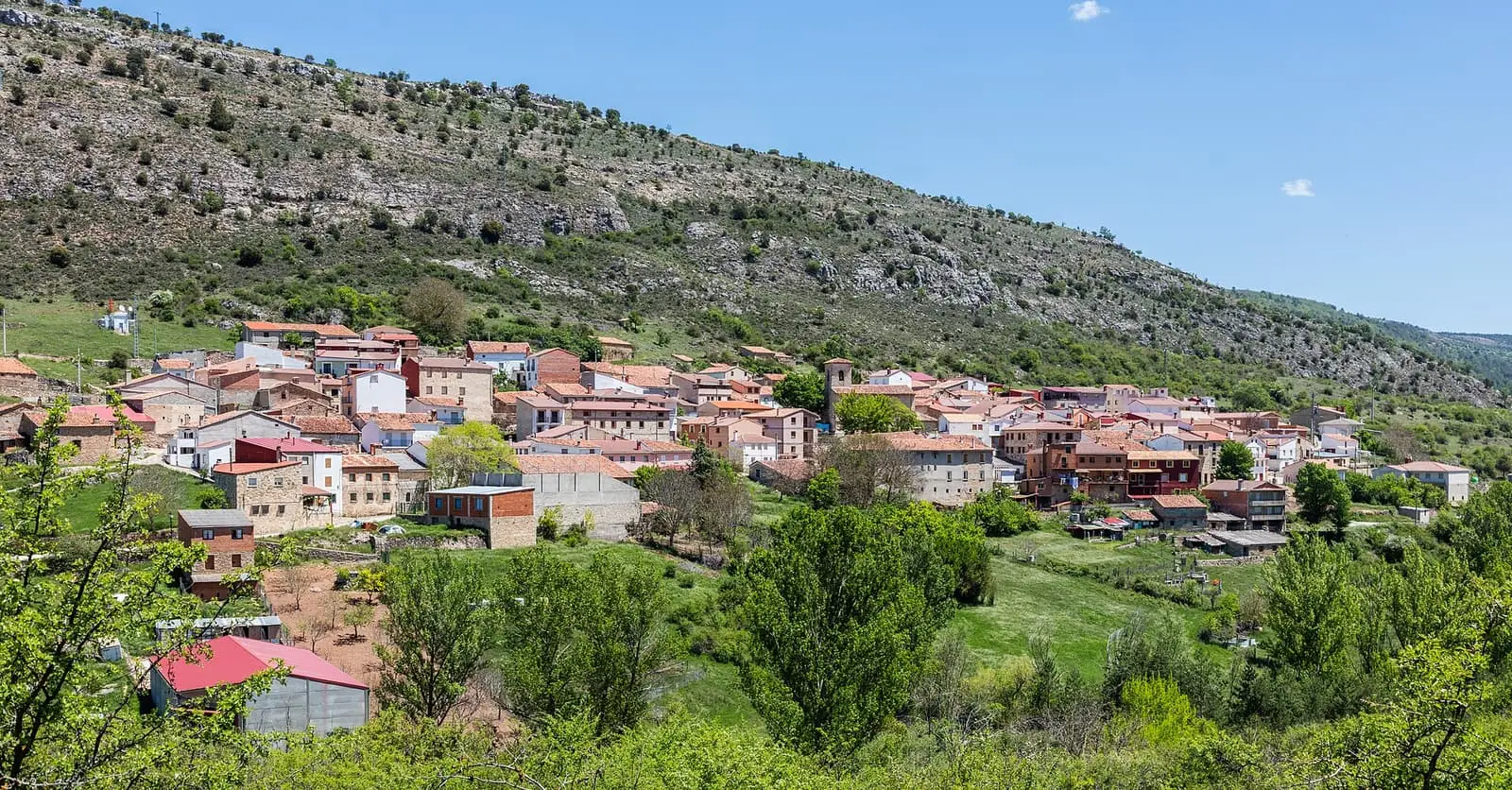
In Valsalobre the hills provided a living. Five resin tappers worked thousands of pines, firewood from the dehesa was shared among villagers by lot, lavender was distilled in a boiler beside the river and asphodels and acorns fattened the pigs. Villagers tell the story in videos by Vestal Etnografía.
On this page 7 sections
Resin
A villager who as a child took food to his resin-tapper father tells it this way: his father spent more than thirty years extracting resin from the pines of the dehesa (wood pasture). There were five resin tappers in Valsalobre. One worked three thousand five hundred pines, another three thousand and another two thousand, and each man’s trees were sometimes close together and sometimes scattered, which meant some collected more resin than others.
Between March and April the bark was stripped from the pine. A half-moon piece of metal was hammered in with a mallet and a casco, an earthenware pot made in Priego, was placed below to collect resin when the pine «sudaba» (sweated). When the pots filled it was time to remasar, to collect the resin: a paddle was used to put it into a metal tin and from the tin into a wooden vat, like those used for wine. Payment was by the vat. A man who collected it says it was the best-paid work he ever did. He thinks the resin works that bought it, a very important company in the 1950s and 1960s, was in Cañizares, though he is not certain.
According to them, the pine that yielded most resin was the maritime pine; Scots pine was never tapped. For the child bringing food, the broth almost always arrived spilt from the basket swinging so much, and he went round the dehesa for fear of the cattle.
Firewood, by lot
Oak firewood was cut communally. The whole village carried out pruning, and the wood was piled in rimeros, heaps later allocated among families by lot. Sometimes an oak was so large it went to two or three villagers, and the pieces were numbered. Dead Portuguese oaks were also allocated by lot. In the past the upper branches were distributed and the overhanging side branches left; now, they say, it is the other way round.
That same timber drove the village economy. One man explains that the town council always lived from pine felling: when timber brought money, there was no need to worry about paying for anything. Today, with timber worth almost nothing, the council has no resources. A man who felled a Scots pine about twenty-one metres tall remembers it yielding seven cubic metres and being bought by a carpenter. Beside it stands another, called «el abuelo» (the grandfather), which villagers say is still standing in the dehesa.
Lavender
For many households, espliego, lavender, was the best income of the year. Gathering was banned until the appointed date, and it was cut in late August or early September, after threshing was finished. People brought it to a scale and were paid by the arroba. One man says his household lived on it for half a year. Two shepherds shared the work: one stayed with the sheep and the other cut the lavender and carried it back on his shoulder, and that money paid for the festivities.
Lavender was distilled in a boiler beside the river, near a small bridge at the entrance to the village. Children helped tread it down, jumping on it to pack it, and a very small quantity of essential oil came from the boiler. Women also went to cut it. One woman remembers her harvest being rounded up to four arrobas when weighed because it fell only a little short. It was not sown in the Serranía: it grew on the hillsides.
Asphodels, acorns and mushrooms
Gathering gamones, asphodels, was banned all year except on one appointed day. Villagers remember the competition: some people went to sleep nearby the night before to be first, and everyone had their spot. They were gathered before dawn because later, in the sun, they could no longer be gathered as well, and were boiled with pumpkin, potatoes and bran for pigs. Portuguese-oak acorns were subject to the same ban and were gathered on another appointed day.
Mushrooms did not then have the reputation they have now. People gathered saffron milkcaps, field mushrooms and king oyster mushrooms. One man remembers loading a mule with a pannier full of saffron milkcaps, which they call «mízclos» (saffron milkcaps), and going to Cañamares to exchange them for a load of grapes, more or less kilo for kilo. Valsalobre had no vineyards.
What they say about abandonment
Villagers link abandonment of the hills to fires. One stockbreeder explains it this way: when there was livestock, the ground was clear and lightning strikes nearby did not start fires; now, without animals, dry grass burns from a cigarette end. According to him, Patrimonio Forestal put so many obstacles in his way that he ended up selling his livestock. This is one person’s testimony and has not been checked, so it is recorded among the unresolved questions.
Words of the trade
- Resinero
- The person who extracted resin from pines. In Valsalobre, the trade of five villagers, each working between two thousand and three thousand five hundred pines.
- Casco
- An earthenware pot placed below the cut in the pine to collect resin. Those used in Valsalobre came from Priego.
- Remasar
- To collect resin from the pots with a paddle, putting it in a tin and from there into a vat.
- Espliego
- An aromatic plant from the hills used to distil an essential oil. In Valsalobre it was cut in late summer and paid for by the arroba.
- Gamón
- A plant whose dried roots were boiled with pumpkin, potatoes and bran to feed pigs.
Where it is today
Carry on elsewhere
- Valsalobre en altotajo.es · the village told from the Alto Tajo
Frequently asked questions
Were there resin tappers in Valsalobre?
Yes. One villager remembers five, each with between two thousand and three thousand five hundred pines, and says resin brought a great deal of money to the village and town council in the 1950s and 1960s.
How was firewood shared out?
After communal pruning, heaps or rimeros were made and allocated among villagers by lot. If an oak was very large, it went to two or three families.
What was lavender used for?
It was cut in late summer, weighed on a scale and paid for by the arroba. An essential oil was distilled from it in a boiler beside the river. For many households it was the best income of the year.
Sources and reading
- Vestal Etnografía: «La resina y la leña en la dehesa de Valsalobre» source consulted · Oral source. Automatic transcript read: figures and names are memories and are used only where the transcript is clear.
- Vestal Etnografía: «El espliego y el gamón en la dehesa de Valsalobre» source consulted · Oral source. The lavender, asphodels, acorns and mushrooms come from here.
- Vestal Etnografía: «Las salinas y el pino de Judas en Valsalobre» (conversación con tres vecinos) source consulted · Oral source. The town council and pine felling, and the account of fires, come from here.
- Vestal Etnografía: «La escuela y los quintos en Valsalobre» (conversación con tres vecinos) source consulted · Oral source. Recalls how lavender was distilled and how much the women earned.
- Vestal Etnografía: «Los mayos y la matanza en Valsalobre» (conversación con un vecino de 97 años y una vecina) source consulted · Oral source. The story of the Scots pine called «el abuelo» (the grandfather) comes from here.
Open questions
- The numbers of pines per resin tapper and resin tappers in the village come from one witness's memory. Check against town council books or listed forests.
- Species: villagers say negral (or rodeno), albar and enebro; the Forest Catalogue is needed to confirm exactly which trees were tapped.
- Location of the lavender boiler (beside a small bridge on the river) and the pine called «el abuelo» (the grandfather), which one villager says is still standing in the dehesa.
- Whether the mushroom and acorn market they mention existed as such or was occasional barter.
- The role of Patrimonio Forestal in felling and gathering bans, as described by the interviewees: this is their opinion; no documents have been consulted.