Episode · 1980s – 2026 · Geology and dinosaurs
Las Hoyas, from a wall to a fossil site
In the 1980s a builder showed Cuenca geologist Santiago Prieto fossil fish in the limestone slabs he used to clad houses. They came from a hillside in La Cierva disturbed for pine planting. Prieto took samples to Madrid and palaeontologist José Luis Sanz took charge: that was the beginning of Las Hoyas, one of the major Early Cretaceous sites. Since then, each summer, students and scientists have opened its thin layers one by one.
On this page 5 sections
Fish in a wall
In the mid-1980s, in La Cierva, machines disturbed a hillside to plant pines and left piles of limestone slabs. A builder used them to clad houses, and some held fish. He showed them to a friend, the Cuenca geologist Santiago Prieto, a caver and later a teacher training lecturer, who went to the site and took a few samples to his former lecturers in Madrid. In the office of palaeontologist Nieves López he met José Luis Sanz, a Mesozoic specialist. Sanz first thought the rocks were Jurassic; then he saw they were younger, Cretaceous, and took charge. The first campaigns lasted a week, with two or three lecturers and a few students, geological maps and no very clear idea where to look.
Prieto does not claim the discovery of Concavenator. He remembers that among those early samples were large pieces enclosed in rock that suggested a bigger animal, but preparing them took a great deal of work, and small, clean fossils were then more appealing. The skeleton was excavated in 2003 and described in 2010. Today a room in the Museo de Paleontología de Castilla-La Mancha bears his name.
Opening the book
About 125 million years ago Las Hoyas was a subtropical wetland of pools and little islands of vegetation. The water and mud coming in left thin layers that now open like the pages of a book. Each summer, students from the Universidad Autónoma de Madrid separate them with small cold chisels. Anything of interest is recorded with its layer, because what matters is seeing how organisms change from one level to another: many fish here, crayfish there. Then, in the museum, it is cleaned, repaired, registered and studied.
It is not all dinosaurs. A little mark may be a coprolite, fossilised dung that one day, once analysed, will reveal what the animal that left it ate and who else lived in the wetland. There is a small shark with two spines and bipedal dinosaur footprints about forty-five centimetres long. In 2021, in the Magenta trench, a long trackway was studied, left by a theropod two or three metres tall that limped: one toe remained turned backwards. It was preserved in such detail because the footprints fell on microbial mats that hardened the mud almost immediately.
What comes next
About thirty people from Spain, Italy and France worked in the 2026 campaign, and there were hundreds of applications to take part. Besides excavating, they mapped the terrain to establish the wetland’s extent, were processing data from a synchrotron and were beginning to gather information for an artificial intelligence thesis to help study it. They are looking not just for the next striking animal but to understand how the whole wetland worked.
The questions are no longer limited to Las Hoyas. In 2024, at the initiative of villagers from Landete, Algarra and Casas de Garcimolina, who paid part of the cost through crowdfunding, study began on another layer of laminated limestone between the two villages: the Proyecto Chikuto, named after an amateur from Landete who showed palaeontologists where there were fossils. With Las Hoyas and Buenache de la Sierra, it is another piece in the puzzle of the Serranía’s Cretaceous wetlands.
Vocabulary
- Laja
- A thin slab of limestone that splits naturally; in those of Las Hoyas fossils remain as if between the pages of a book.
- Coprolito
- Fossilised dung. Analysis can reveal what an animal ate.
- Rastro
- A series of successive footprints left by the same animal.
- Tapete microbiano
- A layer of microbes on the mud that, when trodden on, helped harden and preserve the footprints.
- Cata
- A sector of the excavation with its own name, such as Magenta.
- Columna estratigráfica
- The order of layers from bottom to top, which makes it possible to establish what is older.
Where it is today
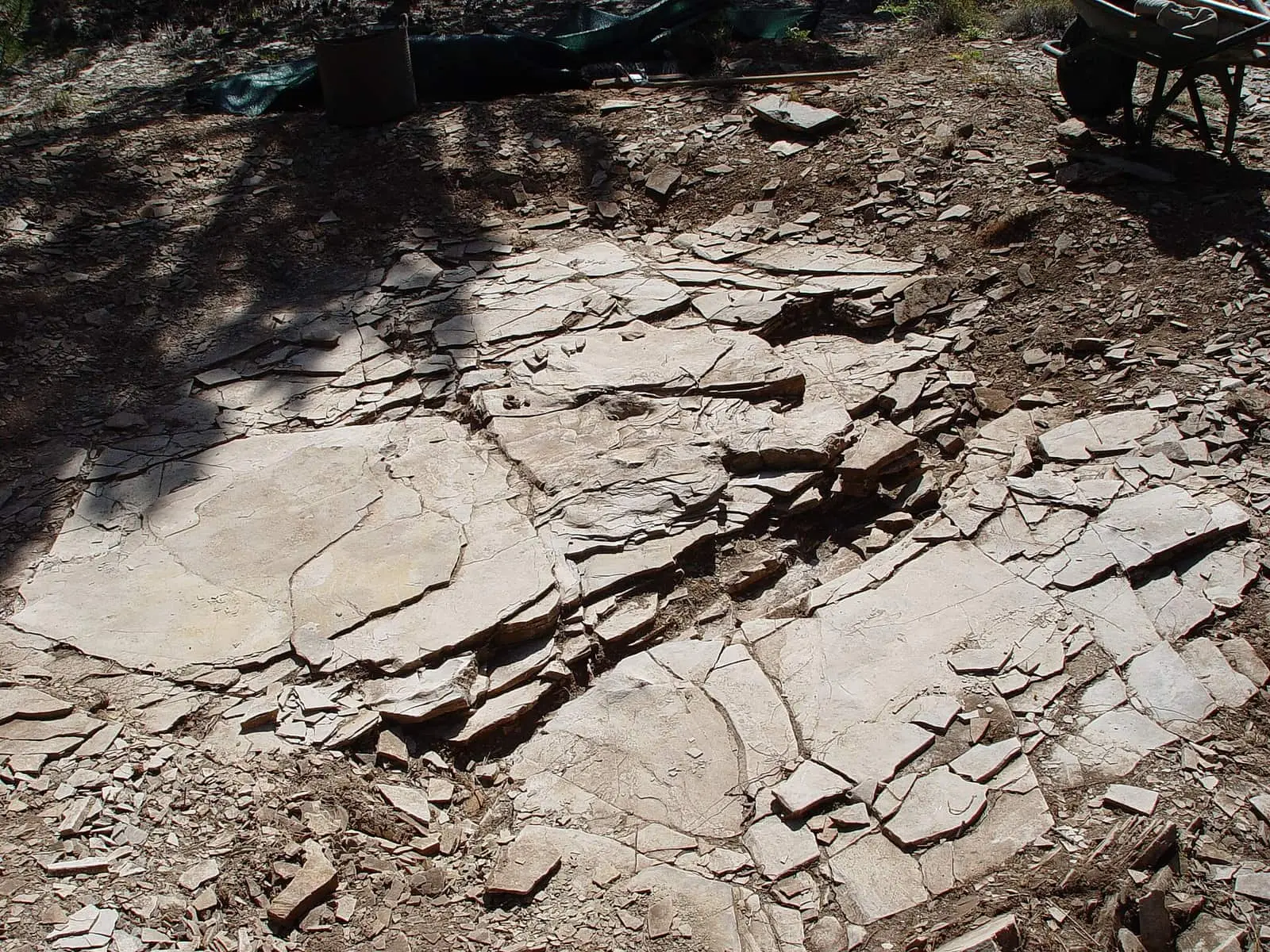
Las Hoyas
La Cierva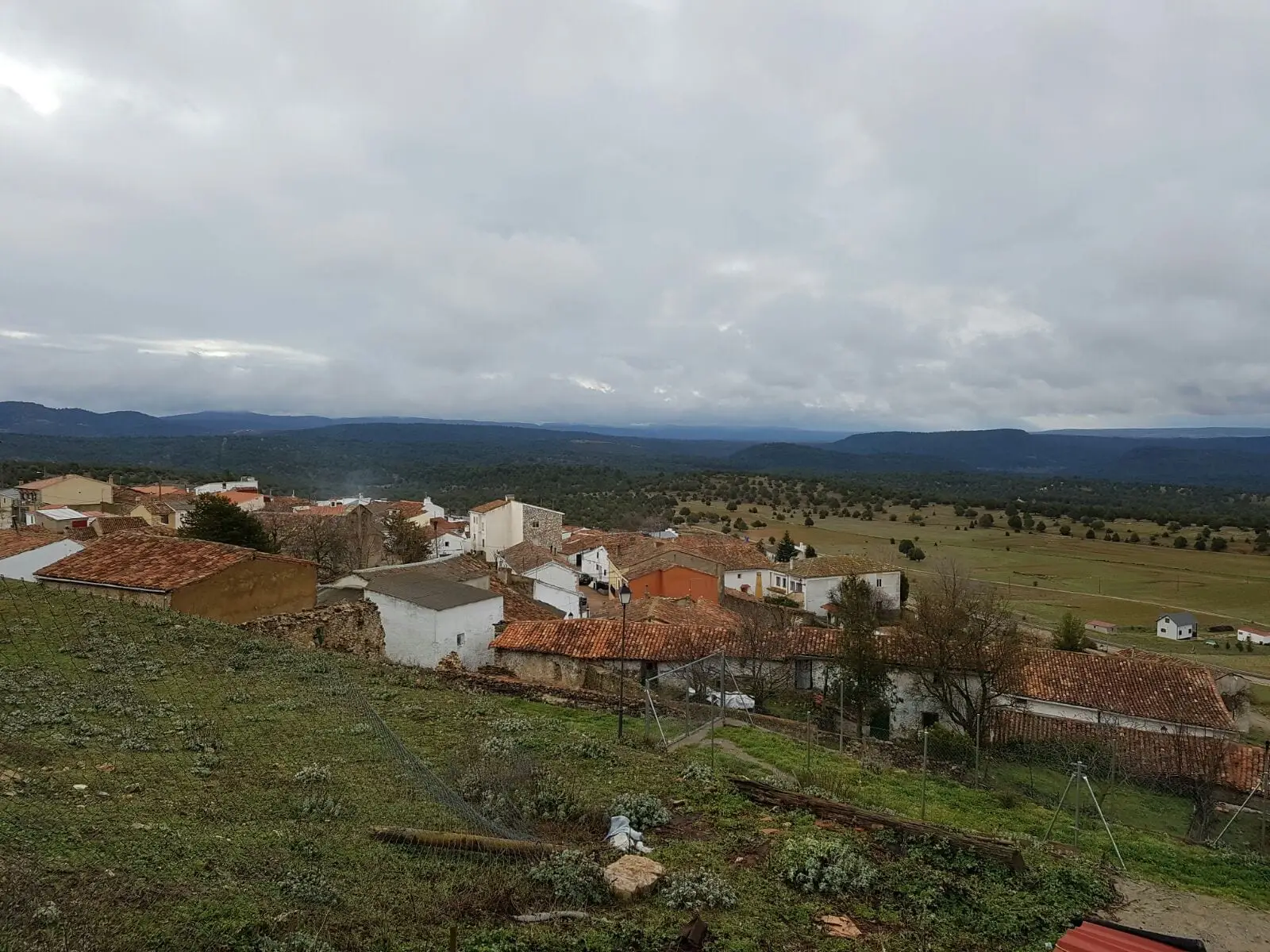
La Cierva
Cuenca · 2 placesCasas de Garcimolina fossil site (Proyecto Chikuto)
Casas de Garcimolina, Algarra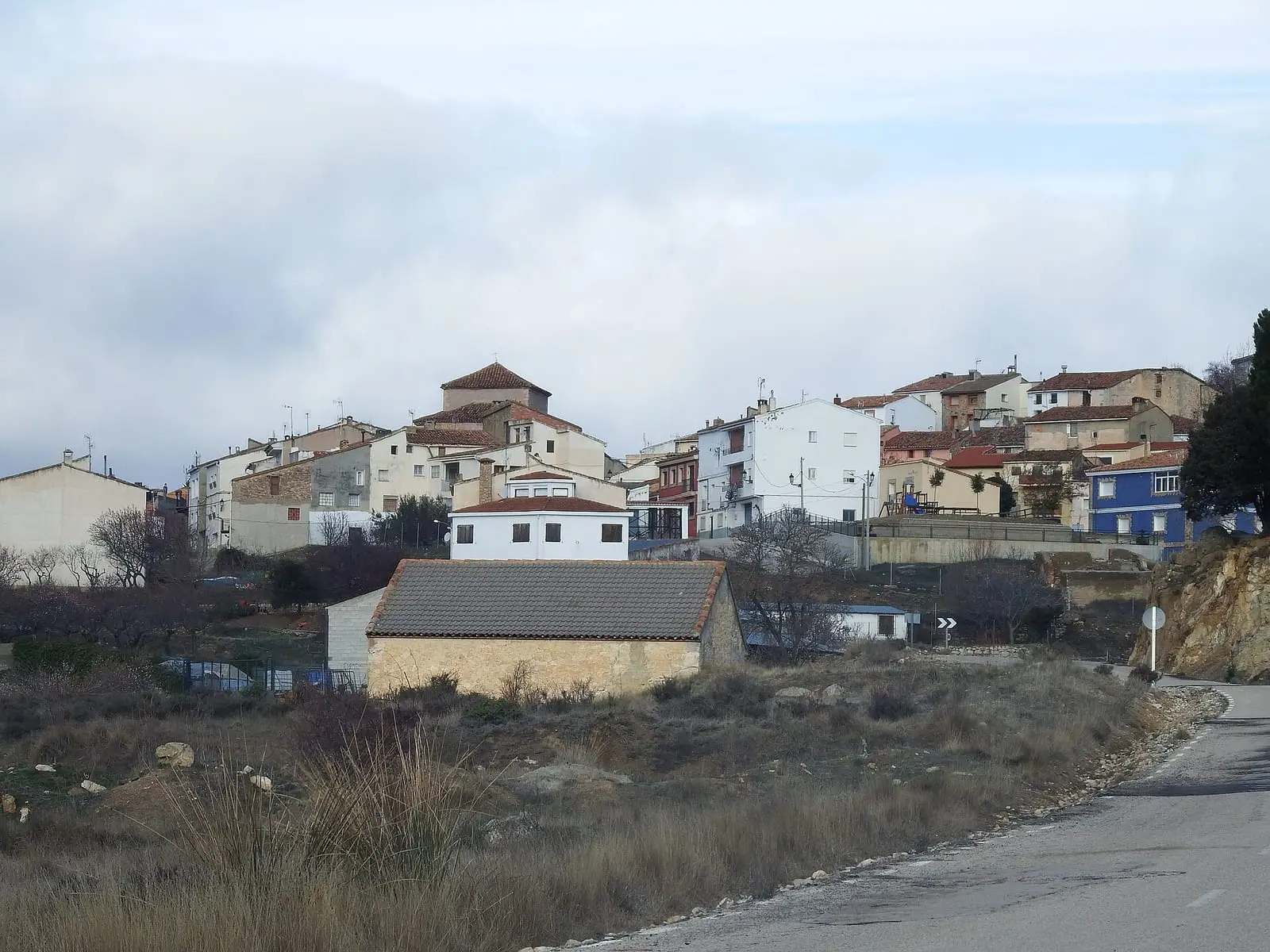
Casas de Garcimolina
Cuenca · 1 places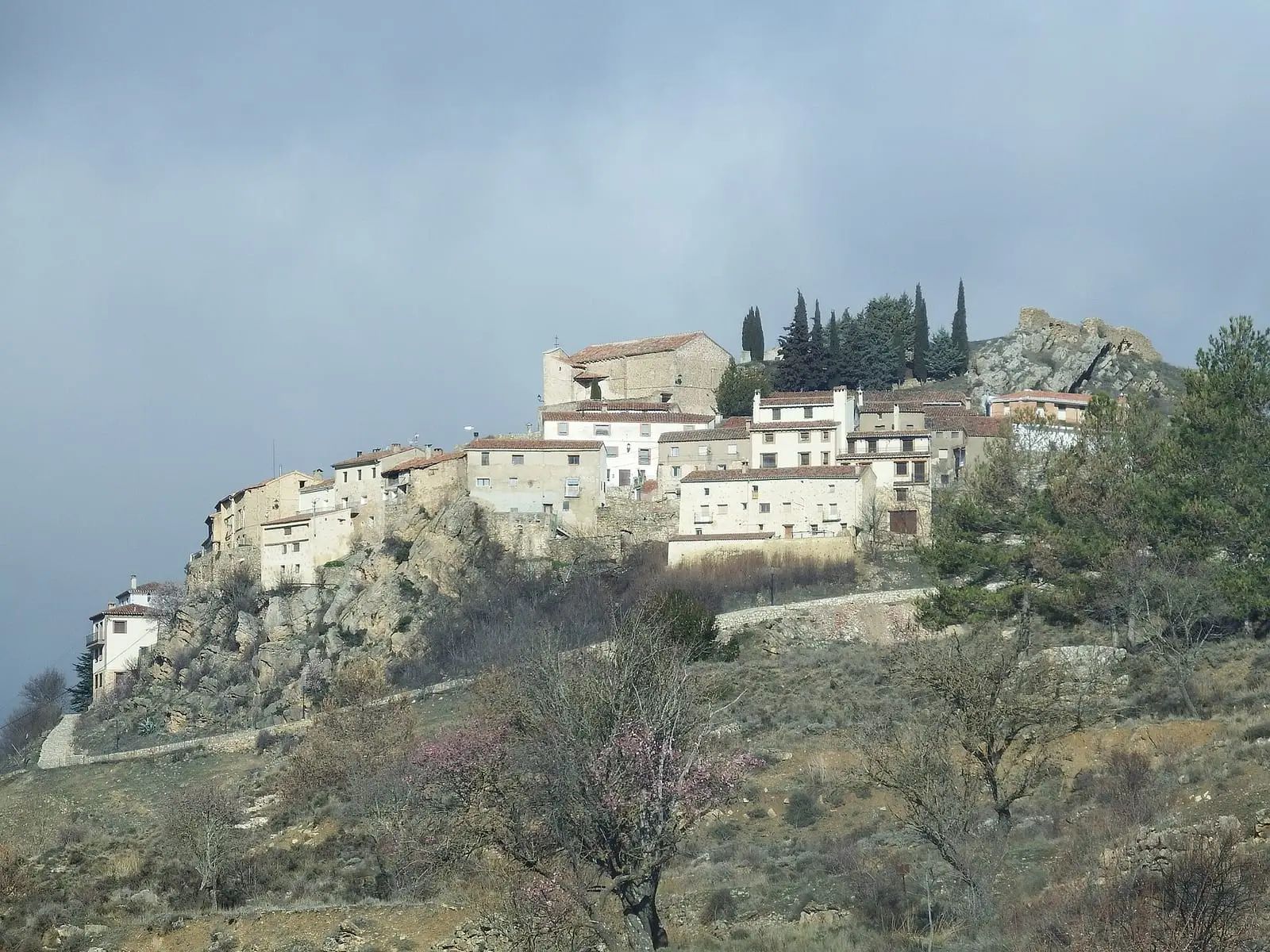
Algarra
Cuenca · 1 places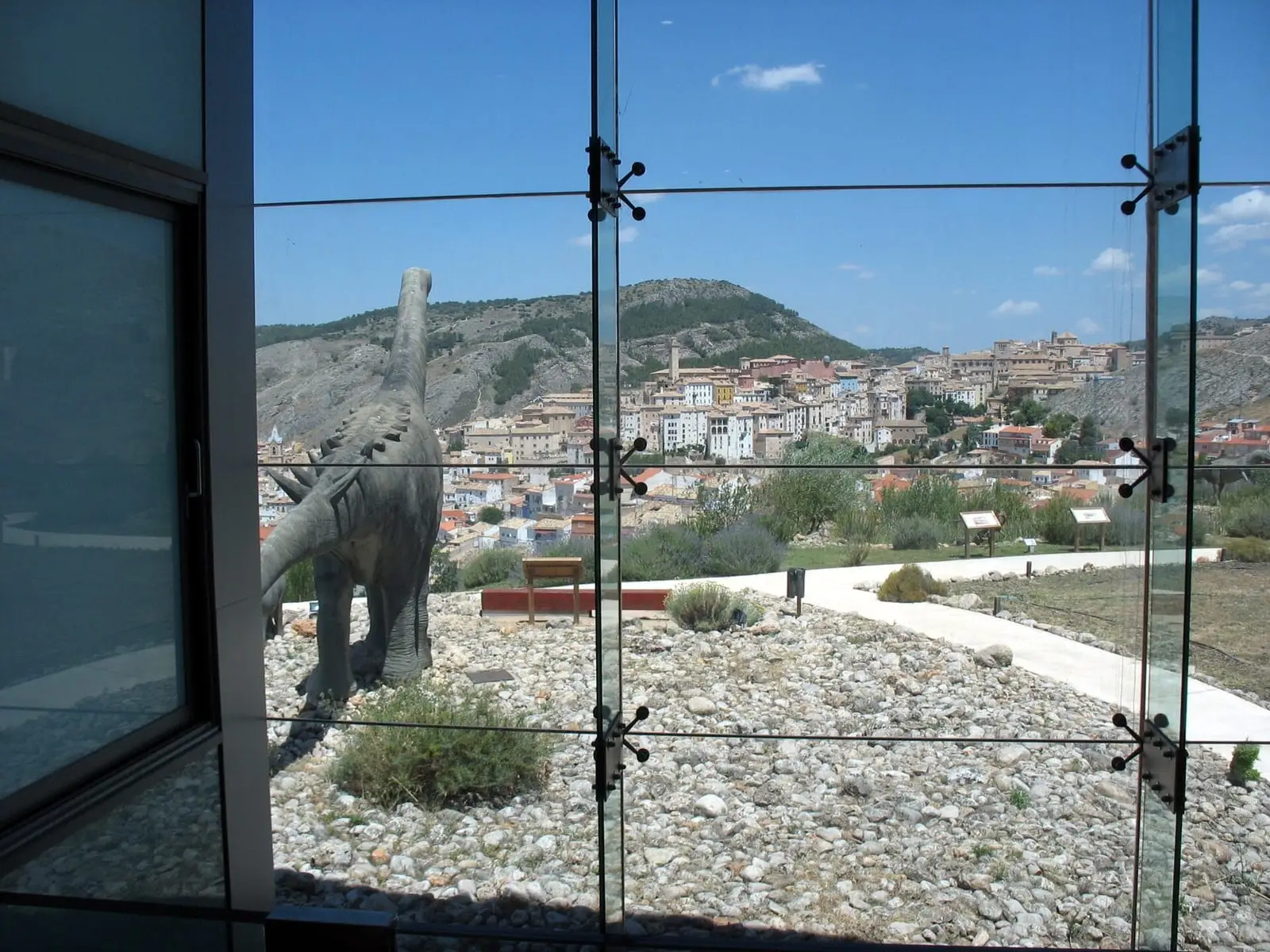
Museum of Palaeontology of Castilla-La Mancha (MUPA)
CuencaFrequently asked questions
How was Las Hoyas discovered?
In the 1980s, limestone slabs with fossil fish used to clad houses caught the attention of Cuenca geologist Santiago Prieto. They came from a hillside in La Cierva disturbed for pine planting. He took samples to the university and palaeontologist José Luis Sanz organised the first campaigns.
Can the excavation be visited?
Only on the open days organised by the researchers and the museum in some summers. It is a protected Palaeontological Zone: do not enter independently or collect anything. The fossils can be seen in the Museo de Paleontología de Castilla-La Mancha, in Cuenca.
Sources and reading
- Hoy por Hoy Cuenca, Cadena SER: «Santiago Prieto: el geólogo y apasionado descubridor de dinosaurios de Cuenca» (23-10-2024, con audio) source consulted · Includes an earlier report with José Luis Sanz; the chronology of Concavenator is read from a book coordinated by Iván Narváez and Pepe Alfaro.
- Hoy por Hoy Cuenca, Cadena SER: «En busca de dinosaurios en los humedales de Cuenca de hace 120 millones de años» (13-07-2022, con audio) source consulted
- Hoy por Hoy Cuenca, Cadena SER: «El dinosaurio que dejó sus huellas en Cuenca era cojo y medía más de dos metros» (11-07-2021, con audio) source consulted
- Hoy por Hoy Cuenca, Cadena SER: «La pieza que le faltaba al puzle: nuevo yacimiento paleontológico de Cuenca» (10-07-2024, con audio) source consulted
- Hoy por Hoy Cuenca, Cadena SER: «Inteligencia artificial y paleontología se unen en una nueva excavación en Cuenca» (30-07-2026, con audio) source consulted
Open questions
- Date of the first excavations: 1985 according to a report and 1988 according to the interview with Sanz (one article prints 1885, an obvious typographical error). The excavation report is missing.
- Age of the wetland: the pieces give 120 or 125 million years; 125 is used, the figure in the official records.
- The 2021 trackway: the original study of the limping theropod has not been consulted.