Village · Cuenca
Huélamo
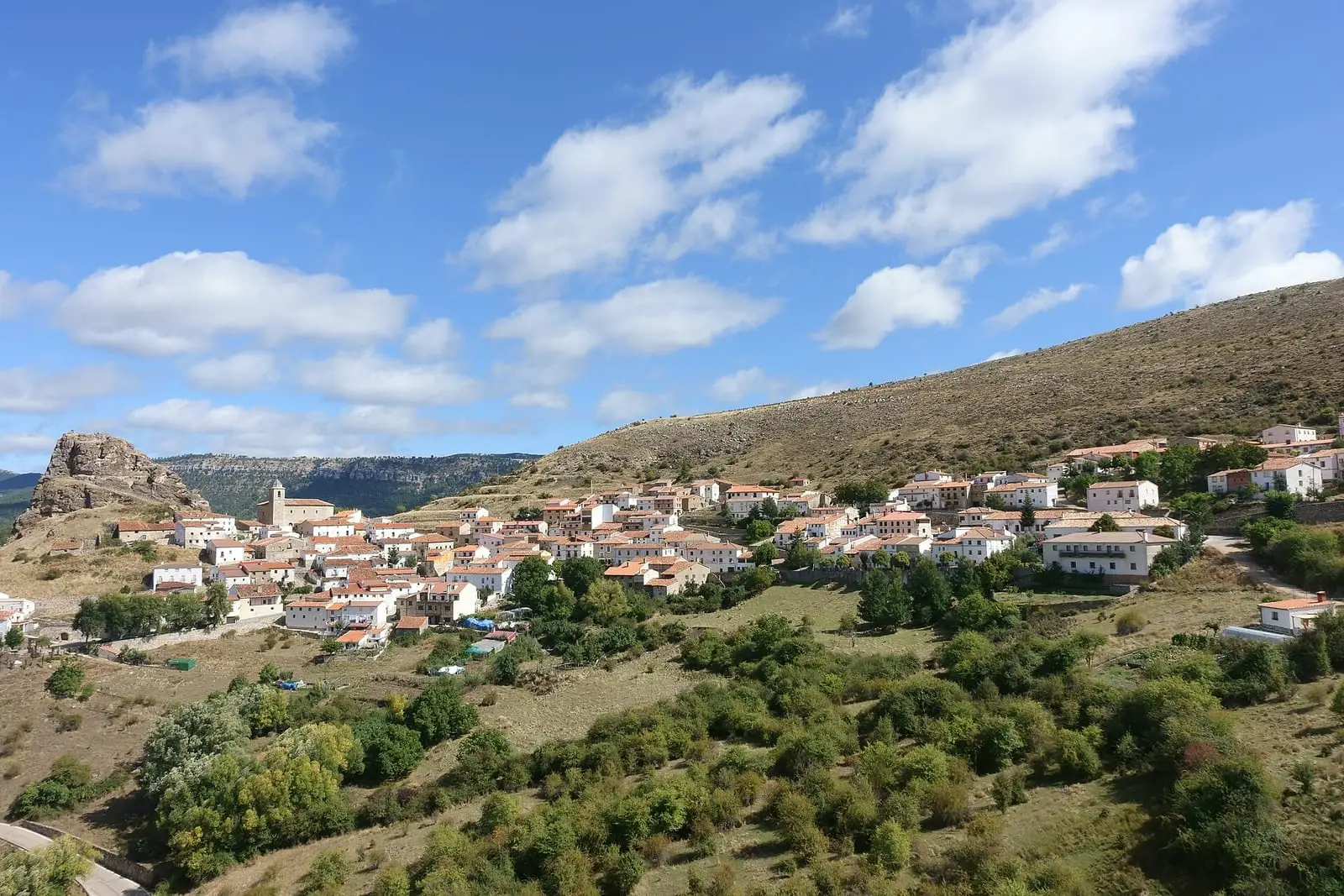
Huélamo is a village in the Serranía Alta (upper Serranía) of Cuenca, hanging from a slope above the upper Júcar and crowned by a crag with Arab castle remains, within the Natural Park. It had 866 inhabitants in 1920 and 80 in 2021. The Ensenada Cadastre of 1752 records ironworks, trip hammers, a fulling mill, charcoal burners and trout fishermen.
On this page 14 sections
A village clinging to the crag
Huélamo clings to a hillside on the left bank of the upper Júcar within the Natural Park. Above, on the crag, remain the ruins of Huélamo castle, of Arab origin, with a cistern that retained wall paintings. The bullring occupies the old Corral del Concejo at the crag’s foot.
Julián Romero, field commander of the Tercios of Flanders, was born in Huélamo in 1518. The town hall square bears his name, events honour him each August, and Los Cargos depart from that square during the Virgen del Rosario festivities. The Virgen del Pilar hermitage, called Del Socorro in 1879, was rebuilt in 1951 and has murals by José Segura García from 2010 to 2015.
What trades and memory tell
In 1752 Huélamo was a town under the Count of Salvatierra’s lordship, paying him twenty-four trout pies a year. The Júcar drove a council flour mill and fulling mill; there were ironworks with a trip hammer for iron, another for copper, charcoal burners working from San Andrés to late May and five trout fishermen. Woodland was cleared, sown for six years and left to regrow for about forty before the next clearance.
In 2006 a grave with remains attributed to two AGLA guerrillas killed in 1949 was exhumed in the cemetery: the Huélamo guerrilla grave, described in The guerrilla in the Serranía.
Centuries of ups and downs
The Relaciones de Felipe II record the collapse of Huélamo’s livestock farming in the second half of the 16th century: in six years numbers fell to 4,000, from 70,000 in one reading of the Relaciones and 7,000 in another, and households from 187 to 141. Many survived by making pine troughs, chairs, screws and sieve hoops, sold in La Mancha for wheat, wine, oil and chickpeas. During the War of the Spanish Succession in the early 18th century the village was devastated; fifty years later only eighty of its three hundred houses had been rebuilt. Today 70% of the municipality belongs to the village: woods formerly common land of the Sierra de Cuenca passed to Huélamo and are public-utility forests (montes de utilidad pública), of black, Scots and maritime pine. It is told in Everyone’s woodland. In the mountains streams are called royos: Royo Herrero, Royo Pajarón, Royo de las Salinas, recalling salt here too.
Where the timber drives began
The Júcar timber drives began in Huélamo municipality. Up to here the Júcar is a stream; what makes it a river is its meeting, at the municipality’s northern entrance, with the Almagrero or River Herrería, descending from the Aragon boundary. There stood the Herrería de los Chorros: in 1752 it had an inn, several houses, a grocery and a trip hammer for copper, and in 1940 nine people still lived there. Beside Puente de los Chorros the first cambras, stacks of logs, were piled and the first loading point stood. The Relaciones de Felipe II in 1575 already said the Júcar rises where the streams of Valdemeca, Tragacete and Royo-Herrero meet.
The large timber drives began at the municipality’s southern entrance, at the Venta de Juan Romero, a hamlet beside the river with its spring and a mill with two pairs of millstones and a drop of about fifteen metres, receiving pines from the Muela de la Madera. In 1940 it had 35 inhabitants. It was also a resting place for flocks on the Cordel de Huélamo, the narrower drove road following the Júcar. «Marzo con sus marzadas se lleva las maderadas» (March, with its March floods, carries off the timber drives), people said: the gancheros, river timber drivers, waited for the thaw. Smaller drives also came down the Valdemeca. Beside Puente de los Chorros was the Cañadahonda resting place, where flocks from Albarracín stopped, and the Cordel de Huélamo followed the Júcar to Prado de los Esquiladores: river for timber and drove road for livestock, side by side.
A hundred and thirty-five livestock shelters
Across the municipality’s 78 km², 135 lambing pens, pens and rock shelters have been documented with names and locations: shelter for livestock and shepherd, with pen, shed and hut, built in dry stone on sunny slopes; rock shelters use overhangs in limestone walls. They are spread across the woodland’s five divisions, La Muela, Resinero, La Serrezuela, Valdeminguete and Las Salinas or Las Molatillas, the last having most, with 55. Almost all bear the name or nickname of the family using them, and almost all are ruins.
The municipality is also spring country: a recent study documented 52 permanent springs, and the town council counts up to 150 water points. People fetched household water from El Pozuelo spring in earthenware jugs. From the 1960s each family’s small flocks gradually disappeared, leaving a few large livestock farms.
A 2024 radio portrait recalls the houses’ ironwork and remains of an old foundry, and presents the castle and tower as a Castile-Aragon frontier post collecting tolls; the document is missing. Huélamo had 76 registered inhabitants in 2023.
A Huélamo tale collected by lecturer Pilar Gómez Couso in her book of provincial wonder tales is La Puerta del Diablo. A young man agrees to race a stranger and discovers his soul is at stake; he reaches shelter in time, and his pursuer leaves a mark. It is a tale, not an event, and corresponds to no specific gate that can be visited.
The jota and the forums
In early September 2023 the community centre hosted a Vestal Etnografía forum on traditional ecological knowledge. About fifty people attended and there was a panel on rural knowledge and depopulation. Cuando canta la garlocha, by José Fajardo, illustrated by Aneta Tarmokas (Alalimón, 2023), was presented: stories born of field notes, some set in the Cuenca mountains. Forums continued in Cañete, Cuenca and Cardenete.
In May 2024 Huélamo hosted the Trashumancias programme’s third training day, with fifty students and over a hundred local residents. That day:
- Marco Antonio de la Ossa presented La música en Huélamo (Cuenca) (1964-2023);
- Algazara gave a jota workshop;
- storyteller Félix Albo told tales.
On 20 June 2026 Herrería de Los Chorros hosted La Sierra Cuenta, a play by Teresa Valeriano written from the memory of inhabitants of Huélamo, Beamud, Vega del Codorno, Valdemeca and Tragacete, with transhumance as its background.
Another legend, that of the man in the black cape, was adapted by Pilar Muñoz from Leyendas conquenses. A farmer accompanies a stranger towards La Serna and discovers he is the devil. He flees home and promises the Virgen del Rosario to attend the procession barefoot. It passes Alto de la Horca and Los Dornajos.
The Ensenada Cadastre already recalled saltwater springs used for saltmaking and blocked on royal orders. A village shepherd remembers schooling in those days in The hearth, school and the road to Valencia.
The school
Marco Antonio de la Ossa has written Huélamo’s school history using the teachers’ press and records:
- 1906. Nicolás Moreno Rabal is appointed teacher, appearing again in the press in 1908, 1911, 1913 and 1917.
- 1916. Two school mutual-aid societies, Elia and El Olmo, are registered.
- 19 March 1917. A cultural celebration is held, with readings, songs and presentation of accounts.
- 1925. A tree festival is held, with pupils and teachers planting trees, followed by a meeting of the mutual-aid societies and talks about saving.
- 1936. A new two-classroom school is approved, one for boys and one for girls. Work began before the war but was not completed then.
- School year 1980-1981. The school closes.
A village shepherd interviewed in 2019 remembered a single year of school with «el maestro Nicolás» (the teacher Nicolás), in the building now used as the town hall: boys upstairs and girls below. It is told in The hearth, school and the road to Valencia.
Routes
The PNSC-S5 climbs to the castle from Plaza del Obispo: 0.4 km and half an hour through the centre, with the Júcar valley at the end. The PR-CU 7, Ruta del Masegar, a short-distance trail, is 10.8 km through pine and Portuguese-oak woods, among lime-kiln and tile-works remains. The PR-CU 29 leads to Ceñajo de los Calatrava, Peña Rubia and Las Torcas.
Plan your visit
Climb to the castle on the short route and leave El Masegar for a full morning.
Before you travel
The castle summit has drops and the cistern is an open hole: do not lean over. In winter streets and trails may have snow and ice.
Combine with
Tragacete and Valdemeca are less than 10 km away as the crow flies.
Frequently asked questions
What is there to see in Huélamo?
The village clinging to a slope below a crag and the castle of Arab origin, reached by a 0.4 km route from Plaza del Obispo, overlooking the upper Júcar valley.
Which trails start from Huélamo?
Subida al Castillo (PNSC-S5, 0.4 km), PR-CU 7 Ruta del Masegar (10.8 km, 3 hours) and PR-CU 29 Ceñajo de Los Calatrava, Peña Rubia y Las Torcas (13 km).
What trades did Huélamo have in the 18th century?
According to the Ensenada Cadastre of 1752: ironworks and an iron trip hammer, another for copper, a fulling mill, a flour mill on the Júcar, charcoal burners and five trout fishermen, besides tailors, a coppersmith, a weaver and a wool carder.
Carry on from here
The rivers, zones, eras, places and official routes that the atlas links with Huélamo.
Rivers and basins
Following the water from Huélamo
Follow these watercourses to where they meet, to their villages and to the memories of their basin.
Lands and landscapes
From here, follow the memory of the land
These readings connect Huélamo with the stories, the work and the villages around it.
Traces in the village and around it
Which eras you can read here
A single place can keep traces of several periods. These layers connect what you see with the atlas's stories.
War and guerrilla · memory of the land
The war in the village's memory
In 2006 a grave was exhumed in the cemetery with the remains attributed to two AGLA guerrillas killed in 1949 in clashes with the Guardia Civil.
Source: Polo, Cruz y García (2010), arqueología y antropología forense de la represión franquista.
Read the story of the guerrilla →Places in the municipality and around it
Official routes
Near Huélamo
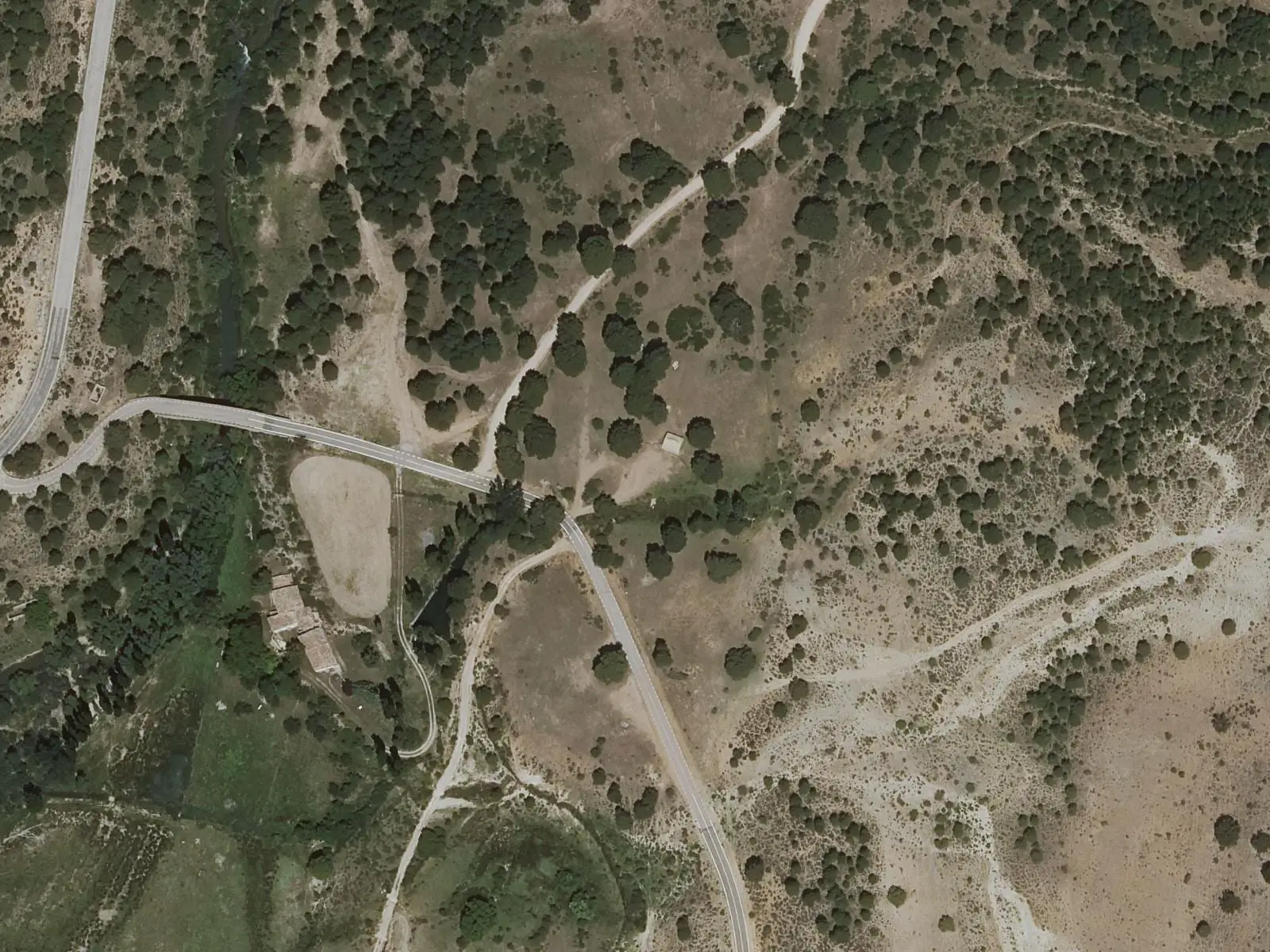
Molino de Juan Romero picnic area
Cuenca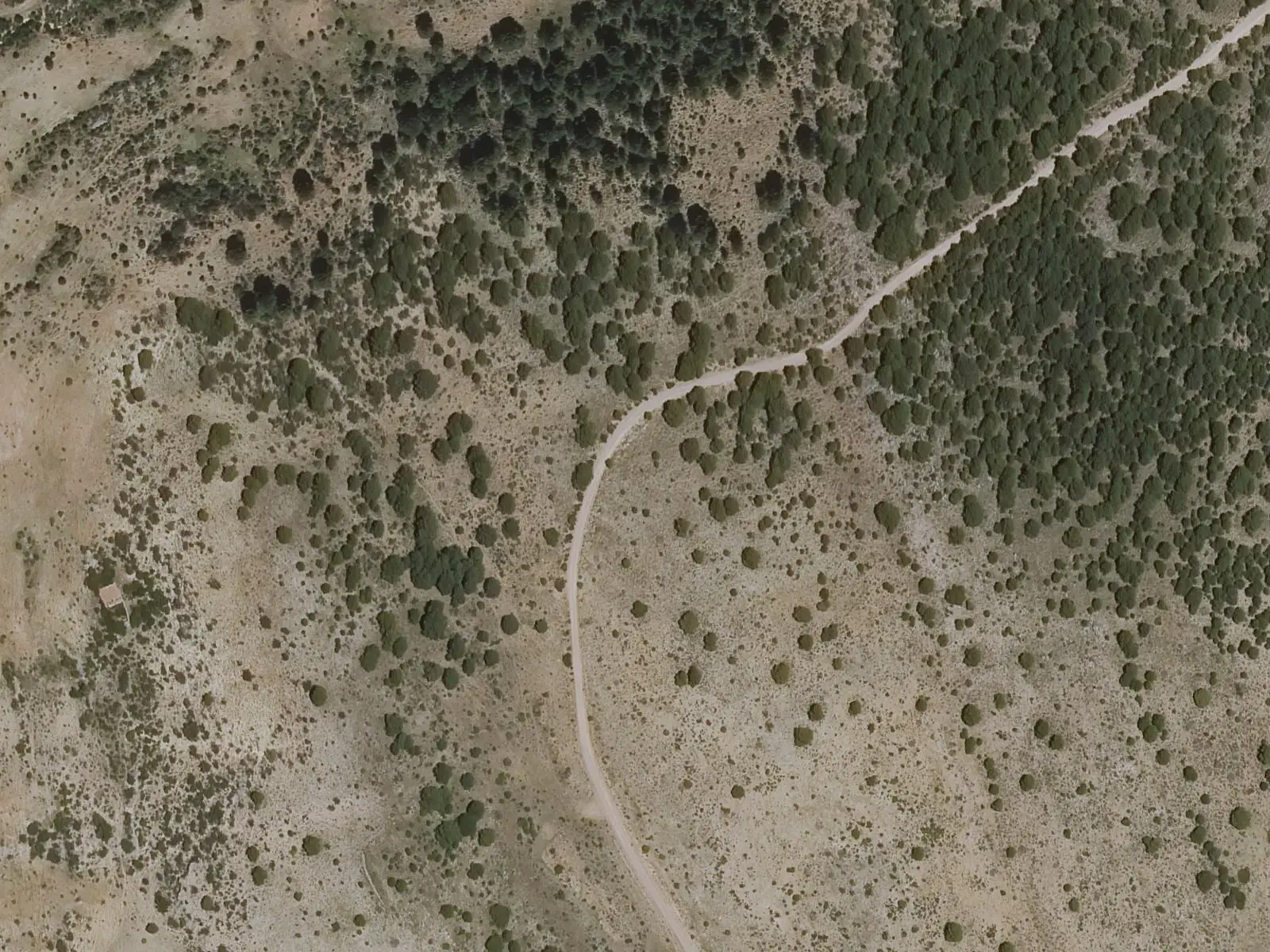
Centenar viewpoint
Valdemeca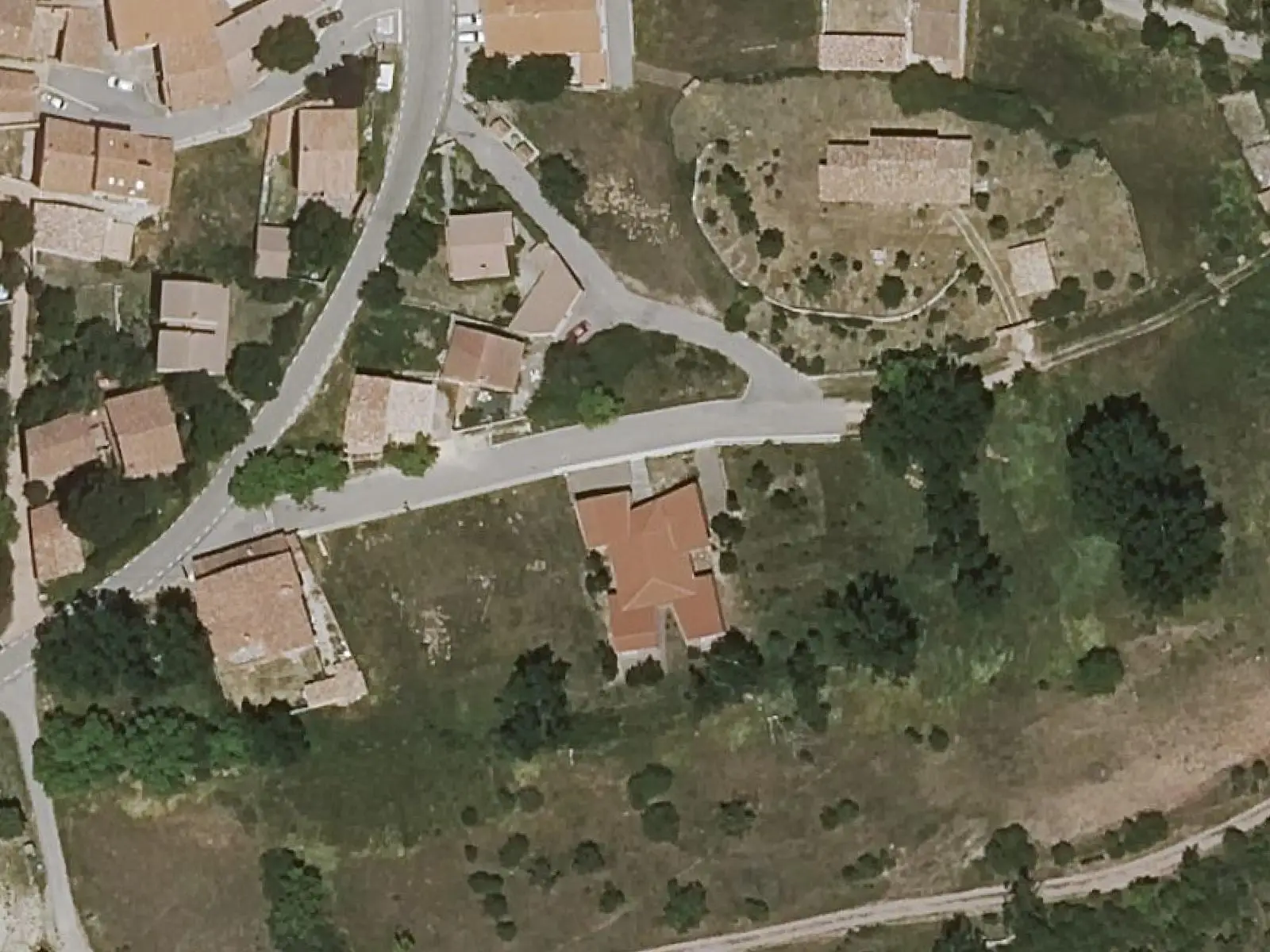
Valdemeca Visitor Reception Centre
ValdemecaSee 5 more
Paisaje Ilustrado of Valdemeca
Valdemeca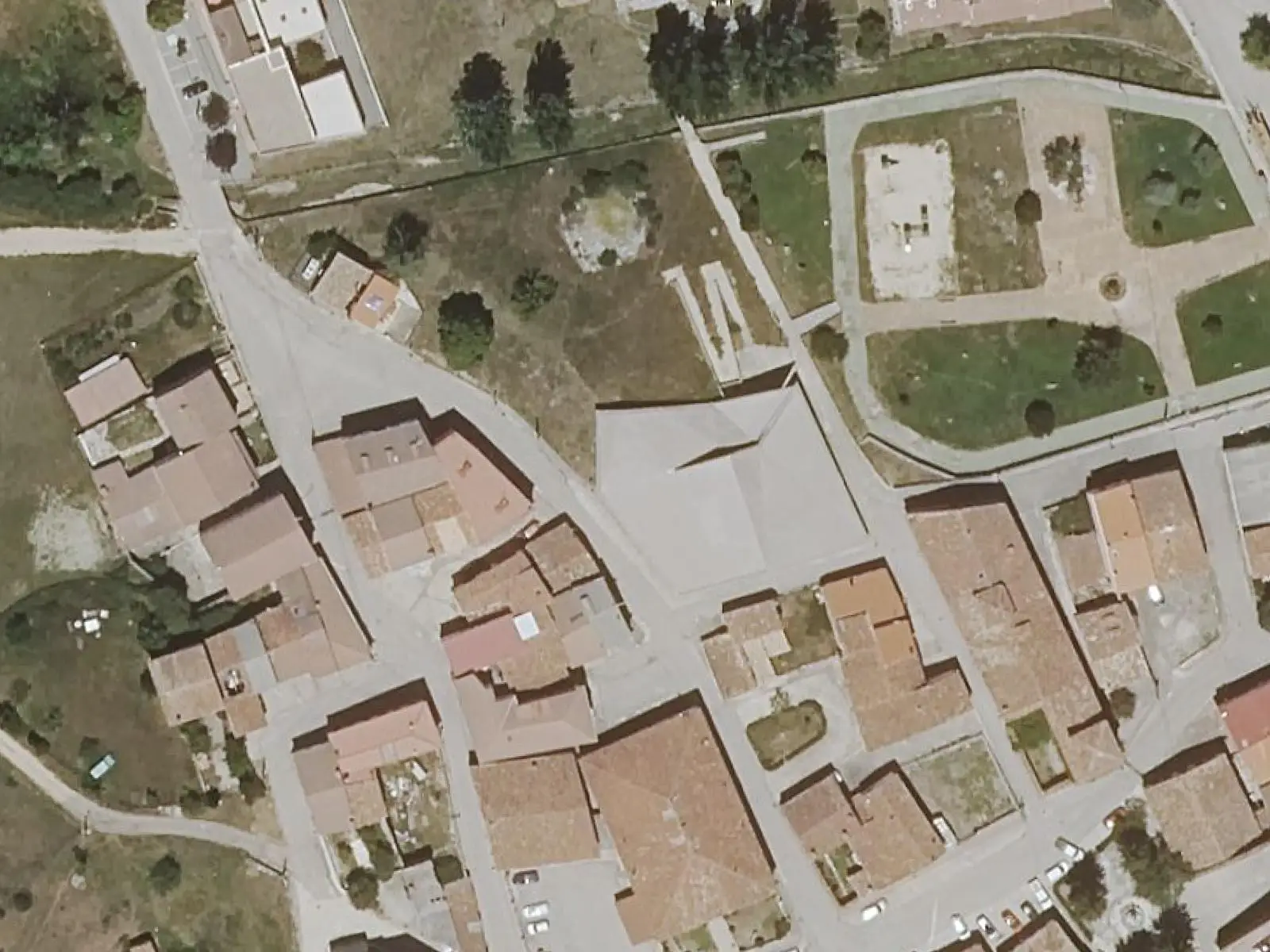
Tragacete Visitor Reception Centre
Tragacete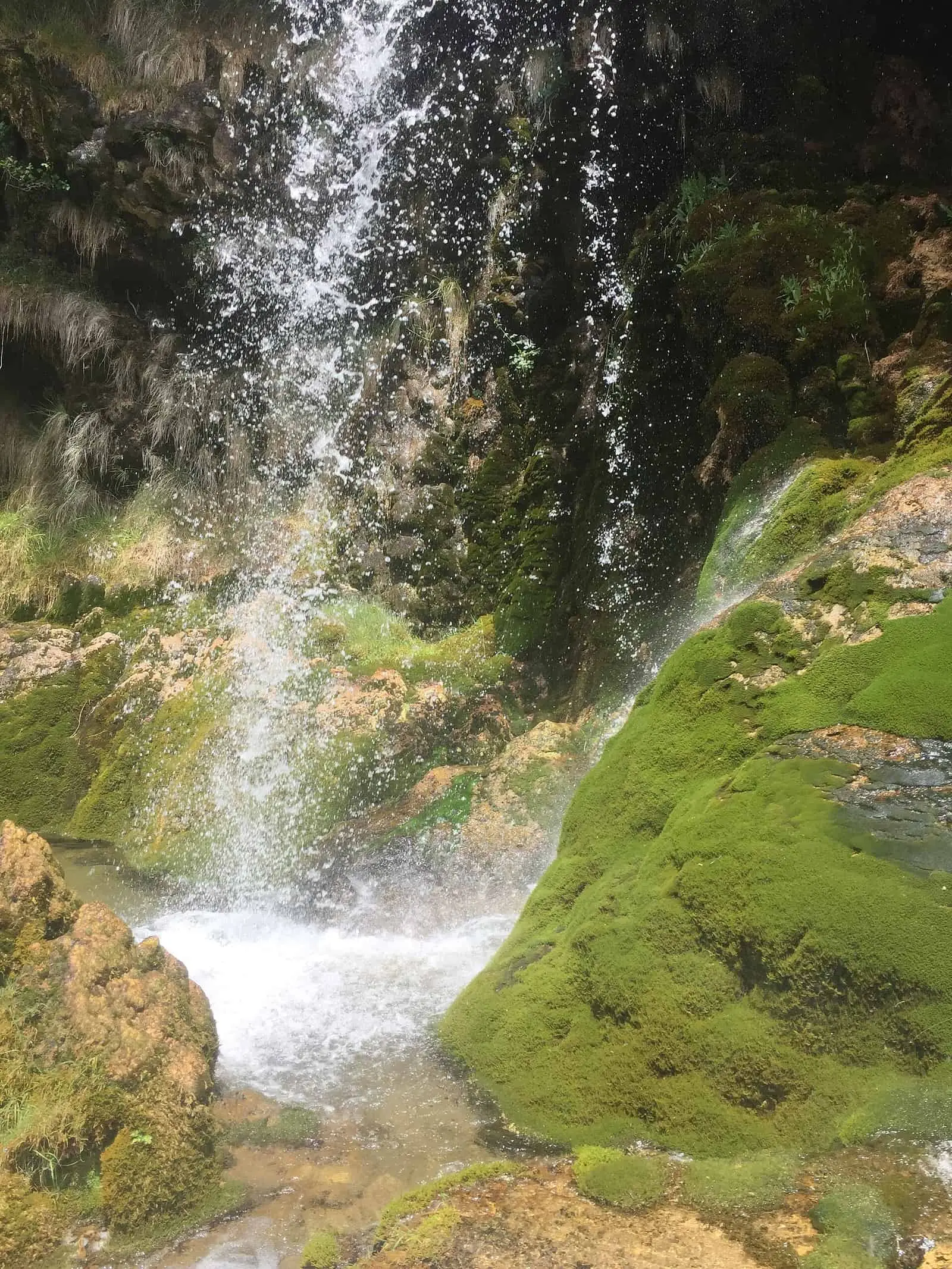
Cascada del Molino de la Chorrera
Tragacete
Fuente de los Pastores picnic area
Beamud
Beamud viewpoint
BeamudPopulation of Huélamo, 1842–2021
Huélamo reached 866 inhabitants in 1920. The 2021 census counted 80, 91 % fewer. It is the story told in the emptying.
Climate in Huélamo month by month
Averages for the ten years from 2015 to 2024 from the ERA5 reanalysis (Copernicus), for a grid cell with a reference altitude of 1296 m. They are model estimates, not measurements from a local station or thirty-year climate normals.
Source: Copernicus ERA5 via Open-Meteo, CC BY 4.0. Retrieved: 2026-10-09.
Location
● Reference point · ● Villages · ● Places · ━ Routes nearby
Location sketch. The map with paths and names loads as you scroll to it.
Approximate position: village centre.
Reference villages: Valdemeca · Tragacete · Beamud · Uña.
Open the full map and its historical layers →Where the data on this page come from
- Name
- IGN, Equipamiento Geográfico de Referencia Nacional: nombre oficial y código INE source consulted, 5 October 2026
- Municipality (INE code)
- IGN, Equipamiento Geográfico de Referencia Nacional: nombre oficial y código INE source consulted, 5 October 2026
- Protected areas
- Ley 5/2007, de 8 de marzo, de Declaración del Parque Natural de la Serranía de Cuenca (DOCM) reference located, 5 October 2026
- Junta de Castilla-La Mancha, Educación Ambiental: ficha técnica de la exposición «Serranía de Cuenca» reference located, 5 October 2026
- Location
- IGN: Nomenclátor Geográfico Básico de España, capital de municipio (CC BY 4.0) source consulted, 9 October 2026
«Source consulted»: the primary source has been read. «Reference located»: the source has been identified but not yet read. «Open question»: the figure needs confirmation.
More about Huélamo, told from the village: Huélamo Town Council website.