Village · Cuenca
Campillos-Paravientos
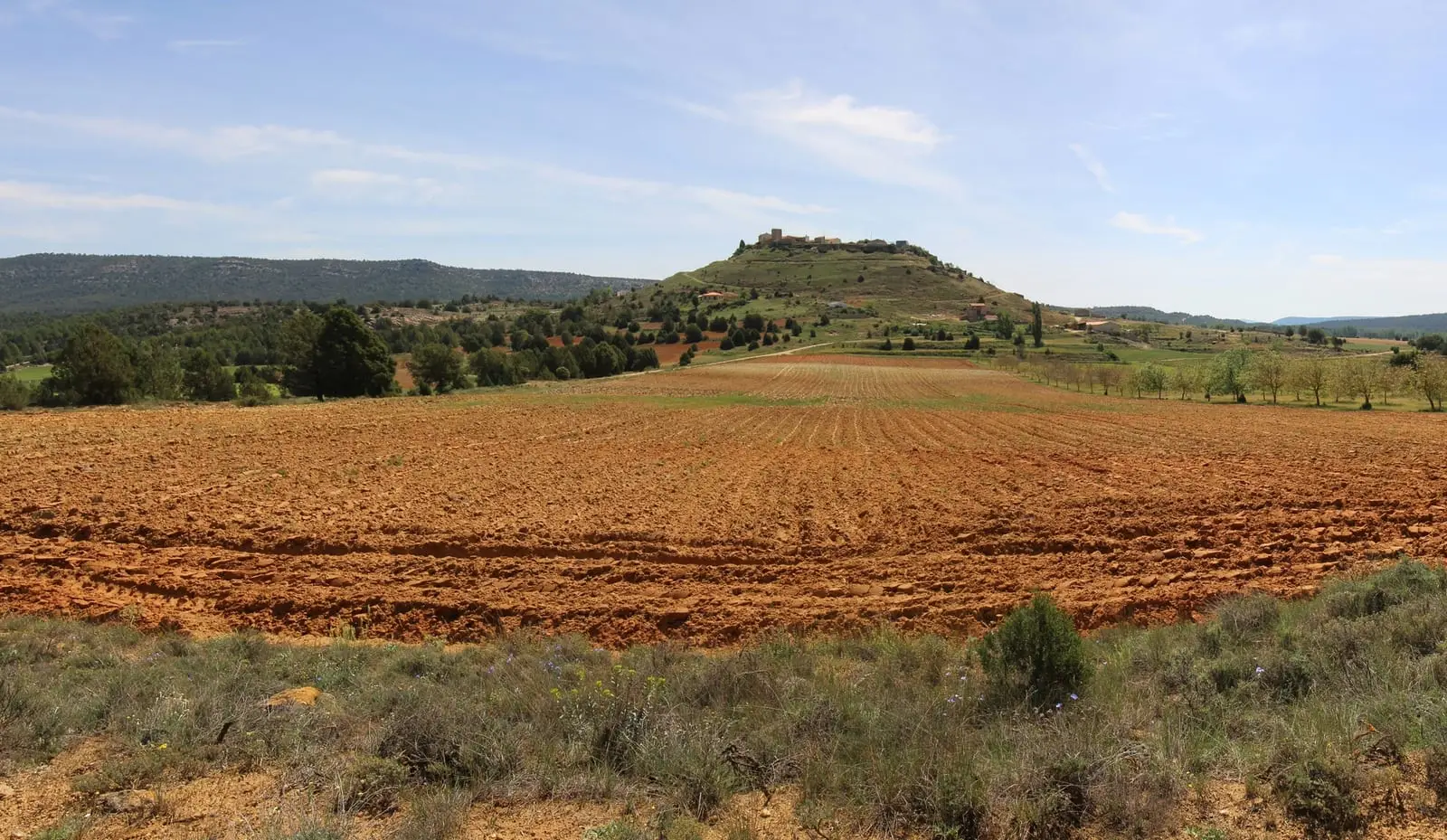
Campillos-Paravientos is a village in the Serranía Baja (lower Serranía) of Cuenca, in the Valle del Cabriel Biosphere Reserve, formerly named Campillos de Gormaz and Granja de Campillos Paravientos. It had 595 inhabitants in 1940 and 103 in 2021. It celebrates San Roque with flag-running and jota and ribbon dances.
On this page 11 sections
Two names, one village
Campillos-Paravientos lies in the Serranía Baja, on the upper Cabriel, within the Valle del Cabriel Biosphere Reserve. It is a cold mountain village. In 1449 it appears as Campillos de Gormaz, probably because it was resettled by people from Gormaz in Soria, and around 1590 as Granja de Campillos Paravientos, within the lordship of Moya. In El Palomar, pottery and dressed stones suggest an earlier settlement.
The church is 15th-century, with 16th-century additions. Of its three hermitages, Santa Quiteria, San Sebastián and San Roque, San Roque remains, with an inscription of 1602 on the lintel. The Cabriel bridge was built in 1930 with the Cañete-Utiel road.
What trades and memory tell
In 1588 a bishop from Ireland visited the parish: Cornelio, Bishop of Limerick.
At San Roque the offices change hands (the staff, the spike and the flag), the flag is run, the Carrera de la Joya race held, and jotas and the ribbon dance performed. In late spring the village makes a pilgrimage to the Virgen del Remedio hermitage in Alcalá de la Vega.
Holy Week in the past
Pedro Juan Navarro Martínez, a native of the village, has described Holy Week in Campillos-Paravientos in Revista Moya. Good Friday meant cod stew. Easter Sunday began at dawn with the rosario de la aurora, the dawn rosary, sung through the streets with its twenty-one alleluias, and at the ringing of bells people went to the church square to collect small stones, thrown skywards when storms threatened, and holy water for family ailments. The Virgin came out in a black mantle and the Risen Christ by another route; at their meeting her mourning was removed, and young men climbed the bell tower to swing the bells. From a house balcony to the square’s Olmo Gordo, felled in 2006, hung the Judas effigy, a straw figure the year’s conscripts raised and lowered as the procession passed and the boys later tore apart.
Then people ate hornazo: a cake of kneaded dough with a whole boiled egg, longaniza sausage and pork loin preserved in an earthenware jar, with the recipient’s initials on the top. Godparents made it for godchildren, and it was eaten with friends at La Torca, San Roque or the springs. The afternoon brought skittles, iron-bar throwing and ball games against a wall in the square and, Lent over, dancing to an accordion.
At carnival two alcaldes de ánimas, carnival mayors for the souls in purgatory, were in charge, with hats and cudgels: they charged to stop or continue the dancing, issued absurd proclamations at night, such as going to the spring with a sieve or paying, and could force a masked person to reveal their identity. It is told in Carnival for the ánimas and San Juan night.
Light from the mill
In 1934 two men from Henarejos installed the San Antonio power station using the dam and pond of Tío Heliodoro’s mill beside the Cabriel. It lit Campillos-Paravientos, Henarejos, San Martín de Boniches and El Cubillo through lines on wooden poles, sometimes hung from the pines themselves. In autumn poplar leaves blocked the turbine screen and the bulbs dimmed to embers; then one of the miller’s children, even if at the dance, ran to rake away the leaves, and the light brightened again «como cuando se le echaba aceite al candil» (as when oil was added to the lamp).
Houses with plank ceilings
In the oldest houses of Campillos-Paravientos, the first cluster around the church, town hall, square, El Carasol and Calle Real, the ground-floor ceiling, also the first-floor floor, is made of pine planks about 5 metres long, 40 cm wide and between 5 and 10 thick. There are records for about seventy houses, including several bread ovens such as the council oven. Some beams are so long they cross rooms in two neighbouring houses. The timber is almost all resin-soaked pine that does not rot, and woodworm has not touched it in all this time.
To make the planks, the log was squared on four faces, raised horizontally to about three metres and sawn by two men, one above and one below, with metre-and-a-half saws. It could also be split with wedges and a sledgehammer, called almaina in the village. Older people said La Lobera was named for wolves, showing it had once had dense pine forest, perhaps also present in La Dehesa and La Dehesilla. When a house is demolished, the planks are reused: benches made from them stand in Calle Poniente, Calle La Moncloa and Plaza de la Herrería.
Plan your visit
It is a short visit: church, hermitage and bridge.
Before you travel
Ask the town council when the church and hermitage open.
Combine with
Alcalá de la Vega and Boniches are about 6.5 km away as the crow flies: the three can be seen in a day along the upper Cabriel.
Frequently asked questions
What was Campillos-Paravientos called before?
The town council records a reference to Campillos de Gormaz in 1449 and, around 1590, the name Granja de Campillos Paravientos, within the lordship of Moya.
What festival does Campillos-Paravientos have?
The San Roque festival, with a change of office-holders, flag-running and jota and ribbon dances, according to the municipal account.
Carry on from here
The rivers, zones, eras, places and official routes that the atlas links with Campillos-Paravientos.
Rivers and basins
Following the water from Campillos-Paravientos
Follow these watercourses to where they meet, to their villages and to the memories of their basin.
Lands and landscapes
From here, follow the memory of the land
These readings connect Campillos-Paravientos with the stories, the work and the villages around it.
Near Campillos-Paravientos
Fuente del Royo picnic area
Huerta del Marquesado
Prao de San Roque picnic area
Huerta del MarquesadoPaisaje Ilustrado of Huerta del Marquesado
Huerta del MarquesadoSee 5 more
Las Hoyas
La Cierva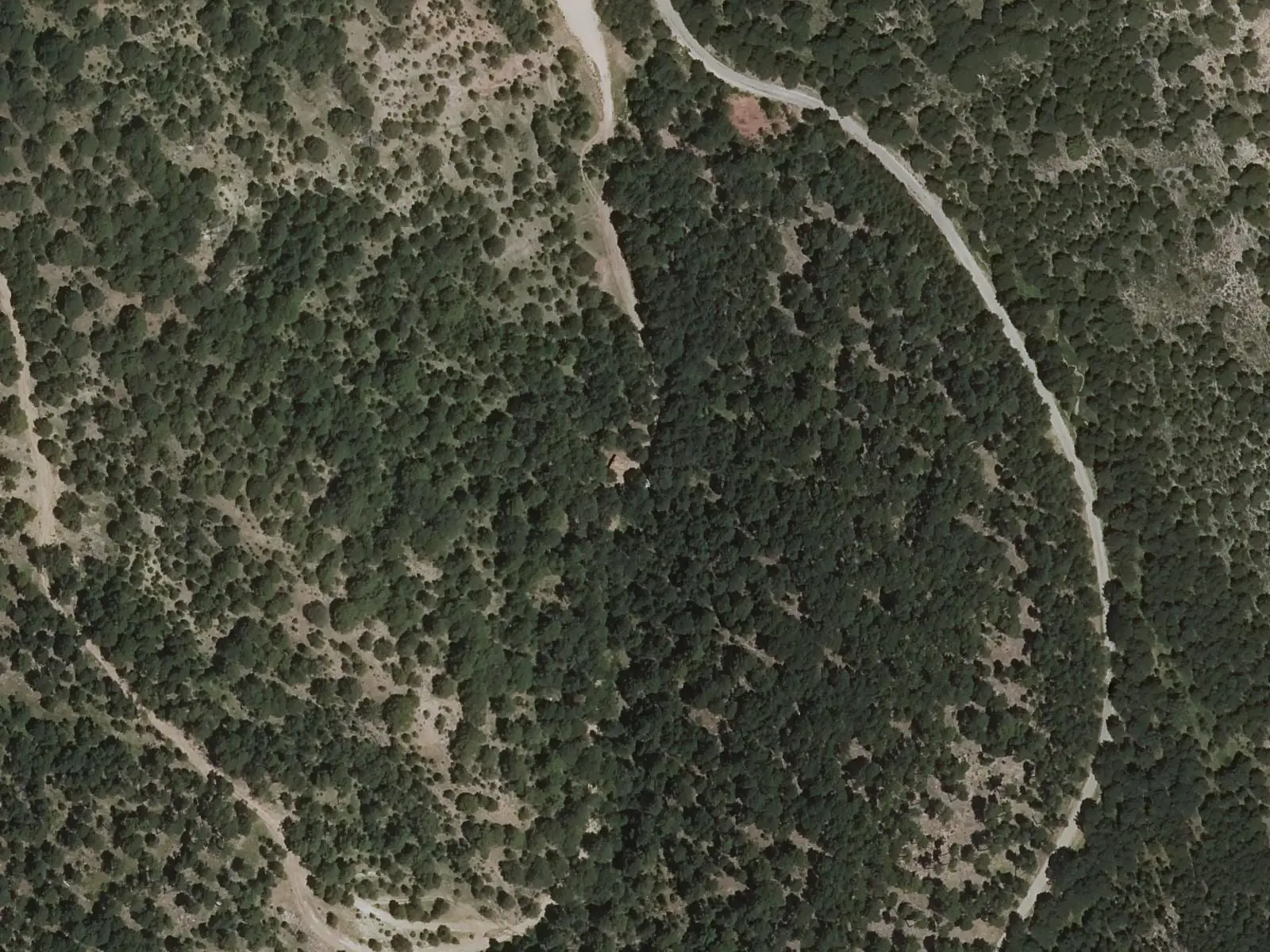
Fuente de la Ardilla picnic area
ValdemecaPaisaje Ilustrado of Valdemeca
Valdemeca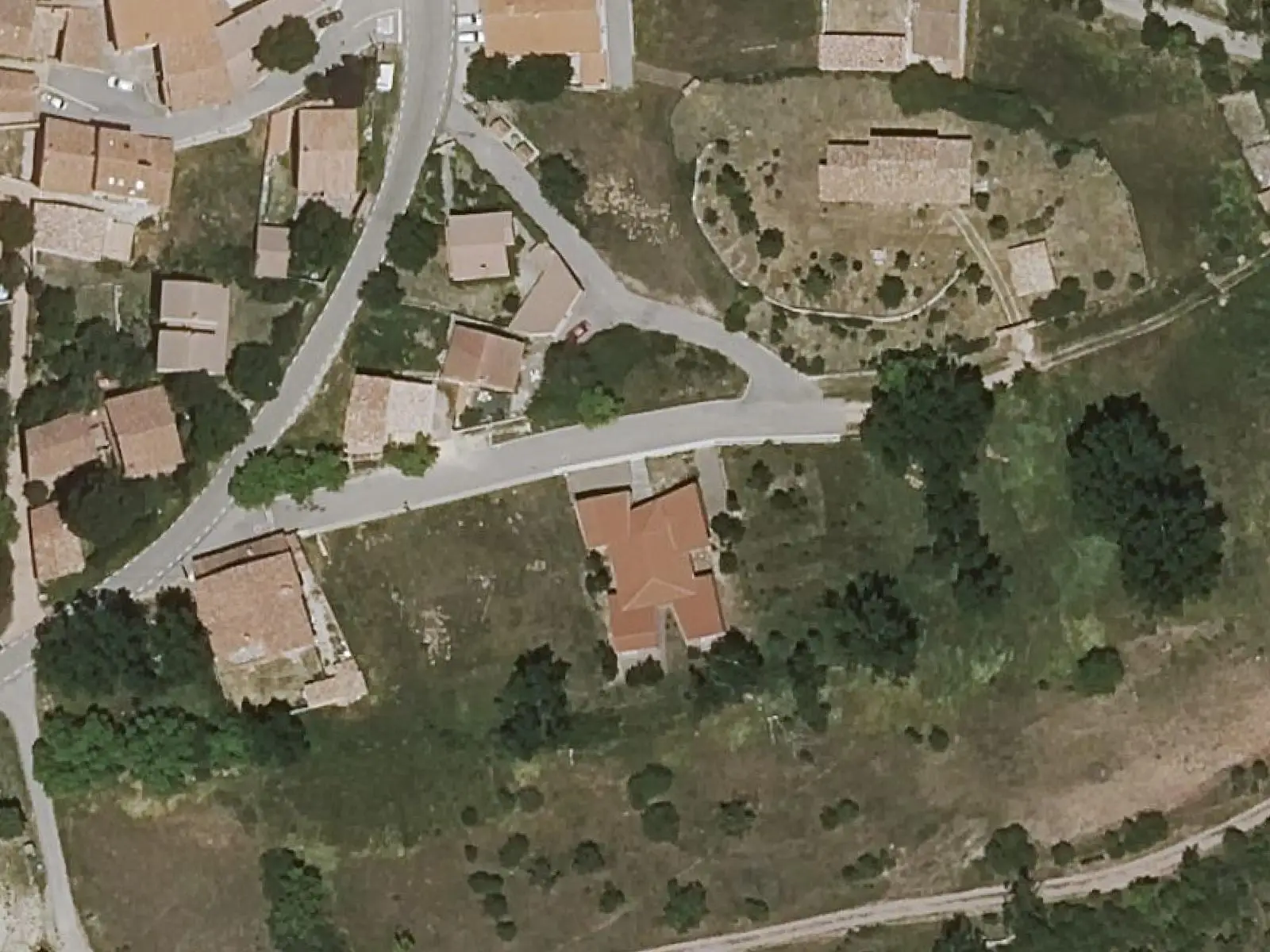
Valdemeca Visitor Reception Centre
Valdemeca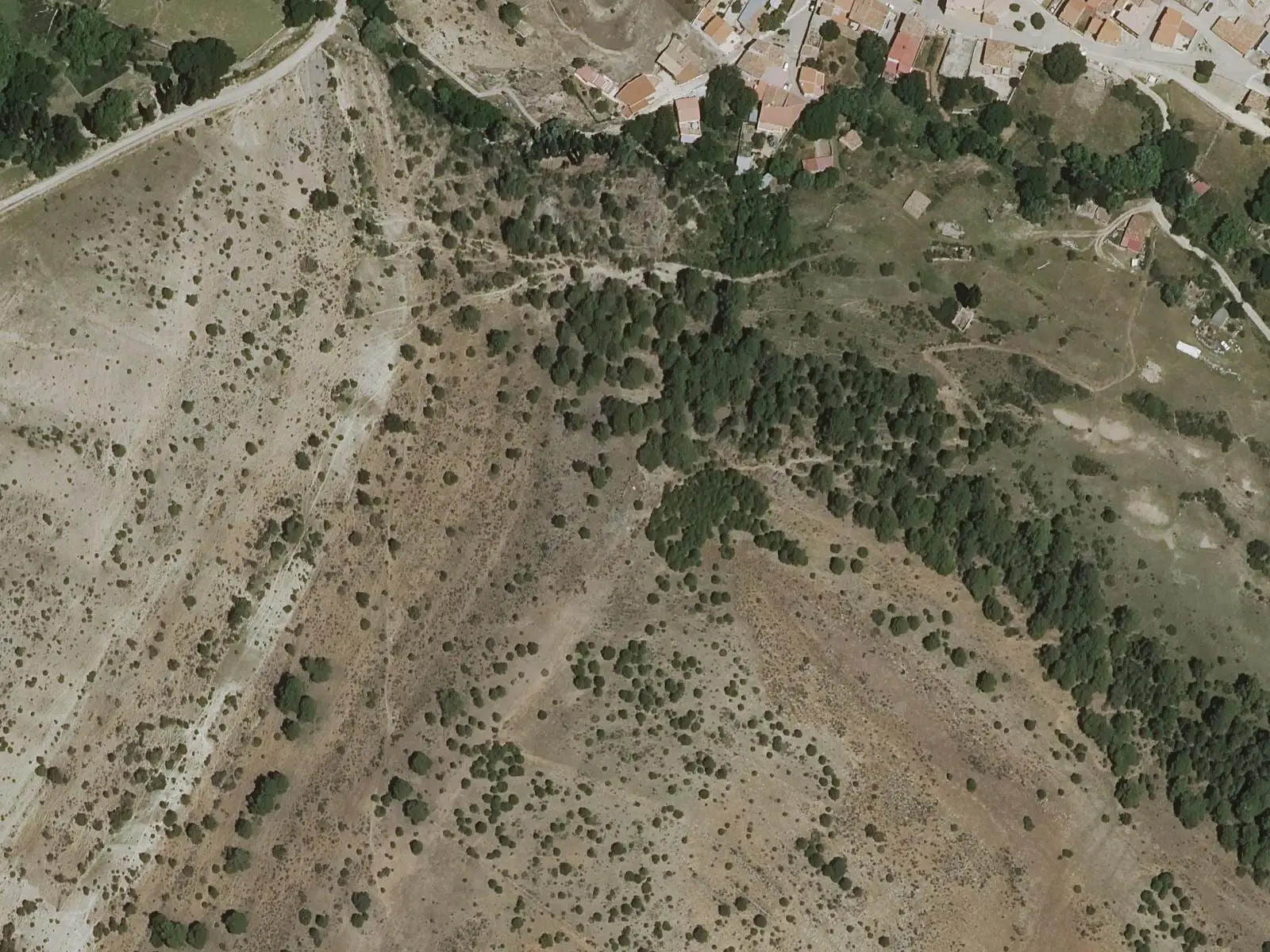
Beamud viewpoint
BeamudPopulation of Campillos-Paravientos, 1842–2021
Campillos-Paravientos reached 595 inhabitants in 1940. The 2021 census counted 103, 83 % fewer. It is the story told in the emptying.
Climate in Campillos-Paravientos month by month
Averages for the ten years from 2015 to 2024 from the ERA5 reanalysis (Copernicus), for a grid cell with a reference altitude of 1175 m. They are model estimates, not measurements from a local station or thirty-year climate normals.
Source: Copernicus ERA5 via Open-Meteo, CC BY 4.0. Retrieved: 2026-10-09.
Location
● Reference point · ● Villages · ● Places · ━ Routes nearby
Location sketch. The map with paths and names loads as you scroll to it.
Approximate position: village centre.
Reference villages: Alcalá de la Vega · Boniches · Fuentelespino de Moya · Huérguina.
Open the full map and its historical layers →Where the data on this page come from
- Location
- IGN: Nomenclátor Geográfico Básico de España, capital de municipio (CC BY 4.0) source consulted, 9 October 2026
«Source consulted»: the primary source has been read. «Reference located»: the source has been identified but not yet read. «Open question»: the figure needs confirmation.
More about Campillos-Paravientos, told from the village: Campillos-Paravientos Town Council website.