Episode · 1183 – 1950s · Frontier, charters and castles
Moya, a town on the boundary of three kingdoms
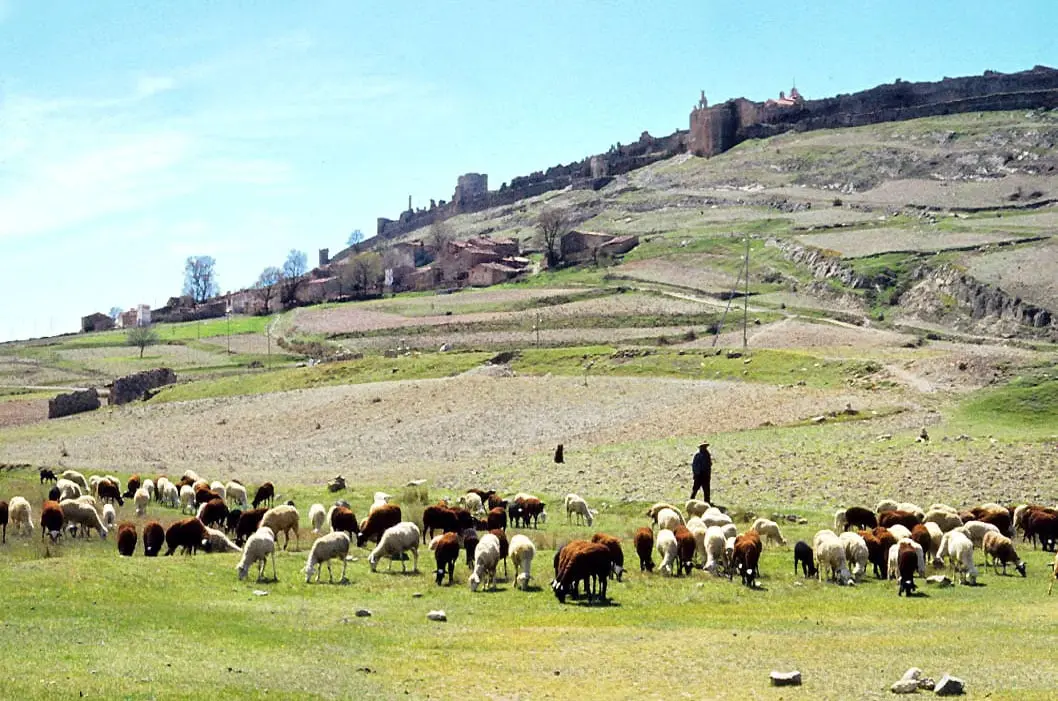
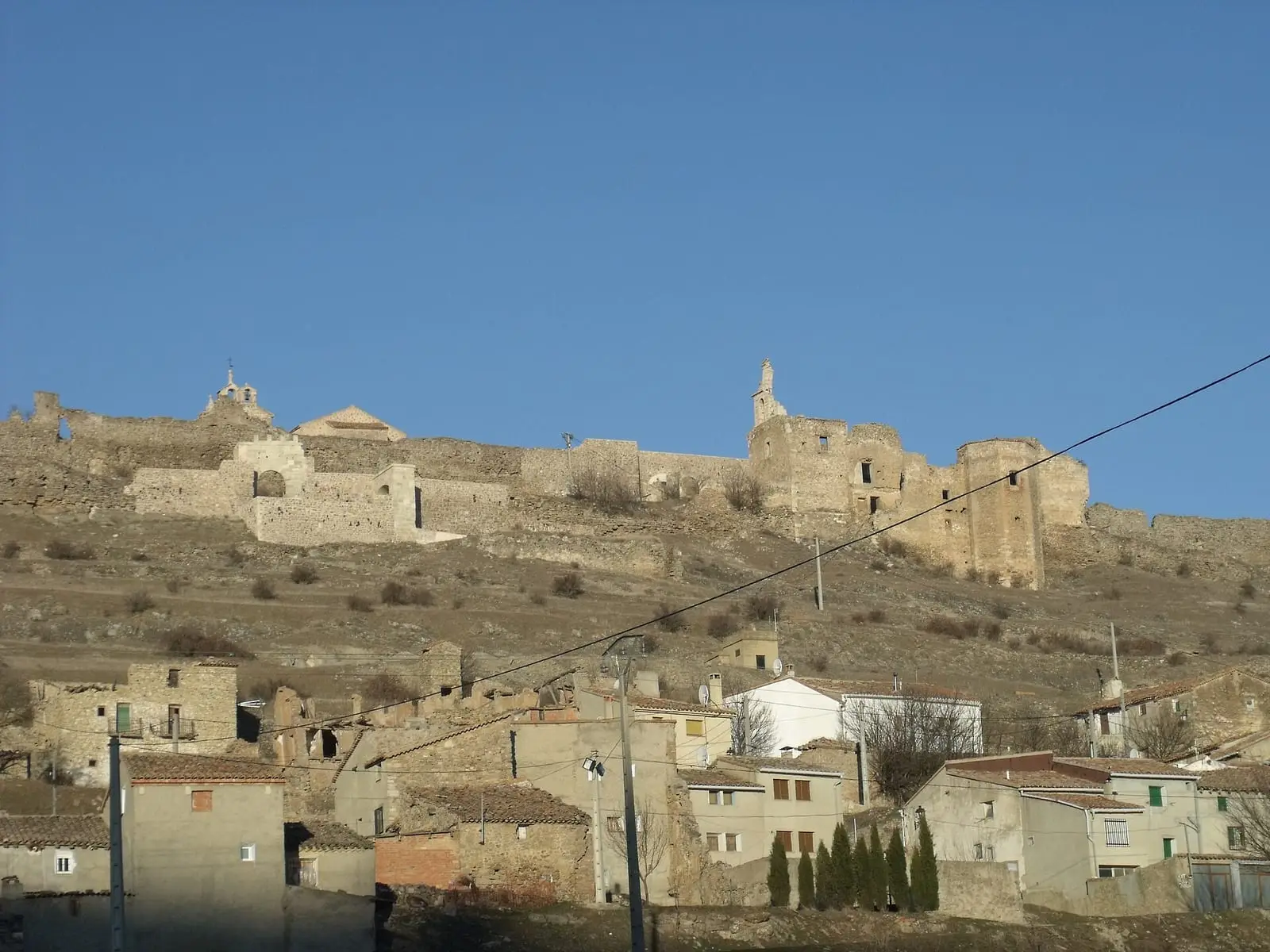
Moya, on a 1,149 m hill at Cuenca's eastern edge, was for centuries the key to the boundary between Castile, Aragon and Valencia. Conquered in 1183, it had its own charter, a hospital for captives run by the Order of Santiago from 1211 and a customs post, the Torre de San Roque, where duties were levied on goods passing between kingdoms. In 1480 it became the marquisate of Andrés de Cabrera and Beatriz de Bobadilla. It declined from the 18th century and its last inhabitant left in the 1950s.
On this page 7 sections
The key to the frontier
Moya occupies a rounded hill at 1,149 metres, at the eastern end of the province of Cuenca, where Castile, Aragon and Valencia met. People lived there from the Middle Bronze Age, and Roman coins minted in Bílbilis have been found there. The Castilians took it in 1183. Alfonso VIII resettled it and granted a fuero (town charter), which Chamocho dates to 1210. It does not survive: two lost manuscripts are known, one in Latin and the other in the vernacular, and a 1625 letter from the castle governor Baltasar Cavallón, who said he had seen the Latin version.
Moya headed a large territory. In 1222, Cañete became its dependent village and came under its charter. Its estates had towers, such as Mijares, in Landete, sold in 1235 to the Hospital de Santiago. And the frontier was active: in the 14th century the mayor of Ademuz, who chose to ignore a peace between Castile and Aragon, entered the rento, an isolated farmstead in the hills, of Orchova with armed men and took cloth and livestock worth 15,000 marabetinos. The people of Moya complained to the King of Aragon, Pedro IV, who gave ten days for its return. Today, at the Mojón Triginio, the three frontier villages meet every May.
Captives and customs
In 1211 the Casa de la Merced, the Hospital de Moya, was founded to ransom Christian captives, organised by the Order of Santiago, under which the town came in 1215. The hospital in turn held Muslim captives for exchange. In December 1234, the council and Commander Gonzalo Díaz signed an agreement over six who had escaped and were in Requena in the hands of its knights and foot soldiers; the six were valued at 1,200 maravedíes.
At the Torre de San Roque, on the north-eastern slope, Moya was a puerto seco (inland customs post): there the lezda, a customs duty, was levied on goods passing from one kingdom to another. The town had five walled enclosures and eight gates, a coracha, a wall protecting access to water, descending to the Torre del Agua, six churches, a convent and two hospitals: the historic ensemble.
Marquises and rebels
Moya was under direct royal jurisdiction from 1319, and in 1480 became a marquisate for Andrés de Cabrera and Beatriz de Bobadilla, its great years. In 1520 and 1521, during the Revolt of the Comuneros, the town rose twice against its lord. The title later joined the House of Villena through marriage.
How it emptied
Decline began in the 18th century: the great families left, and towards its end Moya lost the corregimiento, its administrative district, and court to Cañete; the parishes were reduced to two and convents closed. In 1808 it rose against Napoleon. The sale of confiscated property and the new administration separated the 36 villages under its jurisdiction, and in 1835 Cabrera’s Carlist troops attacked and destroyed the town. Inhabitants gradually moved down to the neighbourhoods on the plain. The last left the old town in the 1950s.
In April 1975 the BOE, the official state gazette, announced the fifth auction of the castle ruins, with a starting price of 50,000 pesetas. In 1982 the town was declared a historic-artistic ensemble. Only Santa María la Mayor remains in use for worship.
From the archive
Vocabulary
- Puerto seco
- An inland customs post on the frontier between kingdoms. In Moya it was in the Torre de San Roque.
- Lezda
- A tax levied on goods passing through.
- Coracha
- A wall running down from the enclosure to protect access to water. Moya's reached the Torre del Agua, beside the spring.
- Albacara
- A walled enclosure beside the castle where livestock and people could shelter in an attack.
- Collación
- A parish and the neighbourhood organised around it in medieval towns. Santa María la Mayor in Moya is mentioned in 1222.
- Rento
- A farmstead with houses and land, scattered across the municipality.
Where it is today
Moya historic ensemble
Moya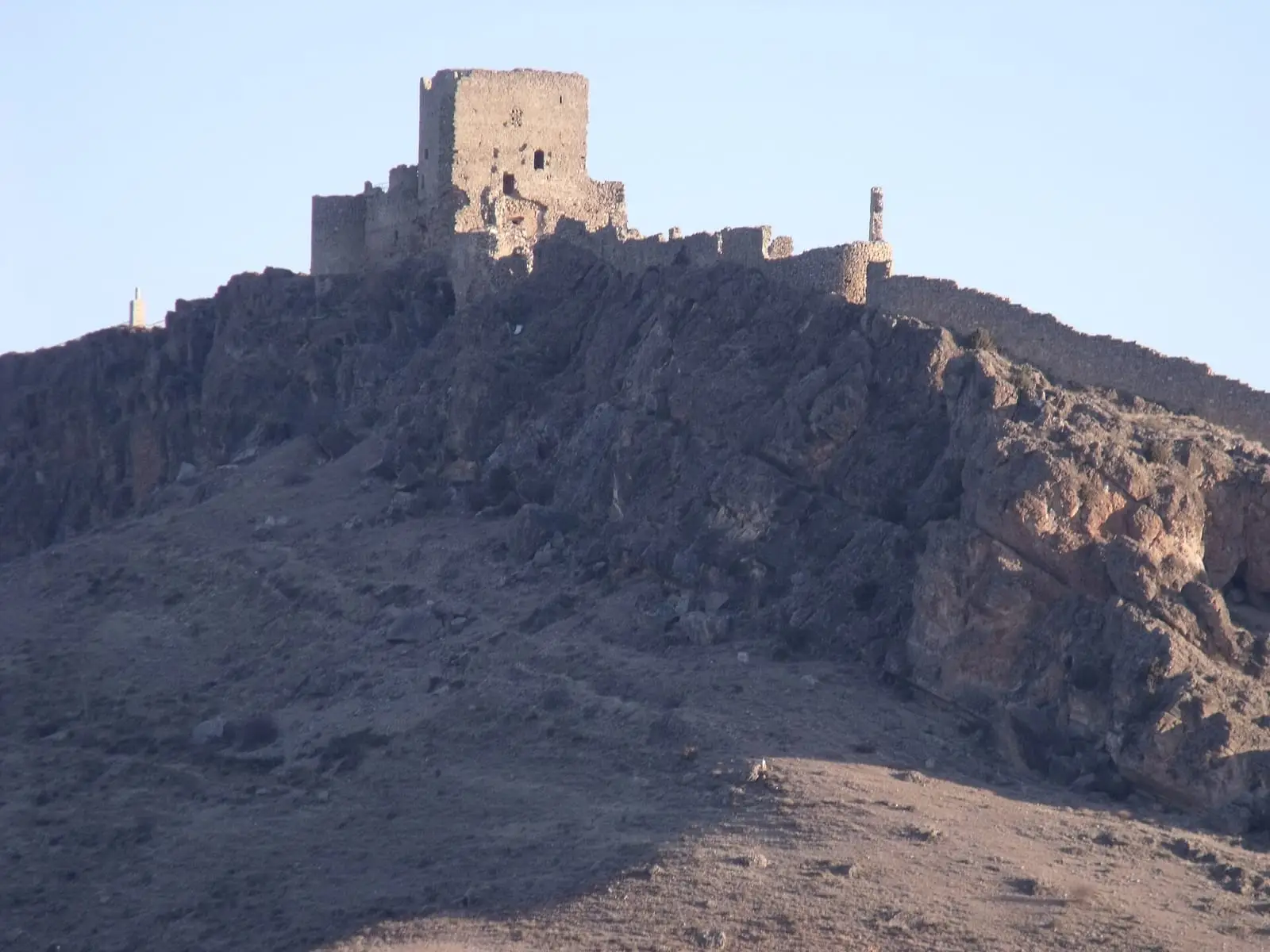
Moya castle
Moya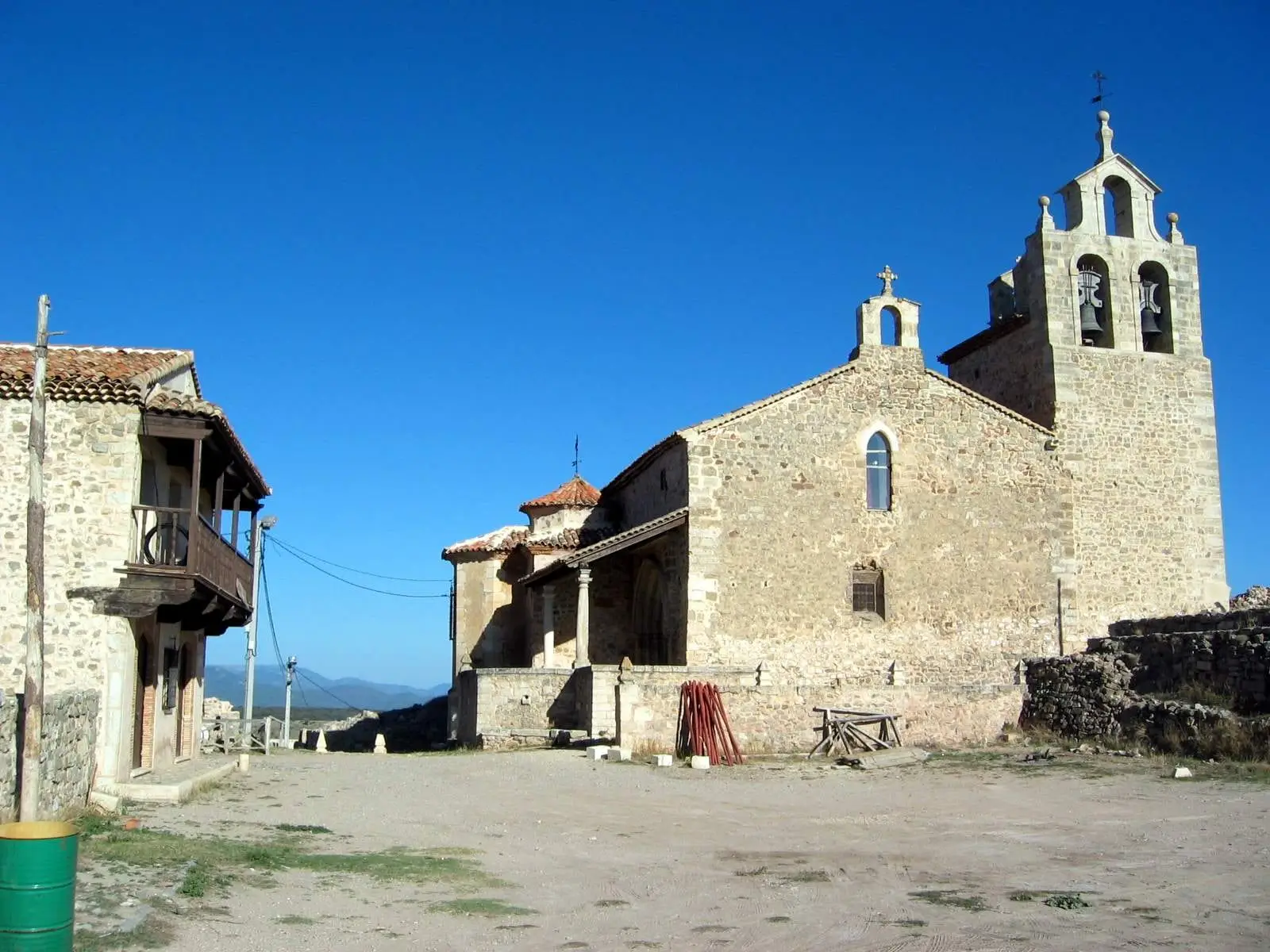
Church of Santa María la Mayor (Moya)
MoyaMoya
Cuenca · 4 places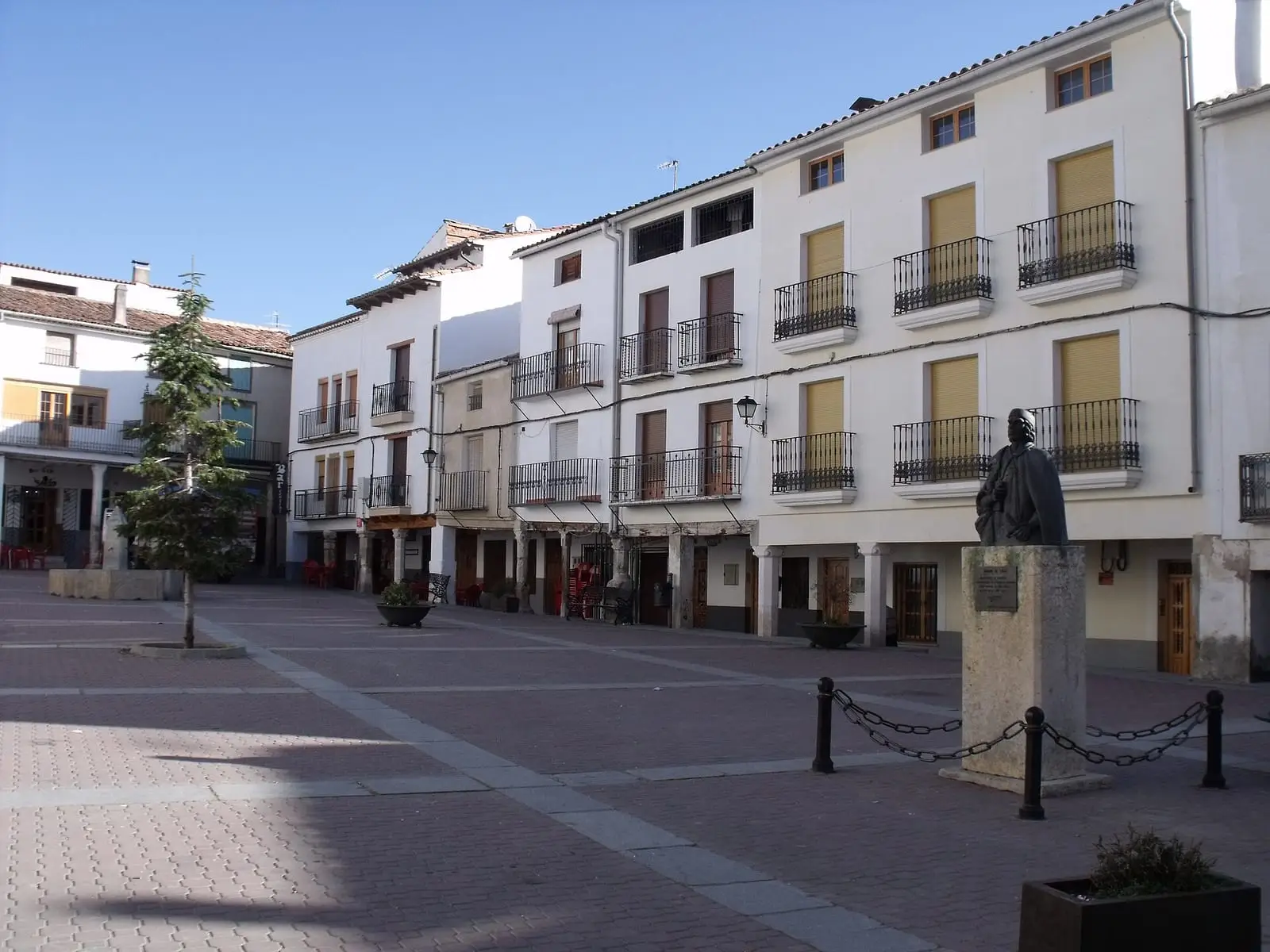
Cañete historic ensemble
CañeteTorre Mijares
Landete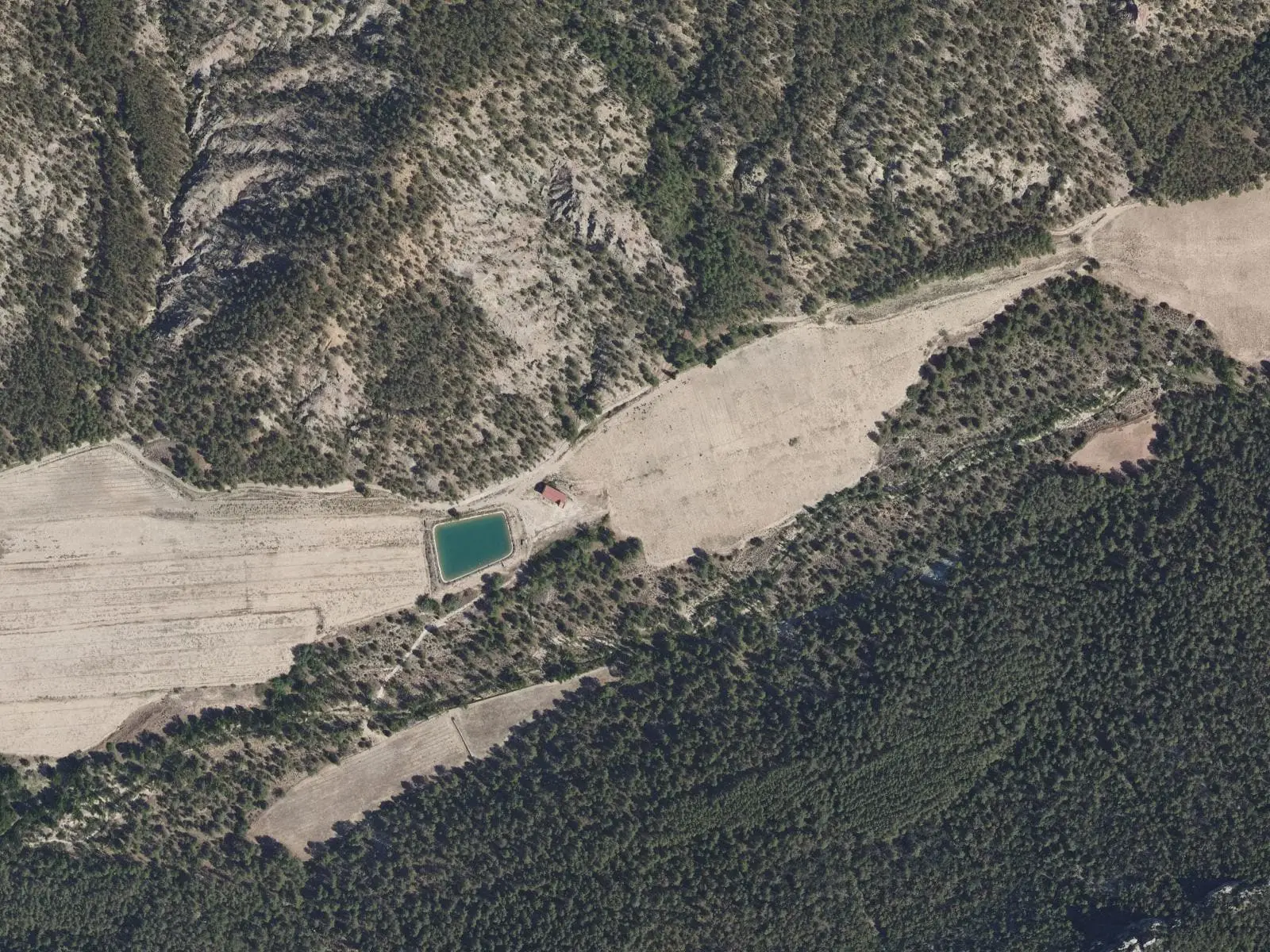
Orchova valley
Santa Cruz de MoyaMojón Triginio
Santa Cruz de Moya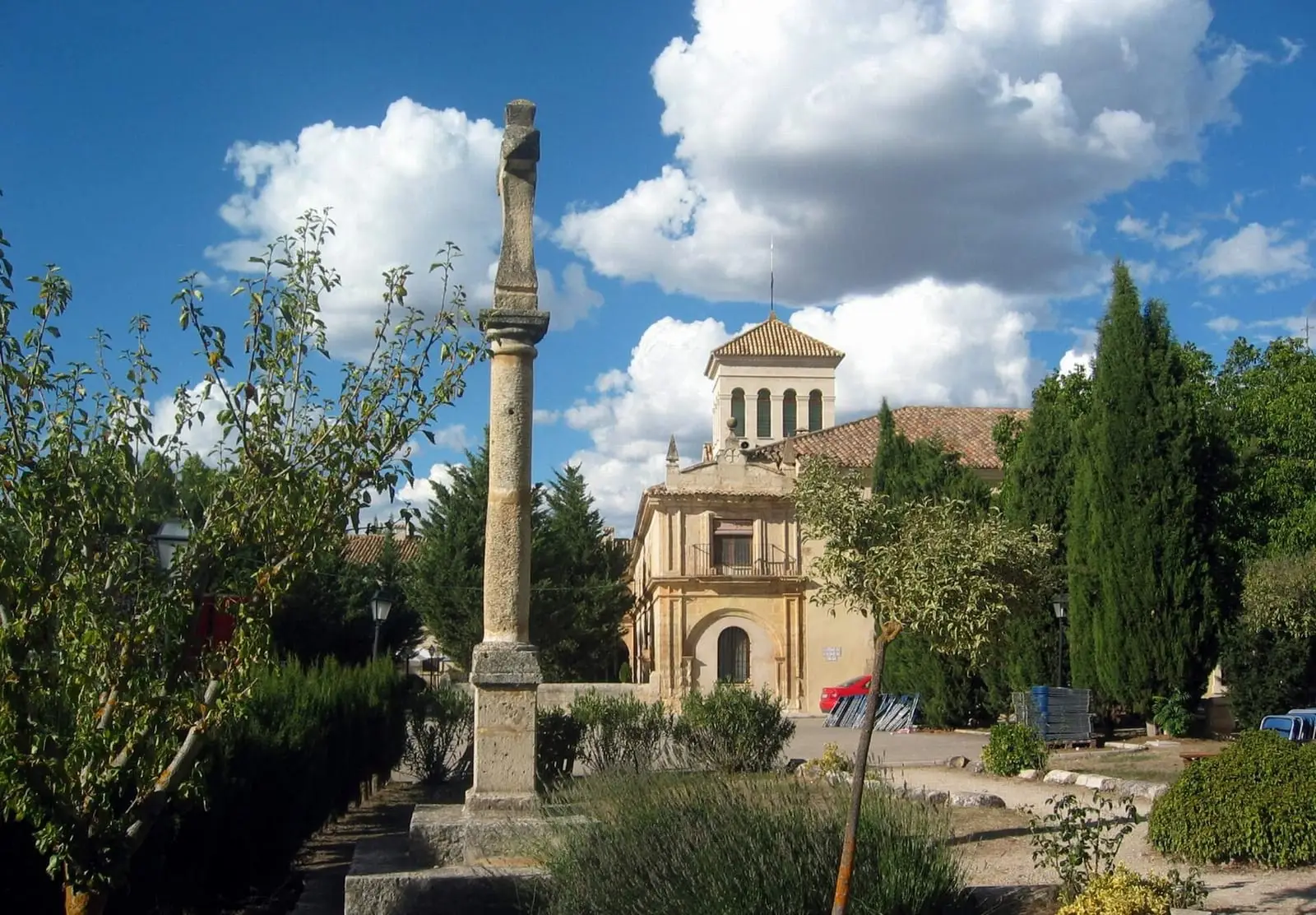
Tejeda monastery
GaraballaFrequently asked questions
Why is Moya empty?
Through a succession of blows: decline from the 18th century, the loss of the corregimiento and court, the separation of the 36 villages under its jurisdiction, the destruction of 1835 during the Carlist War and the movement of inhabitants to the neighbourhoods on the plain, until the last left in the 1950s.
What was the hospital for captives?
The Casa de la Merced, founded in 1211 and organised by the Order of Santiago to ransom Christians held captive in Muslim lands. It in turn held Muslim captives for exchanges: in 1234 six escaped and ended up in Requena.
Sources and reading
- Junta de Castilla-La Mancha, Portal de Cultura: Conjunto Histórico de Moya source consulted
- Real Decreto 2726/1982, de 3 de septiembre, por el que se declara conjunto histórico-artístico la villa de Moya (BOE) source consulted
- Chamocho Cantudo, M. Á. (2017): Los fueros del Reino de Toledo y Castilla la Nueva, pp. 25-26 y 144-145 source consulted
- Sáez, T. (1995): «El Hospital de Moya», revista Moya, Asociación de Amigos de Moya source consulted
- Echevarría Arsuaga, A. (2007): «Esclavos musulmanes en los hospitales de cautivos de la Orden Militar de Santiago (siglos XII y XIII)», Al-Qantara source consulted
- Junta de Castilla-La Mancha, Portal de Cultura: Conjunto Histórico de Cañete source consulted
- Pastor Monleón, A.: «Mi historia de Orchova», Centro de Estudios del Marquesado de Moya (2026) source consulted · Quotes the paragraph in «Moya, tierras de frontera» (p. 129) about the plundering of Orchova.
- Anuncio de quinta subasta de las ruinas del castillo de Moya (BOE, 26-4-1975) source consulted
- López Marín, M. (2026): Landete en la historia source consulted · Loss of the corregimiento and court in the late 18th century and date of the last inhabitant's departure.
Open questions
- Date of the conquest and charter: the regional government's catalogue gives the conquest as 1183; Chamocho dates resettlement and the charter to 1210, and Turismo de Castilla-La Mancha speaks of a charter from Alfonso VIII in the early 13th century. The charter does not survive.
- The plundering of Orchova is known from a paragraph in «Moya, tierras de frontera», quoted second-hand; Pedro IV's document has yet to be seen.
- Who bought the castle in 1975: the auction notice does not say.