Episode · 1st century BC – 693 · Rome and lapis specularis
Valeria and its territory
Valeria was founded between 93 and 82 BC on a tongue of land between two gorges, and flourished between the end of Augustus' reign and the Flavians, when the forum, basilica and nymphaeum were built. Its territory reached La Veguilla, in Arguisuelas, where a soldier decorated with torcs had his mausoleum. From the 3rd century the city was dismantled; by the 5th it was abandoned, but its name continued as a bishop's see until 693.
On this page 8 sections
A city between two gorges
Valeria was founded between 93 and 82 BC on a tongue of high land between two gorges, one of them the Gritos, and never lost the name of its founder, a Valerius Flaccus. Pliny mentions it in passing. Its great period came between the end of Augustus’ reign and the early Flavians, in the 1st century AD: the city’s aristocracy then paid for the forum with its porticoes, a judicial basilica, the tabernae (shops) and a nymphaeum, a monumental fountain, with a retaining wall 105 metres long. On the cliff edge, houses hung over the gorge.
Its citizens were enrolled in the Galeria tribe, and that makes them recognisable in inscriptions in the countryside.
The soldier of La Veguilla
About 30 km west of Valeria, at La Veguilla, on the left bank of the Guadazaón in the municipality of Arguisuelas, two inscriptions were known: an altar to Jupiter Optimus Maximus, found among the stones of a dry-stone wall, and a large funerary ashlar. Luis Mediamarca saw and measured it in 1867: two pieces of 75 by 95 cm, with letters 9 cm high. A man of the Galeria tribe whose name began Vitul- commissioned it for himself, his mother and his wife, who had a Greek name, Chelido.
In 2020 Jonathan Edmondson and Helena Gimeno published a third stone, reused in the pen of a village house and found, according to villagers, around 1900. It is a block from a mausoleum epitaph. It says the dead man had served in a century and won decorations, including at least two torcs, rigid metal neck rings, and was buried by his frater, brother or comrade-in-arms. The letter forms date it to the early decades of the 1st century. The editors believe the soldier returned to his homeland after discharge and lived in a villa in Valeria’s territory.
Statues in the forum
In the forum’s western portico was a large exedra that its excavators compare with the Forum of Augustus in Rome: a hall of fame with statues of the imperial family, gods and citizens the city wished to honour. Pedestals, inscriptions and bronze fragments survive, found in the cryptoporticus fills. One was dedicated to Diva Drusilla, Caligula’s sister, around AD 38 to 40; a torch fragment may have belonged to a statue of Ceres. Each campaign brings to light the names of another seven or eight people from Valeria.
Villas in the countryside
The wealth of that world can be seen at Noheda, in Villar de Domingo García, occupied between the 1st century BC and the 6th century AD, with 231 m² of figurative mosaic in a room of 290 m². In the hills, the Cueva del Hierro mine began to be worked in Roman times and continued producing iron until the 20th century.
A city dismantled
From the mid-3rd century Valeria’s buildings were gradually dismantled and stripped. In the 4th century, houses occupied the forum basilica. Water was lacking, and the city was far from the major roads. Some people moved about 500 metres down to the site of today’s village, where the church of La Sey reuses 2nd-century Roman shafts and capitals. By around the 5th century the old site was empty.
The territory filled with villages. In Fuentes, 12 km from Valeria, the cemetery of La Dehesa de la Casa-Los Balconcillos is mainly 7th-century; in Chumillas, about 15 km away, excavations have revealed Ciriyuelos, a village of about 6.5 hectares that lived from sheep and goats and lasted until the 8th century. Near the saltworks of Monteagudo, almost sixty people were buried at Los Colmenares.
The bishop without a city
Yet Valeria continued to exist on paper. In 610 its see signed the Constitutio Carthaginiensium Sacerdotum, and its bishop appeared at the Councils of Toledo until 693, when he signed the Sixteenth. Pilar Diarte-Blasco and Manuel Castro-Priego call these bishoprics sedes sine urbe, sees without a city: the Visigothic kingdom used the old Roman districts to organise the Church even when the city that gave them their name had been abandoned for centuries.
More about this era: Rome and lapis specularis.
Vocabulary
- Foro
- The Roman city's public square, surrounded by porticoes, with the basilica, curia and temples.
- Basílica
- A forum building for justice and business. Valeria's has been described as a judicial basilica.
- Ninfeo
- A monumental fountain dedicated to the nymphs. Valeria's has a 105-metre retaining wall.
- Torques
- A rigid metal neck ring. In the Roman army it was a decoration for centurions and soldiers of the rank immediately below.
- Tribu Galeria
- The Roman voting district to which Valeria's citizens belonged; it appears in their inscriptions.
- Sede episcopal
- A city or territory that gives its name to a bishopric. Valeria's continued to exist after the city was abandoned.
Where it is today
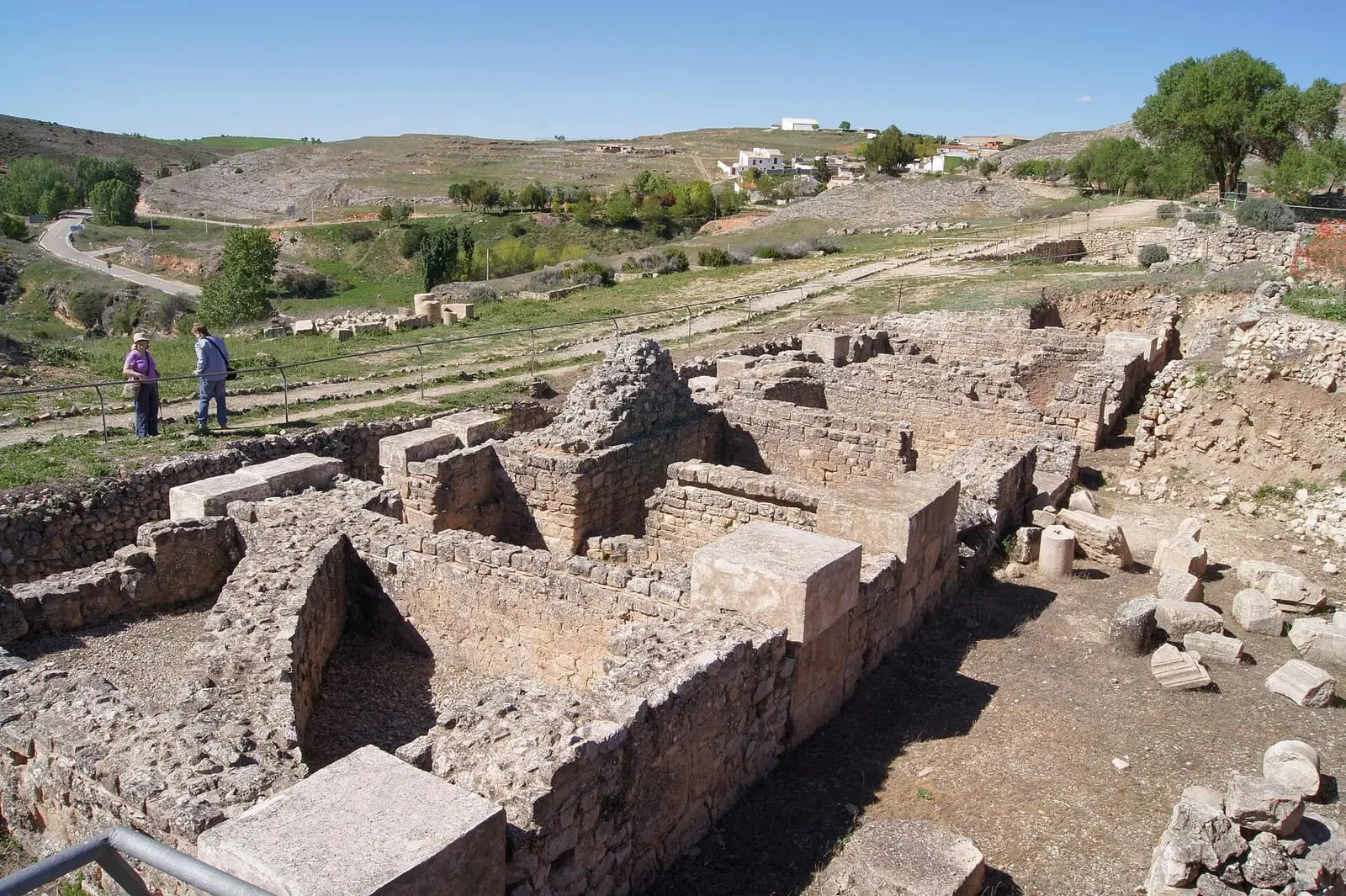
Valeria
Las Valeras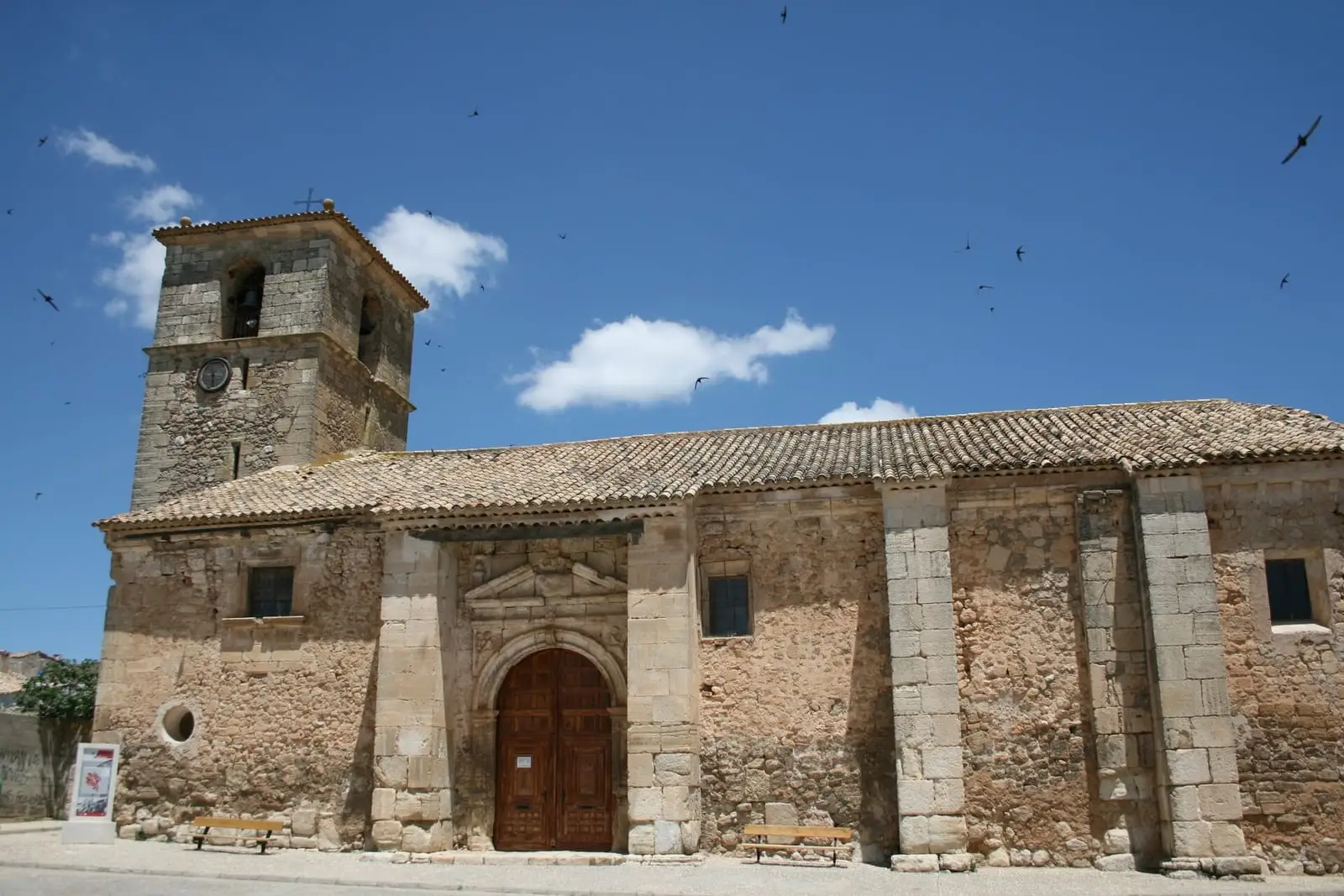
Church of Nuestra Señora de la Sey (Valeria)
Las Valeras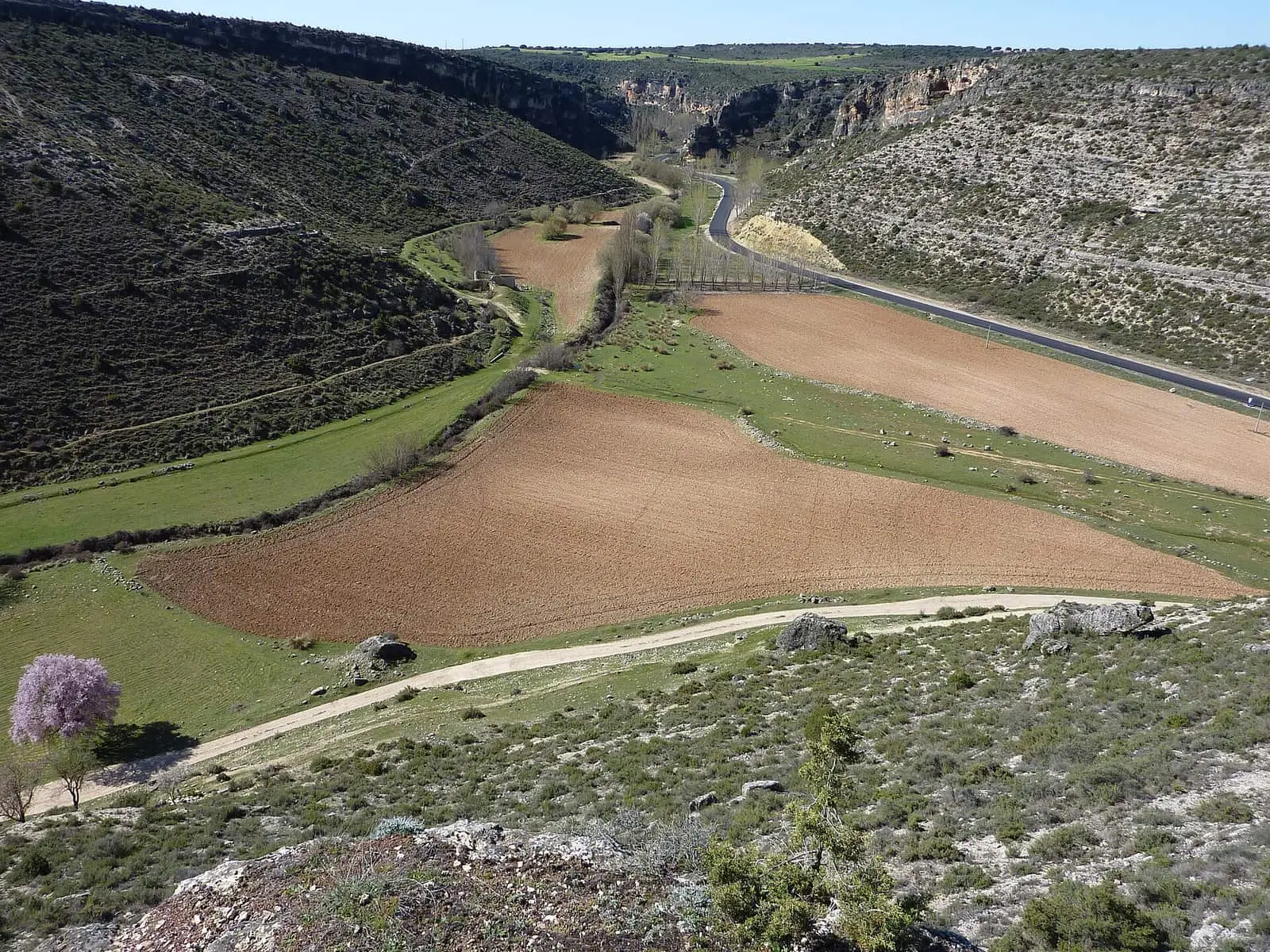
Hoz del río Gritos
Las ValerasLa Veguilla
Arguisuelas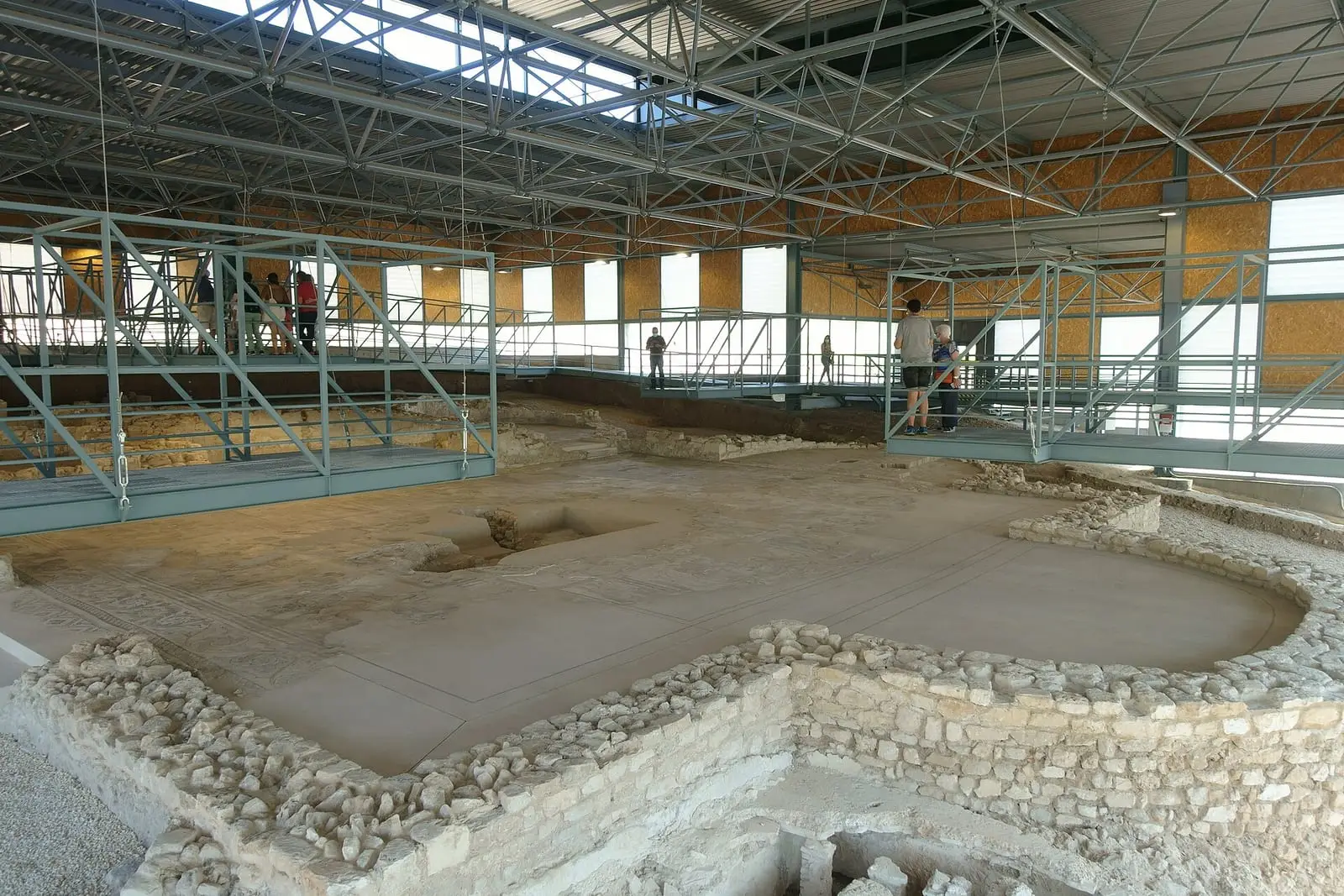
Roman villa of Noheda
Villar de Domingo García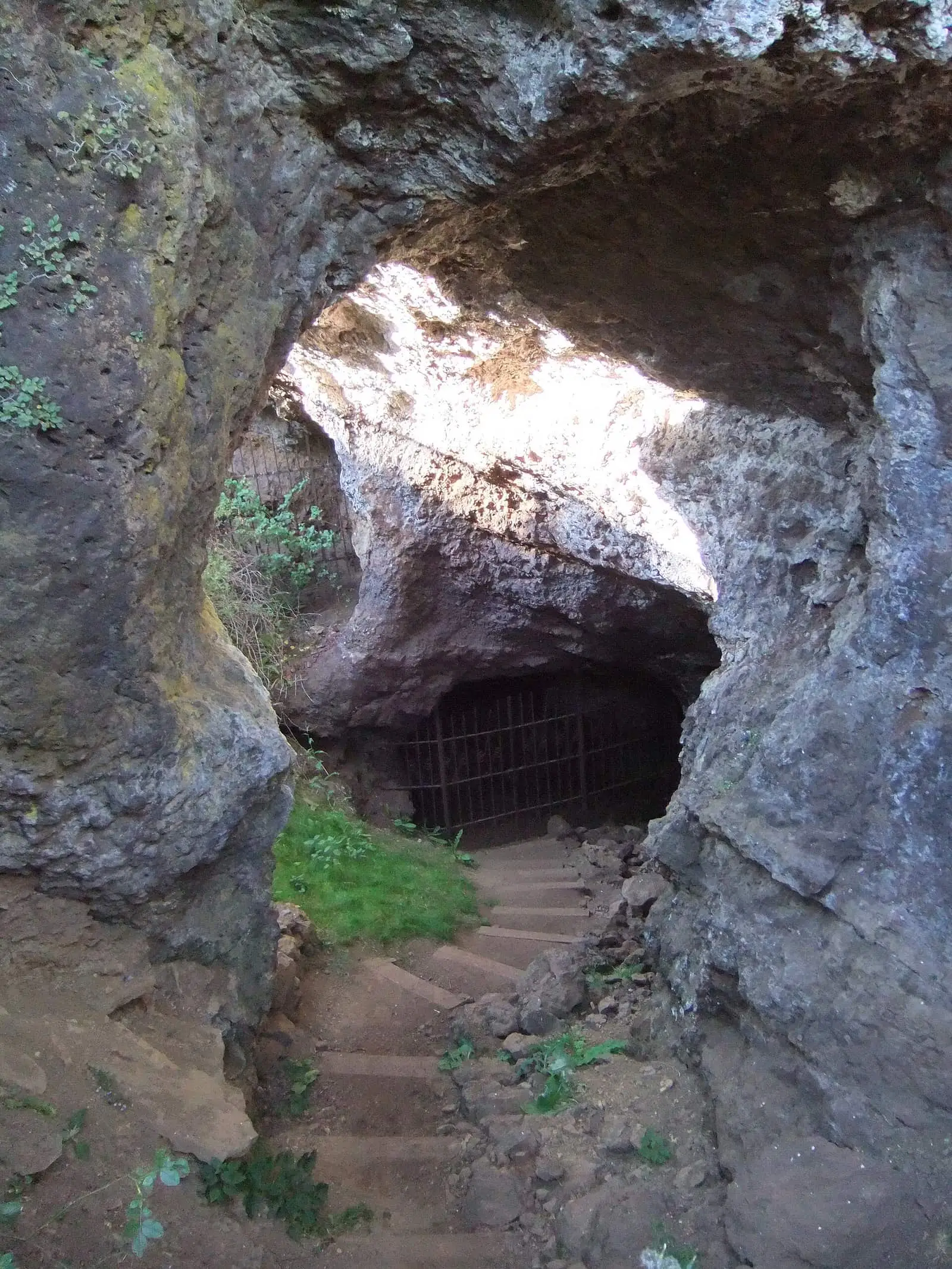
Roman mine of Cueva del Hierro
Cueva del Hierro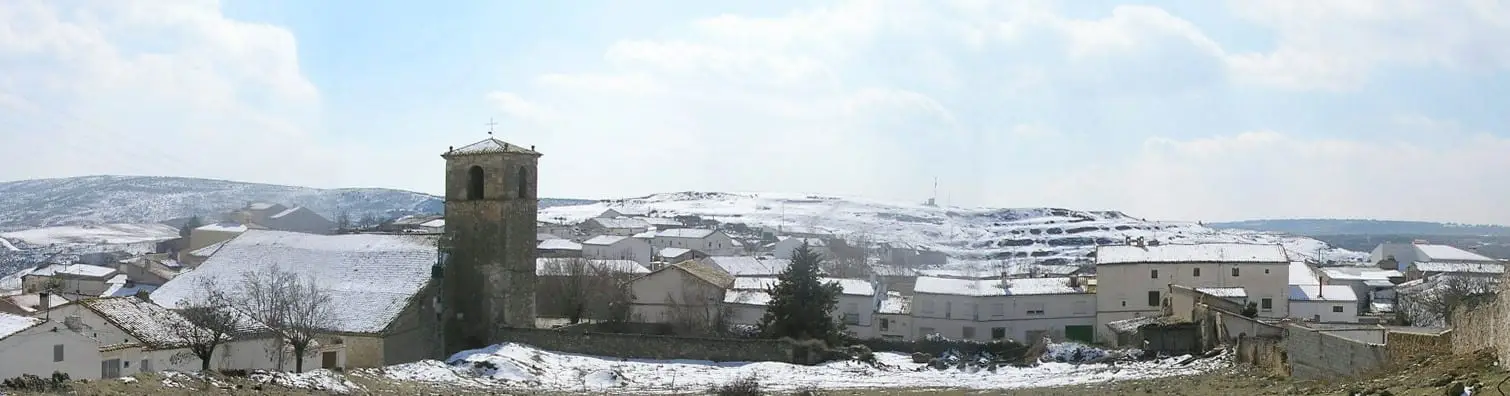
Las Valeras
Cuenca · 5 places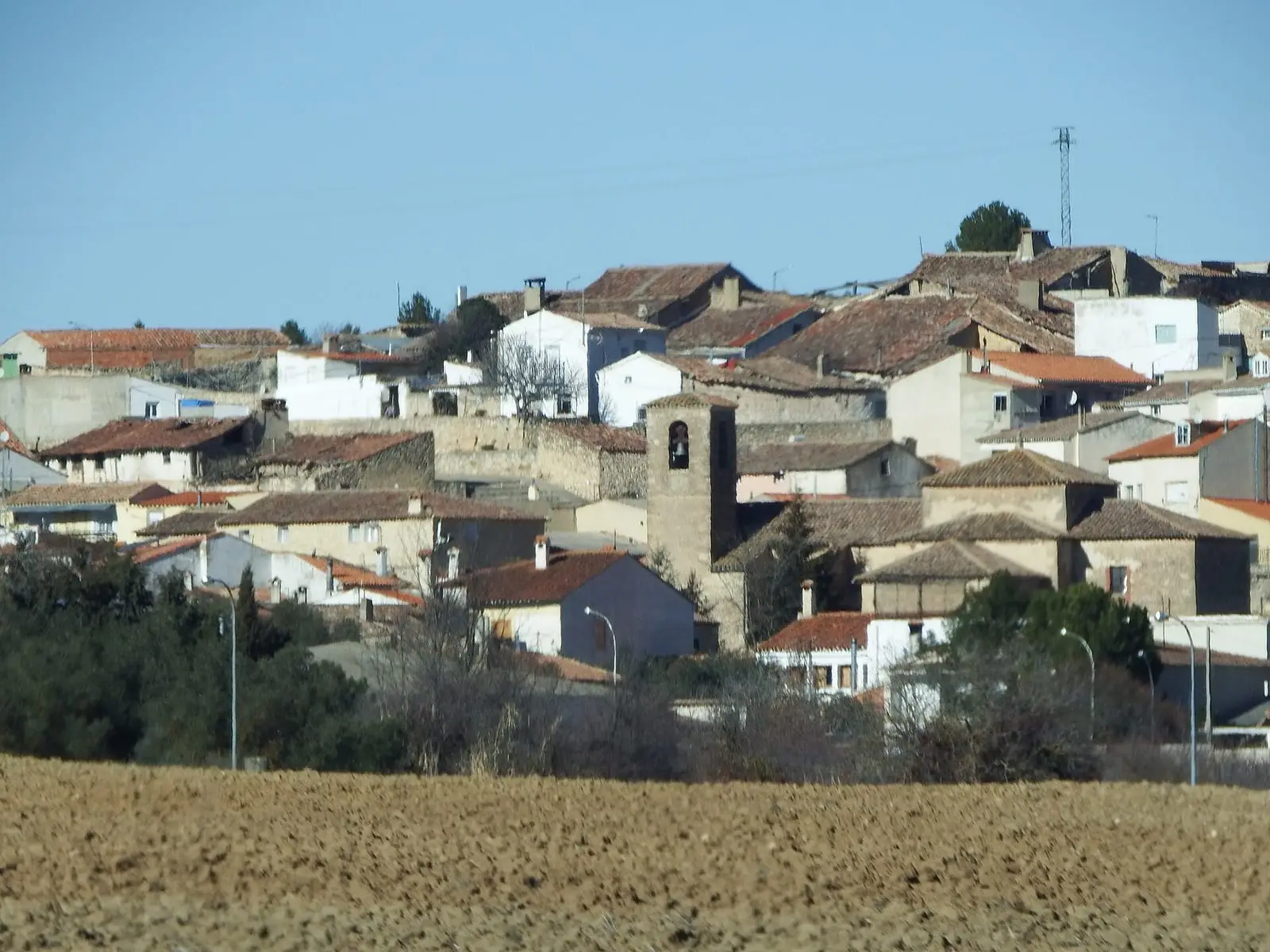
Arguisuelas
Cuenca · 1 places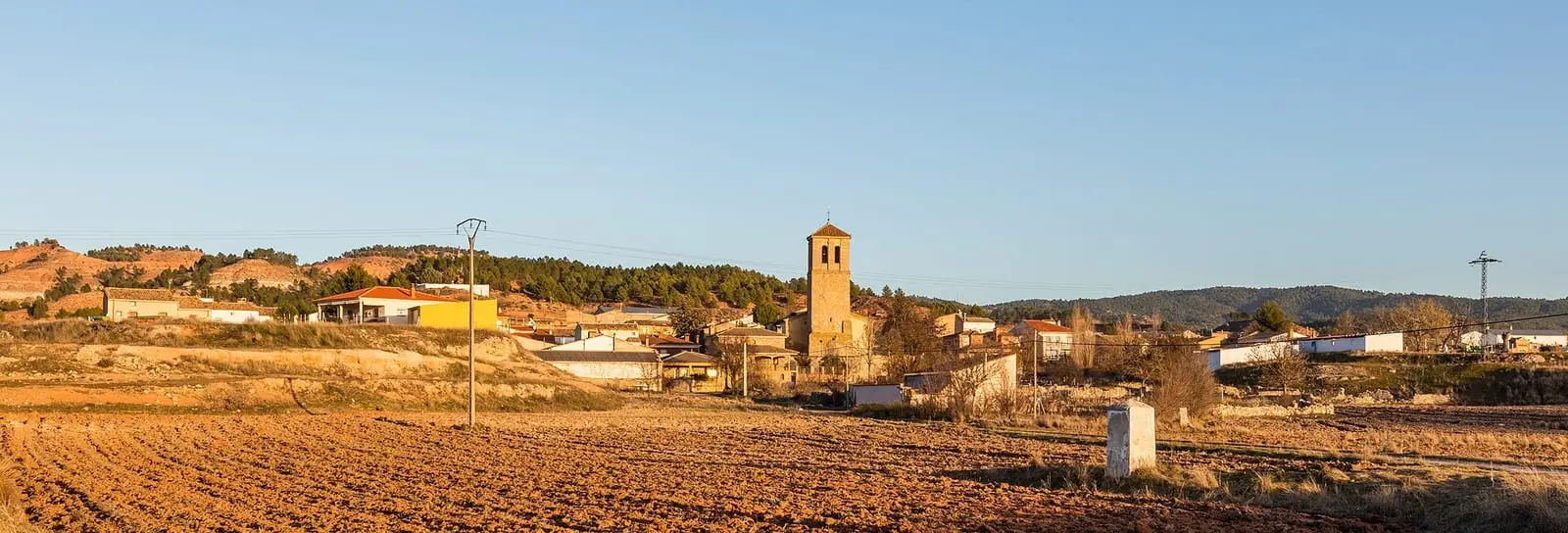
Villar de Domingo García
Cuenca · 3 places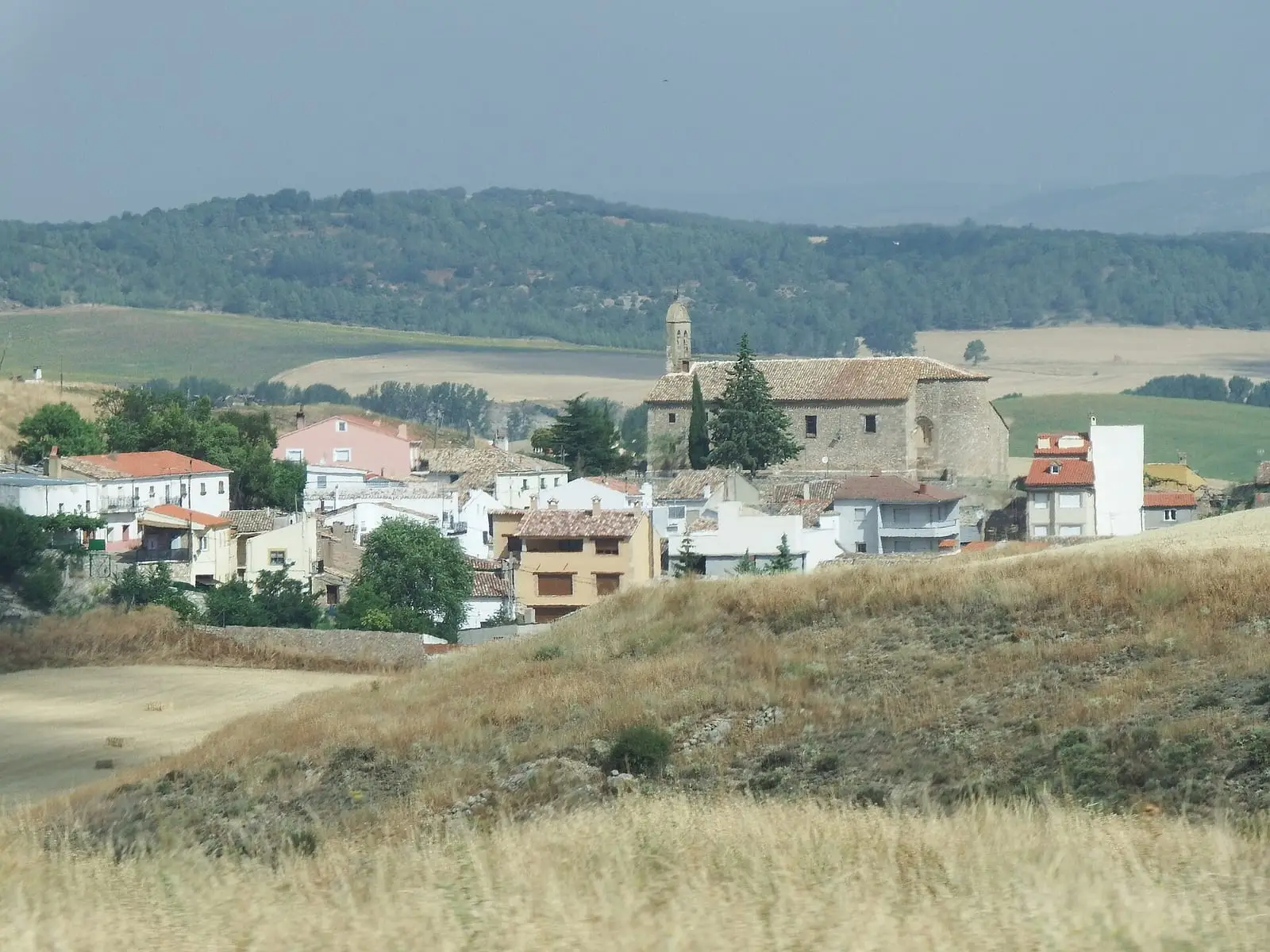
Fuentes
Cuenca · 6 places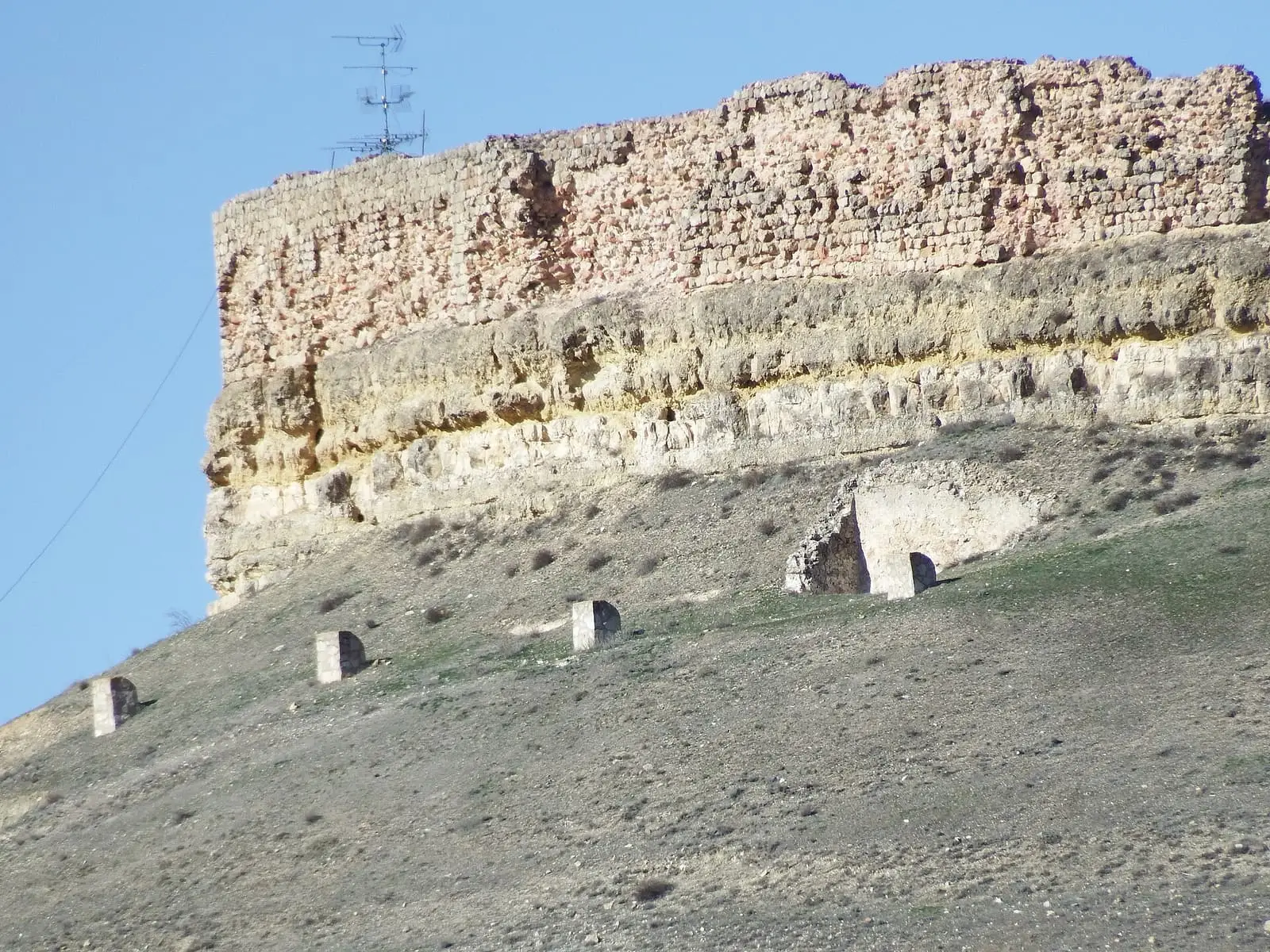
Monteagudo de las Salinas
Cuenca · 1 placesFrequently asked questions
Why was Valeria abandoned?
There is no single cause. From the mid-3rd century its buildings were dismantled and stripped. Archaeologists point to a lack of water when the municipal system stopped working and its distance from major roads. Some people moved about 500 metres, beneath the present village.
Were there bishops in an abandoned city?
Yes. The see of Valeria appears in 610 and its bishop signs for the last time in 693, at the Sixteenth Council of Toledo, when the city site had already been empty for centuries. The bishopric was a territorial district rather than a living city.
Sources and reading
- Junta de Castilla-La Mancha, Portal de Cultura: Valeria (yacimiento visitable) source consulted
- Descubre Cuenca (Diputación de Cuenca): Yacimiento arqueológico de Valeria source consulted
- Diarte-Blasco, P. y Castro-Priego, M. (2025): «Sedes sine urbe: una aproximación arqueológica a la imagen urbana del centro peninsular durante el periodo visigodo», Archivo Español de Arqueología 98 source consulted · Section 3, Valeria and its territory.
- Edmondson, J. y Gimeno Pascual, H. (2020): «Otro militar en el territorio de Valeria», Sylloge Epigraphica Barcinonensis 18, pp. 125-134 source consulted
- Abascal Palazón, J. M. (1999): «Documentos inéditos sobre las necrópolis de Cañizares, Mira y Arguisuelas (Cuenca)» reference located
- Consejería de Cultura de Castilla-La Mancha: Villa Romana de Noheda source consulted
- Revista Leader (Ministerio de Agricultura, 2001): adaptación de la mina romana de Cueva del Hierro source consulted
- Hoy por Hoy Cuenca, Cadena SER: «El gran tesoro de Valeria (Cuenca): un salón de la fama como el de Roma» (10-12-2024, con audio) source consulted · Interview with Dionisio Urbina; the explanation of decline through Visigothic and Arab invasions is the presenter's and is not adopted.
Open questions
- Foundation date: the regional government gives between 93 and 82 BC; Diarte-Blasco and Castro-Priego, between 87 and 82 BC; the history of Cañete, between 85 and 82 BC. All three are recorded.
- The church of La Sey standing over a Roman temple and its name recalling the bishop's see are a hypothesis (Barroso Cabrera, 2019), cited second-hand.
- The La Veguilla soldier's name does not survive: the block is one of at least three. His service under Tiberius is a reconstruction by the editors.
- The link between the Cueva del Hierro mine and Valeria is undocumented; only its working from Roman times is recorded here.