Village · Cuenca
Landete
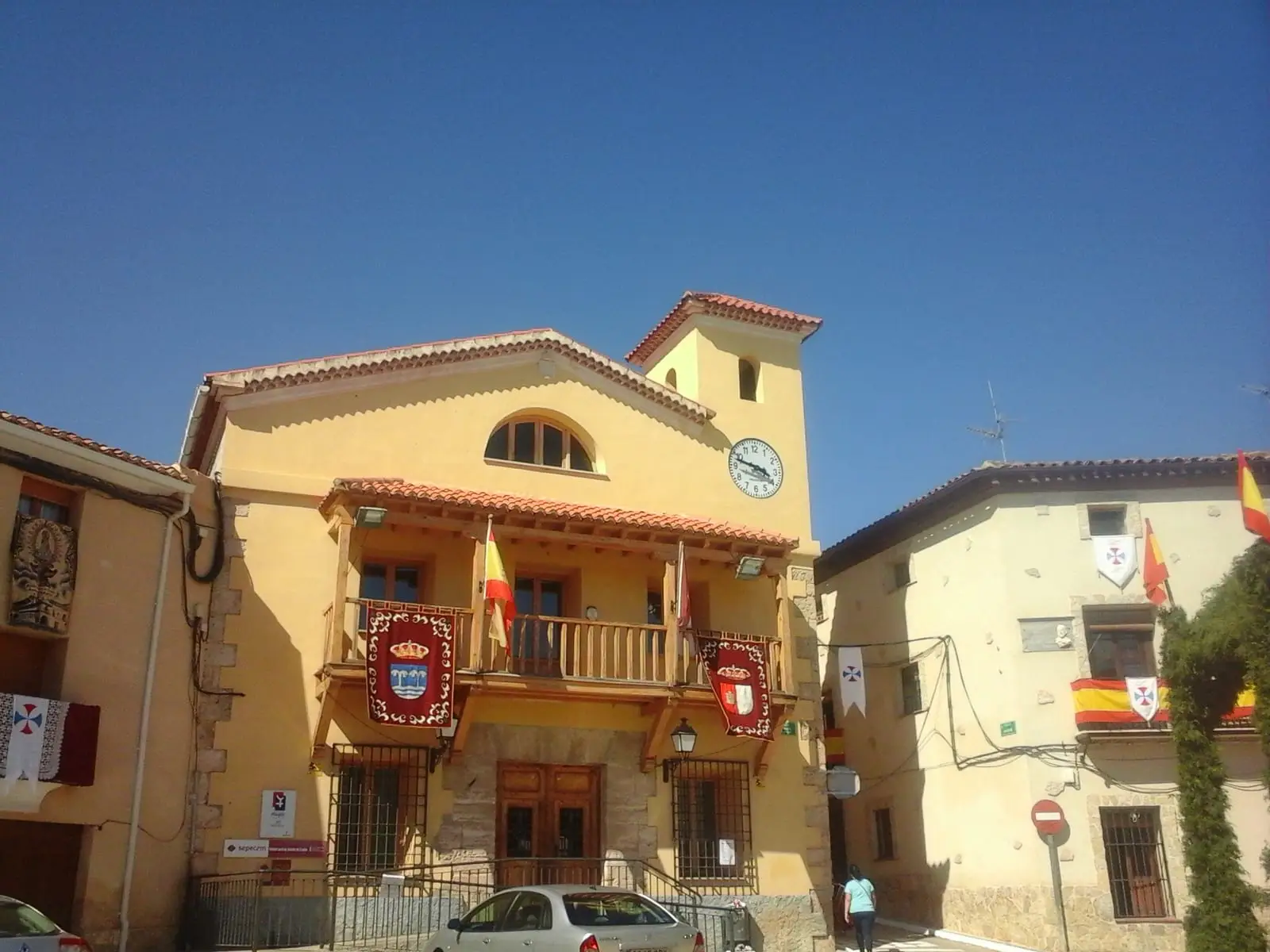
Landete is a town in the far east of Cuenca province, in the Ojos de Moya river valley and the former lordship of Moya, within the Valle del Cabriel Biosphere Reserve. It had 2,224 inhabitants in 1940 and 1,216 in 2021. Its municipality contains Torre Mijares, mentioned in 1235, and several Iberian settlements.
On this page 13 sections
- A town on the route between Cuenca and Valencia
- What trades and memory tell
- A friar from Landete who died in Beijing
- The town where people went to study
- The Night of the Rockets
- The Fuen María sanctuary
- Books and paintings
- Plan your visit
- Frequently asked questions
- Carry on from here
- Population
- Climate
- Location
A town on the route between Cuenca and Valencia
Landete lies in the far east of the province, in the Ojos de Moya river valley, within the Valle del Cabriel Biosphere Reserve. It belonged to the lordship of Moya and lay on the route between Cuenca and Valencia; today it is one of the service centres of the province’s east. In the old centre stands the Casa Grande de los Zapata, a 16th-century manor house. The patron saint is the Virgen de Fuen María, whose main feast day is Whit Monday.
What trades and memory tell
Torre Mijares was an estate with a defensive tower on the old road from Landete to Garaballa. In 1235 its owner sold it to the Hospital de Santiago de Cuenca for 500 maravedís, and its rents went to the Hospital de Moya. In the 18th century an ironworks there used iron and copper from the district.
Small Iberian settlements have been identified through surface finds on the municipality’s hills, including Cerrillo de Fuen-María, Cerro de San Cristóbal, El Socarrao, Fuente la Zarza, Hoya de Mira and Molino Nuevo, gathered with the rest of the basin in the Cerro Viejo entry.
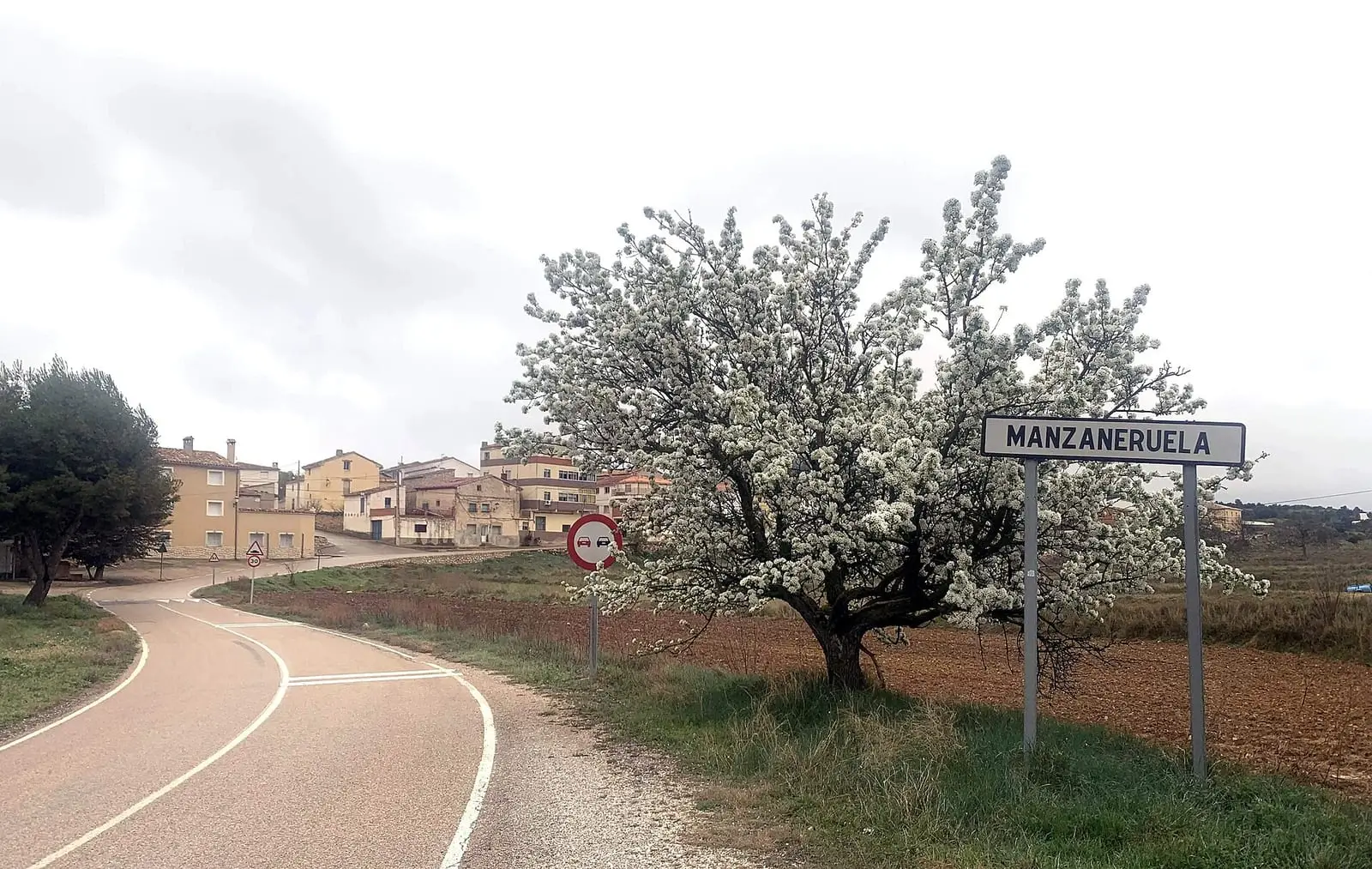
Manzaneruela, a separate municipality until the mid-19th century, also belongs to Landete. On 15 February 1947, about fifteen AGLA guerrillas arrived there: they took food, clothing, weapons and money, distributed propaganda and burnt a consignment of flour and tobacco. The story is told in The guerrilla in the Serranía.
A friar from Landete who died in Beijing
Friar Domingo Coronado was born in Landete in the early 17th century. Orphaned as a child, he was raised by a clerical uncle who wanted him to marry a lady from Murcia; he refused, went to study in Salamanca and took the Dominican habit at the convent of San Esteban. He became a missionary in China: in 1664 he built a church in Shandong province. He was imprisoned for preaching the faith, fell ill in prison and died in May 1665 in the Jesuit church in Beijing. Landete’s municipal library bears his name.
On the long flight of steps down to Fuente Podrida, one ashlar block differs from the rest: it bears an inscription in Latin. A local woman photographed it in 2017, and two researchers from Fuentelespino de Moya read it: it combines thirst for God, «fuente de agua viva» (spring of living water), with the Gospel words «venid a mí todos los que estáis cansados y agobiados» (come to me, all who are weary and burdened). They believe the stone came from the village’s old cemetery.
The town where people went to study
In the late 1950s, when secondary studies meant moving to the provincial capital, Landete secured secondary education of its own. Claudio Novella Sánchez, the Town Council secretary and later mayor, drove the project with the Council, the cooperative and other bodies of the time. It operated as an independent school: teachers from Cuenca’s Instituto Alfonso VIII came to examine pupils at the end of the school year. Pupils from elsewhere lodged in private homes and buildings lent for the purpose until the Colegio Menor Andrés de Cabrera was built with villagers’ money and labour. Approved by the Ministry in 1964, it had 84 places, later increased to a hundred. There was also another residence, the Verde, beside the river. With grants covering tuition and accommodation, children came from throughout the province and from Cádiz, Navarra, Segovia, Teruel or Soria, and some from much further away; at one point more than three hundred young people were studying in the town. Alongside their secondary studies, they learnt trades such as electrical work in the afternoons in local workshops. They went on to become teachers, doctors, vets and lawyers, and Landete’s shops, bakeries and guest houses lived from their custom. The story is told in Studying in Landete.
Childhood in Landete a few decades ago also inspires Ronson (2023), the first graphic novel by artist César Sebastián, who lived in the town until he was thirteen and blends his memories with stories told by his father, from Sinarcas.
The Night of the Rockets
During the San Roque festivities, on the night of 15–16 August, the night of the Virgin’s feast, Landete fills with gunpowder: the cohetada, a rocket-firing celebration in Calle Nicolás Peinado, carried on for hours by groups of friends and festival clubs. Festival programmes from the 1950s already call it traditional; a 1924 sheet mentions strings of firecrackers and luminous rockets, and old rockets wrapped in newspapers from 1922 were found during house repairs, although the paper may already have been old when used. This was why the festival was presented as a centenary in 2024. Since 2018, a rocket-firers’ association has trained newcomers; in 2019 it put on the exhibition El tiempo y la pólvora. People in the town believe the enthusiasm came from Valencia.
The Fuen María sanctuary
Among vineyards, fields and pine woods, the Fuen María sanctuary is so large that guide Fernando Carreras prefers not to call it a hermitage. It has a yellow entrance arch with red details and three arches on the façade, and inside, on an altar, a mural of St Isidore. Beside it is the house where the family of sanctuary keepers lived; by 2023 they no longer lived there, and the image no longer stayed in the sanctuary all year either. A cave closed by a grille is, according to tradition, where the Virgin appeared to two shepherds from Fuentelespino de Moya, which is why both villages feel she belongs to them. On Whit Monday the image leaves Landete’s church, and at the entrance arch the people of Landete hand it to those of Fuentelespino to carry it up, with singing, flowers, dancing and children dressed in traditional mountain clothing. At the foot is a low-flowing spring where villagers fill large water containers. There are two other hermitages in the town, San Cristóbal and San Roque.
Books and paintings
The Centro de Estudios del Marquesado de Moya is taking shape in the municipal library, to bring together scattered material on the history of the Moya lands and connect those researching it. Its foundation is a donation of more than two thousand volumes by researcher Régulo Algarra Hernández, a merchant seaman who devoted himself to studying Moya after retirement. The books were brought from Utiel shortly after the October 2024 DANA storm, with the road closed, in a villager’s van; a partition had to be knocked down to make room for them. In January 2026 they were being catalogued in the afternoons in the Castilla-La Mancha library network.
In buildings which the family identifies as former Civil War airfield hangars is La Loma del Olvido, the art centre opened in 2018 by the children of painter Raúl Torrent (Alicante, 1925–2001). Torrent was a military helicopter pilot before turning to painting: he began with hessian, earth and ropes, then moved to expressionist figurative work with many self-portraits. He came to Landete because his wife taught here, liked the river, landscape and sunsets, and bought the buildings to store his paintings; the area was called La Loma, and he added «del Olvido» (of oblivion). His family preserves his house, the Nidoto, with red floors and grilles he designed. In 2024 the centre held more than five hundred of his works, alternating them with exhibitions by other artists, and opened in summer.
Plan your visit
Walk around the old centre and the Casa Grande de los Zapata. For the tower and archaeological sites, ask the town hall what can be seen.
Before you travel
Torre Mijares and the archaeological sites are out in the countryside, with no prepared access: look without touching anything.
Combine with
Graja de Campalbo and Fuentelespino de Moya are less than 10 km away in a straight line, and Moya completes the former lordship.
Frequently asked questions
What is Torre Mijares?
A medieval defensive tower forming part of the territorial organisation of the lordship of Moya. Its first known mention is from 1235, when Gonzalo García sold the estate to Pedro Pérez, commander of the Hospital de Santiago de Cuenca, for 500 Alfonsine maravedís.
What is there to see in Landete?
The 16th-century Casa Grande de los Zapata, the Ojos de Moya valley, the old centre with its traditional architecture and, in the municipality, Torre Mijares and Iberian settlements identified by survey.
What is celebrated in May?
The festival of Fuen María, Landete's patron saint, whose events in 2026 ran from 23 to 25 May, with Whit Monday as the main day.
Carry on from here
The rivers, zones, eras, places and official routes that the atlas links with Landete.
Lands and landscapes
From here, follow the memory of the land
These readings connect Landete with the stories, the work and the villages around it.
Traces in the village and around it
Which eras you can read here
A single place can keep traces of several periods. These layers connect what you see with the atlas's stories.
War and guerrilla · memory of the land
The war in the village's memory
On 15 February 1947 some fifteen AGLA guerrillas came to Manzaneruela, now in the municipality of Landete: they took food, clothes, weapons and money, handed out propaganda and burned a load of flour and tobacco.
Source: Memoria Democrática de Castilla-La Mancha (UCLM).
Read the story of the guerrilla →Places in the municipality and around it
Near Landete
Fuente del Royo picnic area
Huerta del Marquesado
Prao de San Roque picnic area
Huerta del MarquesadoPaisaje Ilustrado of Huerta del Marquesado
Huerta del MarquesadoSee 5 more
Fuente de la Ardilla picnic area
Valdemeca
Las Hoyas
La CiervaPaisaje Ilustrado of Valdemeca
Valdemeca
Valdemeca Visitor Reception Centre
Valdemeca
Centenar viewpoint
ValdemecaPopulation of Landete, 1842–2021
Landete reached 2,224 inhabitants in 1940. The 2021 census counted 1,216, 45 % fewer.
Climate in Landete month by month
Averages for the ten years from 2015 to 2024 from the ERA5 reanalysis (Copernicus), for a grid cell with a reference altitude of 990 m. They are model estimates, not measurements from a local station or thirty-year climate normals.
Source: Copernicus ERA5 via Open-Meteo, CC BY 4.0. Retrieved: 2026-10-09.
Location
● Reference point · ● Villages · ● Places
Location sketch. The map with paths and names loads as you scroll to it.
Approximate position: village centre.
Reference villages: Moya · Graja de Campalbo · Fuentelespino de Moya · Talayuelas.
Open the full map and its historical layers →Where the data on this page come from
- Location
- IGN: Nomenclátor Geográfico Básico de España, capital de municipio (CC BY 4.0) source consulted, 9 October 2026
- Municipality (INE code)
- Turismo de Castilla-La Mancha source consulted, 4 October 2026
- Name
- Turismo de Castilla-La Mancha source consulted, 4 October 2026
«Source consulted»: the primary source has been read. «Reference located»: the source has been identified but not yet read. «Open question»: the figure needs confirmation.